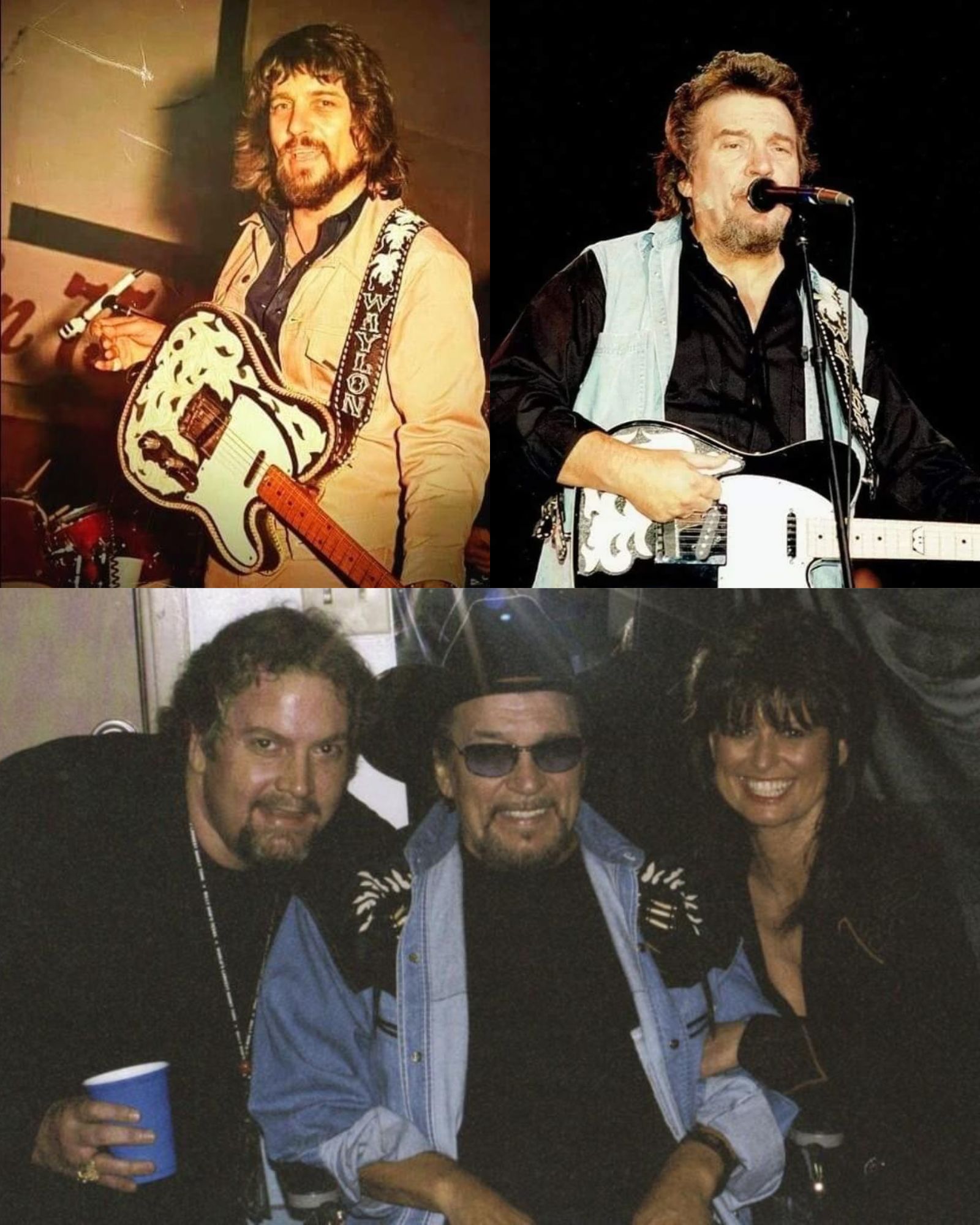
Ten years after Waylon Jennings died, longtime friend and musician Robby Turner found himself looking down at his steel guitar, watching a tear fall onto the instrument.
Turner was working on a recording Waylon Jennings had left unfinished. The familiar voice was still there. So was the guitar playing. But the man Turner had spent so many years making music with was gone.
In October 2012, Turner publicly shared that private moment for the first time during an NPR interview with Waylon Jennings’ widow, Jessi Colter. Even Jessi Colter had never heard the story before.
And the song that brought Turner to tears had a history reaching back 35 years.
The Recordings Waylon Jennings Never Finished
In 1999, during the later years of his life, Waylon Jennings began recording songs with Robby Turner, a trusted musician and longtime collaborator.
The sessions were unusually simple. Waylon Jennings supplied the vocals and guitar, while Robby Turner played bass. The plan was to add other instruments later, turning the basic recordings into a completed album.
These weren’t elaborate Nashville productions. They were intimate performances by two musicians who knew one another’s playing styles remarkably well.
According to Turner’s later recollections, Waylon Jennings sometimes struggled to complete additional takes. But making music together remained an important part of their friendship.
On February 13, 2002, Waylon Jennings died at age 64. The recordings remained unfinished.
For years, Turner kept the tapes rather than immediately preparing them for release.
Why One Song Meant So Much to Waylon Jennings
Among the recordings was a song called Belle of the Ball.
Longtime country fans might remember the original version from 1977. It appeared on the album Ol’ Waylon and served as the B-side of the enormous hit Luckenbach, Texas (Back to the Basics of Love).
But the song meant considerably more to Waylon Jennings than its modest place in the singles catalog might suggest.
During the 2012 NPR interview, Jessi Colter revealed that Waylon Jennings had once told her Belle of the Ball was his favorite song among those he had written.
Jessi Colter also offered an interpretation that made the song especially moving.
Although its language suggested a relationship with a beautiful but complicated woman, Jessi Colter believed the song also described Waylon Jennings’ relationship with the music business and his own journey through life.
To Jessi Colter, the song captured a wandering musician who had experienced the rewards and disappointments of the industry and was eventually preparing to leave.
That interpretation gave the recording an unexpected significance when Waylon Jennings returned to it near the end of his life.
One Rule: Keep Playing Until Waylon Smiled
With Jessi Colter’s blessing, Robby Turner eventually returned to the unfinished recordings.
Turner recruited musicians who had worked with Waylon Jennings, including guitarist Reggie Young and drummer Richie Albright. Fellow songwriter and musician Tony Joe White also contributed to the project.
Turner’s challenge was to complete the music without losing the character of the original performances.
During the NPR interview, Turner explained that his guiding question throughout the project was simple: What would Waylon do?
Turner remembered that Waylon Jennings generally surrounded himself with musicians who understood his style. During earlier sessions, the band would continue playing until Waylon Jennings showed his approval with a smile.
That memory became Turner’s standard for finishing the recordings.
The Moment Robby Turner Finally Broke Down
While adding steel guitar to Belle of the Ball, Turner heard Waylon Jennings’ playing near the end of the song. The experience brought back memories of their years together.
Turner told NPR that he became emotional during those sessions. On one occasion, he looked down and saw a teardrop fall onto his steel guitar.
He had kept the memory private.
When interviewer Melissa Block asked Jessi Colter whether she knew about that moment, Jessi Colter answered that she was hearing it for the first time.
Turner explained that he had never told anyone about it before.
For a musician who had spent so much time working alongside Waylon Jennings, completing the arrangements had become something far more personal than an ordinary recording session.
One Last Album, Ten Years Later
In September 2012, the completed recordings were released as Goin’ Down Rockin’: The Last Recordings, a collection of 12 songs.
The album allowed listeners to hear performances Waylon Jennings had recorded years earlier, now accompanied by musicians who understood his sound.
For Jessi Colter, hearing those recordings was emotional too. She told NPR that hearing Waylon Jennings’ voice again felt so immediate that she needed several listens to take it in.
But perhaps the most memorable part of the album’s story wasn’t the release itself.
It was Robby Turner, sitting behind a steel guitar, trying to finish the music the way his old friend would have wanted.
Ten years after Waylon Jennings was gone, the musicians who knew him best were still following the same rule: play until Waylon smiled.