Scroll to the end of the article to hear the song.
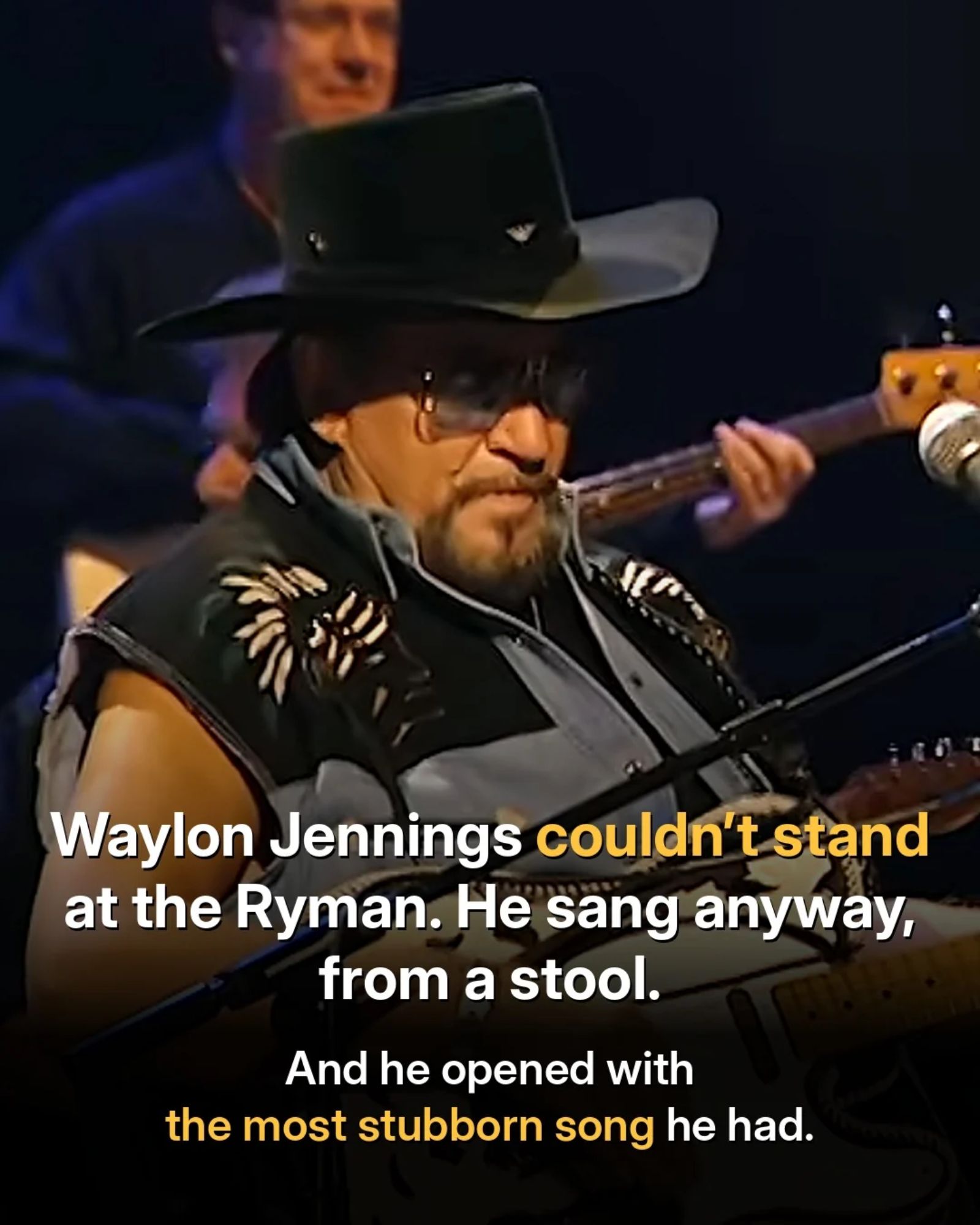
On a winter night in Nashville, the stage at the Ryman Auditorium had something you didn’t expect to see at a Waylon Jennings show. There was a stool sitting right where the outlaw of country music used to stand.
It was January 6, 2000, the second of two nights Waylon Jennings had booked at the building fans call the Mother Church of Country Music. The cameras were rolling, because both nights were being filmed for a live album and a concert film. Before the first song, everyone in the room could see that something had changed.
The Outlaw Who Hated Making a Fuss
Waylon Jennings was not a man who asked for sympathy. He spent most of his career fighting the Nashville system for the right to make records his own way, with his own band, his own sound, and his own rules. He walked out of award shows. He turned down what he didn’t believe in. People called him an outlaw, and he earned it.
By the late 1990s, though, his health was failing. He had cut way back on touring, and when he did play, he usually played sitting down. In 1998 he made a point of telling the press that he didn’t need a wheelchair. He said he had retired from the road, not from music.
Within a year he was back onstage. Around him was a band he had built himself, the Waymore Blues Band. It had thirteen players, including a full horn section, longtime drummer Richie Albright, steel guitarist Robby Turner, and session great Reggie Young. Waylon Jennings called it the band he had always wanted.
“That Ain’t All Old Age”
That night at the Ryman, Waylon Jennings did not pretend. He looked out at the crowd from his stool and talked about it before anyone else could.
“I guess y’all noticed I’m sittin’ on this chair, and that ain’t all old age.”
He told them he had hurt his back and his legs, and added that he was still getting around. It was classic Waylon Jennings: honest, a little dry, and a little stubborn. Then the band came in, and he picked his opening song.
The Song He Chose to Open With
The first song of the night was “Never Say Die,” a song Waylon Jennings wrote himself during the last years of his life.
The song is about a man pressed in from every side. There’s cold above him, heat below him, and nowhere left to run. It doesn’t promise him a happy ending. All he has is his refusal to quit without a fight.
Now picture who was singing it. He was a man who couldn’t stand up anymore, on the most famous stage in country music, and he was singing about refusing to go down easy. He didn’t make a speech about his health. The song said it for him.
His voice was still there, too: the same deep, rough baritone that had carried “Good Hearted Woman” and “I’m a Ramblin’ Man” across the country decades earlier. Later that night he brought out his wife, Jessi Colter, along with guests John Anderson, Travis Tritt, and Montgomery Gentry. By then the opening song had already set the tone for the whole show.
What Came After
It was the last time Waylon Jennings performed in Nashville. In his whole career, it was only the fifth time he had played a live show in Music City. He played a handful of shows after that, but none were captured like the Ryman nights.
The recordings first came out in 2000 on Never Say Die: Live. In 2007 they were released in full as Never Say Die: The Final Concert, a two-CD and DVD set that took its name from that opening song.
Waylon Jennings died on February 13, 2002, at the age of 64. He never went on a farewell tour. He never gave a big goodbye speech. What he left instead was a filmed night in Nashville where he sat down, made a joke about it, and opened with the toughest song he had.
Why Fans Still Talk About It
Fans don’t go back to that night because it was flawless. They go back because it was so completely Waylon Jennings. He told the truth about his body, he didn’t ask for pity, and he let a song he wrote himself carry the rest. He couldn’t stand that night, but his voice held up all the way through.
If you have never heard that opening performance, find it and listen. You’ll hear an outlaw who had decided exactly how he was going to face the end.