Scroll to the end of the article to hear the song.
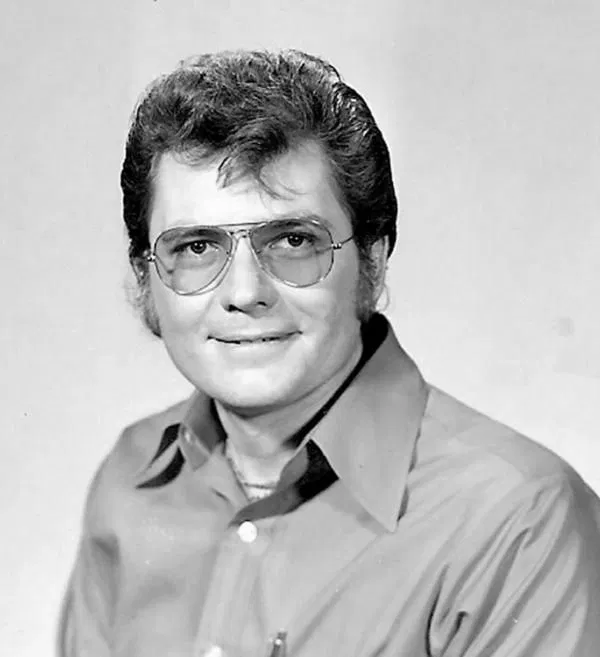
The song is “Flowers on the Wall,” and the man who wrote it was Lew DeWitt, the original tenor of The Statler Brothers. In Quentin Tarantino’s Pulp Fiction, released in 1994, Bruce Willis’s boxer Butch Coolidge drives off feeling pleased with himself and sings along to it on the car radio. He barely gets through a chorus before he spots Marsellus Wallace crossing the street at a red light. Lew DeWitt had died four years earlier, in August 1990, at 52.
For a lot of younger moviegoers, that scene was the first time they had heard the Statlers at all. For longtime fans, it was a song they had known since the radio days of 1965.
The song that was supposed to be the B-side
The Statler Brothers recorded “Flowers on the Wall” in Nashville on March 13, 1965, during time that had been booked for Johnny Cash, whose show they were touring with. Accounts differ on why the session opened up: one says Cash could not make it, another says he stepped out and the four Virginians used the time to teach the studio musicians their songs. Either way, they cut DeWitt’s song along with a Tom T. Hall number, “The Ballad of Billy Christian.”
According to several retellings, the label was pushing “Billy Christian,” with “Flowers on the Wall” on the other side. Disc jockeys flipped the record over. Taste of Country credits a Kansas City DJ with breaking the song on the radio.
Once it started, it ran. In January 1966 “Flowers on the Wall” spent four weeks at No. 2 on Billboard’s country chart and reached No. 4 on the Hot 100. It became the group’s biggest crossover hit, and it helped the Statlers win two Grammys for 1965: Best Contemporary Performance by a Group and Best New Country and Western Artist.
A joke about being alone
On first listen the song sounds playful, almost goofy. The narrator has been left, and he wants everyone to know he is doing just fine and has plenty to keep him busy. But listen to the list. Counting the flowers on the wallpaper. Playing solitaire until dawn with a deck that is one card short. Smoking and watching a children’s TV show in the morning. Every one of those is something a man does alone, in one room, waiting for the hours to pass.
The Library of Virginia’s biography of DeWitt describes it as a song of rejection, with brooding lyrics and a pensive melody that connected with the young audience of the mid-1960s. That is the trick of it: the cheer is the costume.
What fans did not see
Lew DeWitt had suffered from a stomach ailment for years. According to the Reid brothers’ memoir, it went back to his adolescence. While the group was touring in the mid-1960s, doctors diagnosed regional enteritis, a form of Crohn’s disease, and he underwent surgery. Recurring attacks sometimes forced the Statlers to cancel or postpone shows.
When doctors told them that stress could trigger his symptoms, the other three members, Harold Reid, Don Reid and Phil Balsley, took over his nonmusical obligations to the group.
He carried that through a run that included three performances at the White House, years on Johnny Cash’s television shows, and twenty-five albums with the group.
Stepping away
In November 1981, after a tour in California, Lew DeWitt was hospitalized and needed a long recovery. He recommended a singer named Jimmy Fortune to fill in for him. He came back briefly in the spring of 1982 to help finish an album, and his last appearance with the Statlers was at the Music City News Awards on June 7, 1982. When his symptoms returned, he told the group later that month that he was retiring. Fortune became the permanent tenor.
Lew DeWitt did not stop singing. He worked with his own Star City Band on a lighter schedule, made yearly appearances at a summer show in Waynesboro, Virginia, and released solo albums in the mid-1980s. Declining health finally led him to retire from music in 1989.
He died on August 15, 1990, at his home near Waynesboro. The cause was heart and kidney disease, complications of the Crohn’s he had lived with for so long. His business manager told the Associated Press he died in his sleep.
After he was gone
In 1992 a stretch of road in Waynesboro was renamed Lew DeWitt Boulevard. Two years later, Pulp Fiction put his song back on car radios and turntables for a generation that had never heard of Captain Kangaroo. In 2008, Lew DeWitt entered the Country Music Hall of Fame as a member of The Statler Brothers.
Play “Flowers on the Wall” again knowing all that. The narrator keeps smiling and saying he’s fine. It is hard not to hear the man who wrote it in there too.