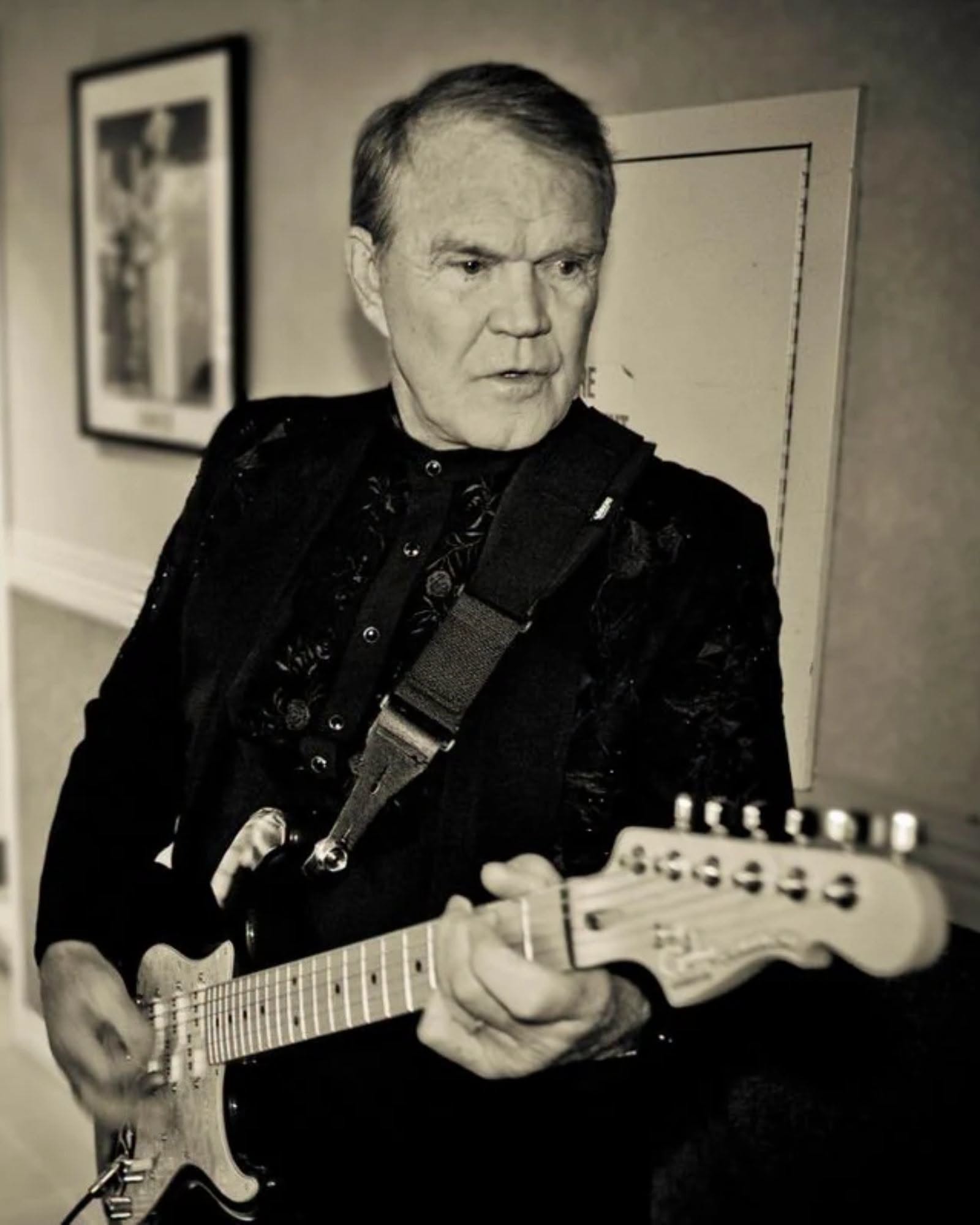
In January 2013, Glen Campbell walked into Sunset Sound in Los Angeles to record “I’m Not Gonna Miss You,” a song built from a single offhand remark about his own Alzheimer’s disease. It would become the song most fans remember as his goodbye, and the moment it was recorded ended up on film.
A remark after a hard day
By then, Campbell had been answering questions about Alzheimer’s for well over a year. He and his wife, Kim, had gone public with the diagnosis in June 2011, partly so audiences would understand if he lost a lyric or repeated a story onstage.
Julian Raymond, his producer and co-writer, later described one particular day to The Wall Street Journal. People had spent the day asking Glen about the disease and how he felt about it. Glen said very little. Then he came over to Raymond and told him he didn’t understand why everybody was so worried. It wasn’t as if he was going to miss anyone anyway.
It was the kind of joke Glen often made about the disease. Raymond heard something more in it.
A song built to be simple
Raymond had worked closely with Campbell for about six years by then. The two had made the album Ghost on the Canvas together, starting the sessions in 2009 with the goal of one last record of original material while Glen could still do it.
Over that time, Raymond kept a notebook of things Glen said. The remark about not missing anyone went into it, and it became the center of the new song.
Raymond also knew the limits. Glen could no longer handle the kind of complicated key changes and wide vocal range that made “Wichita Lineman” what it was. So the song was kept simple on purpose: a plain melody, short lines, and a chorus that turned Glen’s joke into a farewell addressed to Kim and their children.
Back with the Wrecking Crew
The Goodbye Tour had just ended. What was planned as a few weeks of shows had stretched into more than 150 dates over 15 months, closing at the Uptown Theatre in Napa, California, on November 30, 2012.
Only weeks later, Glen was back in a Los Angeles studio. Everyone involved understood this was probably the last time he would be well enough to record, so they called in old friends. Hal Blaine played drums, Joe Osborn played bass and Don Randi played piano, all members of the Wrecking Crew, the Los Angeles session players who backed hundreds of hits in the 1960s and 1970s.
Glen had been one of them. Before he was a star, he was a session guitarist, and in 1963 alone he played on hundreds of recording dates alongside Blaine and the rest. Now the same men were helping him through what is usually called his final session.
What the cameras caught
Director James Keach, who had followed Glen through the tour for his documentary, had cameras running in the studio too.
Glen would stop in the middle of a take and apologize because he could not remember the words. But the melody never left him.
Sometimes he would forget the words, but he never forgot the music.
Keach said the song went down sometimes a line at a time, sometimes a single word at a time. And Glen did not always remember that he had helped write it. After singing through a passage, he would say how much he liked the song. Someone would tell him it was his. He would answer that, well, it was really good.
The session took four takes in a single day. Raymond later said Glen was far from his best but still loved being back in the studio. Keach used the footage as one of the closing scenes of the film.
Who the title was really for
On first hearing, the title can sound cold. It is meant literally. A man losing his memory would not feel the loss of his family. They would feel the loss of him.
Kim Campbell put it plainly. She called it heartbreaking to hear, because Glen was essentially telling his family not to worry about him, that he would be fine, and that they were the ones who would struggle. She added that it was true: he did not know the pain they were living with every day.
When the song was released, Billboard noted that its effect reminded many listeners of Johnny Cash’s version of “Hurt.” Cash’s recording looked back on a life he could still remember. Campbell’s looked ahead to the people he would forget.
What followed
“I’m Not Gonna Miss You” was released on September 30, 2014, on the soundtrack to Glen Campbell: I’ll Be Me, which opened in theaters that October. By then Glen had moved into a care facility near Nashville.
In February 2015, the song won the Grammy for Best Country Song. Kim accepted it onstage and told the audience her husband could not be there because he was in the late stages of the disease. Two weeks later, Tim McGraw sat on a stool at the Academy Awards and sang it to a worldwide audience after it was nominated for Best Original Song. Kim said she was not sure Glen understood the nomination at all.
The song is usually remembered as his final recording, though the covers album Adiós, released in 2017, came out of sessions from the same months. Glen Campbell died in Nashville on August 8, 2017, at 81. In 2021, Elton John, who had called the song one of the most beautiful ever written, released it as a virtual duet with Glen to close his album The Lockdown Sessions.