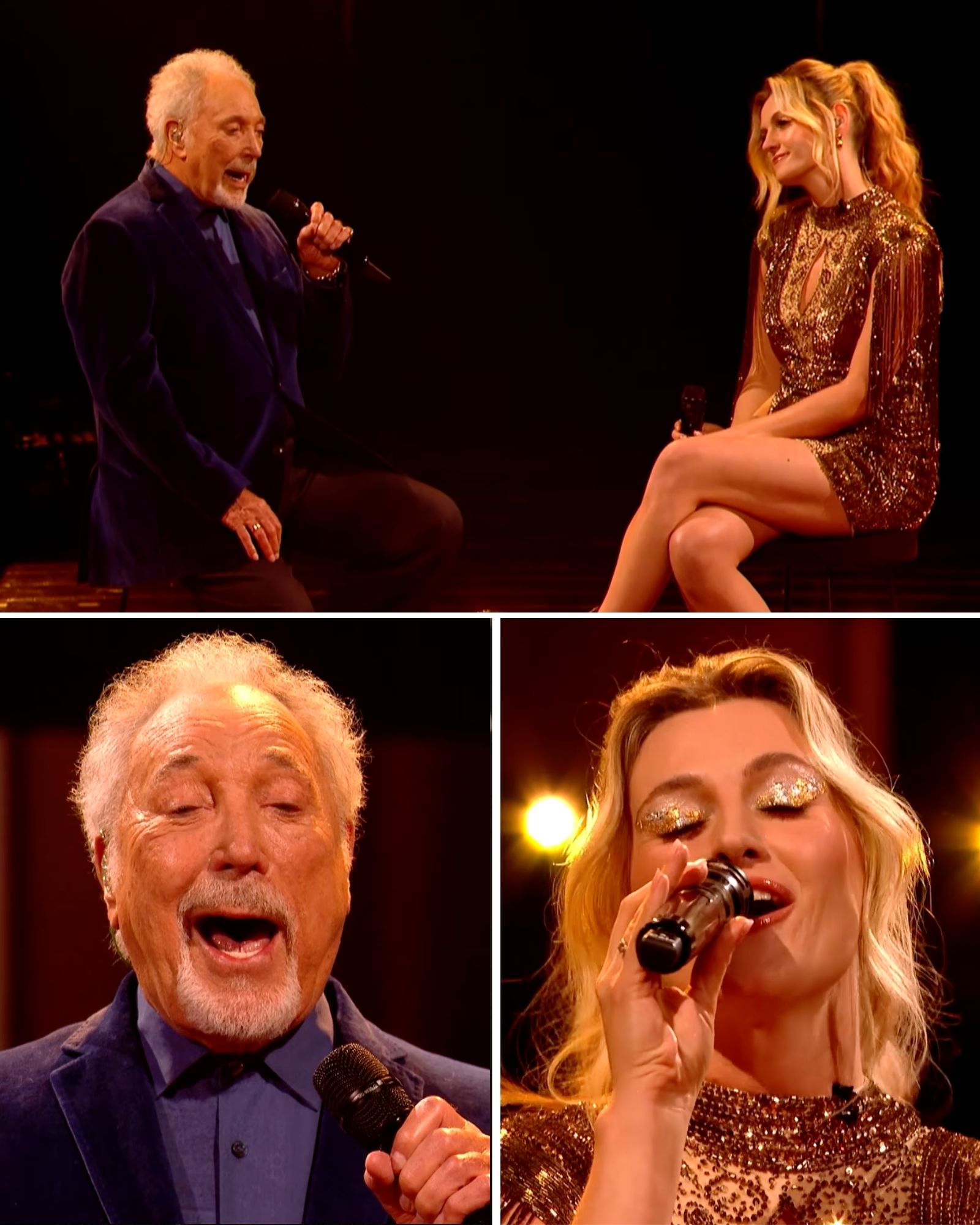
On Saturday, October 31, 2026, Sir Tom Jones sat in his red chair on The Voice UK for the final time as a regular coach. By the end of the night, the singer he had chosen that season, 31-year-old Cate McHugh from Llantwit Major in South Wales, had been crowned the winner. Before the result, the two of them stood side by side and sang John Denver’s “Take Me Home, Country Roads.”
It was a fitting song for the evening. Both of them come from the same corner of Wales, and for Tom Jones it was the end of a road that began when the show launched in 2012.
The Statement in September
The goodbye was not his idea. On September 8, 2026, while the new series was already on the air, Tom Jones posted a statement on Instagram and X. He wrote that he had not wanted to leave the show, that ITV had made the decision some time earlier, and that he had only recently been told.
The reason he said he was given was a financial difficulty with insurance. He also said he had been offered a reduced role rather than a full seat on the panel, and he made clear he was not happy about it. He closed with a line that was quoted around the world. He described himself as:
an 86-year-old who’s still pretty good at his job
ITV did not publicly confirm his account of the insurance issue. The network said it had loved working with him, that he would not be a full-time coach on the next series, and that talks about some future involvement were continuing. In another statement, it called him irreplaceable.
Tom Jones had coached on 13 of the show’s 14 series. The only one he missed was series five in 2016, after the BBC dropped him. He came back when the show moved to ITV in 2017 and stayed for nearly a decade.
A Guitar Outside a Bank on Queen Street
Cate McHugh was 16 when she started busking in Cardiff, standing with her guitar outside the NatWest bank on Queen Street. She told interviewers she always believed she was meant to sing for a living.
In her early twenties, she learned she had Stargardt disease, a degenerative condition of the retina that destroys central vision. Her sight faded gradually. Today she sees blurred patches, with only her peripheral vision still intact. The loss made a music career harder, but she kept going, and after the Covid years she went back to working on her singing.
She was still busking, this time in Cardiff Bay, when she noticed The Voice UK was looking for applicants. She applied on impulse.
The Chair She Could Not See Turn
At her blind audition, she sang “Die With a Smile,” the Lady Gaga and Bruno Mars duet. Only one coach turned around for her: Tom Jones.
She could not see it happen. Cate later explained that inside the studio a turning chair makes no sound at all. The only signal is a change in the lighting. She sensed the light shift, but she had no idea which coach had turned until the voice speaking to her turned out to belong to Tom Jones. He told her:
If you’re short-sighted, you’re not short-voiced.
She said being picked by a fellow Welsh singer meant a great deal to her. In the Battle Rounds, she was paired against the country duo Eric and Jensen on Chuck Berry’s “You Never Can Tell,” and she kept moving forward through the semi-final into the last four.
Asked by fans whether Tom Jones was as kind as he looked on television, she said he was, and summed him up this way:
He is just like, Welsh granddad vibes, he’s lovely.
Two Voices From South Wales
The final put her up against Monique Nicholson-Porter from Team Kelly Rowland, Naná Aldrin-Quaye from Team will.i.am, and Frank Raven from the team of McFly’s Tom Fletcher and Danny Jones.
For her solo, Cate chose The Beatles’ “Blackbird.” Then Tom Jones joined her for “Take Me Home, Country Roads,” the 1971 John Denver song about the pull of home. Local radio in her area reported that the duet brought the room to its feet.
The winner was chosen by the studio audience present during filming rather than by viewers voting from home, a format that drew some grumbling online. The audience picked Cate. She took home a £50,000 prize, a recording contract with Universal Music Group, and a trip to Universal Orlando in Florida.
A Nashville Song About Home, Sixty Years Earlier
The choice of a country song was not a stretch for Tom Jones. In late 1966, exactly sixty years before this final, he reached No. 1 in Britain with “Green, Green Grass of Home,” written by Nashville songwriter Curly Putman.
Johnny Darrell recorded it first in 1965, and Porter Wagoner had a country hit with it that same year. Tom Jones learned it from Jerry Lee Lewis’s version. His recording hit the top of the UK chart on December 3, 1966, stayed there for seven weeks, and became that year’s Christmas No. 1. In America, it climbed to No. 11 on the Billboard Hot 100.
That song is also about a man going home in his mind. Six decades later, Tom Jones sang about the road home again, this time beside a young singer from his own corner of Wales.
The Fourth Win
Cate McHugh became the fourth winner Tom Jones coached on The Voice UK. The first was Leanne Mitchell in 2012. Ruti Olajugbagbe won with him in 2018, and Anthonia Edwards in 2022.
His first win came in the show’s first year. His last came on his final night in the chair.