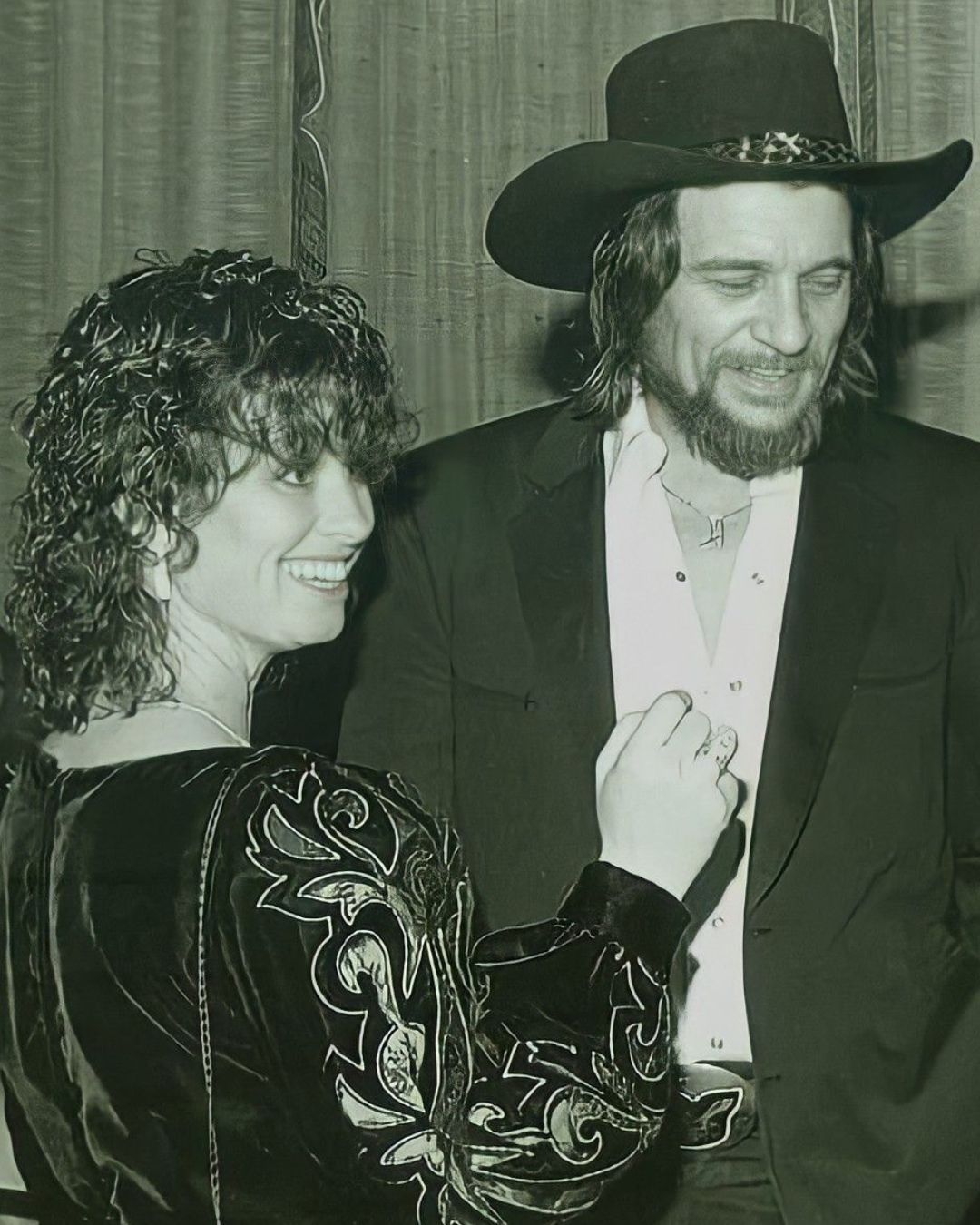
Jessi Colter was raised in a strict Pentecostal home in Arizona. Her mother, Helen Johnson, was a preacher, and by age 11 the girl then known as Mirriam Johnson was the pianist at her church. Yet when she married Waylon Jennings on October 26, 1969, there was no pulpit and no hymn. There was Las Vegas City Hall, a justice of the peace who got her name wrong, and a bride who could not stop laughing.
Jessi told the full story herself in her 2017 memoir, An Outlaw and a Lady. It is far less polished than the version that sometimes gets passed around, and far more human.
A Wedding Dress Already in the Suitcase
By 1969, both of them had a past. Jessi was 26 and divorced from rock and roll guitarist Duane Eddy, with a young daughter, Jennifer. Waylon Jennings was 32 and had already been married three times. Years later, Jessi put it plainly to CMT: she was his fourth wife.
The proposal did not catch her off guard. She wrote that she had seen it coming months before. Ever since she started going out on the road with Waylon, she had kept a wedding dress in her luggage. Nothing fancy, she said, just something suitable.
When he finally asked, she was quiet for a long time. Then she asked if he meant just like that. He said he did. She told him the truth: she had doubts. She worried about giving up her own career, and about what another failed marriage might do to two artists’ reputations. Waylon answered that her honesty was one of the reasons he loved her. He knew her, he said, and doubts would not stop her. She should say yes, and they should get on with it.
The Day at Las Vegas City Hall
There was no long engagement. The couple eloped to Las Vegas, and Jessi recalled laughing nervously from the moment they arrived.
She laughed at City Hall itself. She laughed when Waylon’s best man turned out to be his bass player, a man she remembered for hitting the same wrong notes every night and whose real job on tour was carrying the money briefcase. She laughed when the justice of the peace, droning through the ceremony as if it were his hundredth of the day, called her Mary instead of Mirriam.
Then she looked at the witnesses and realized that none of her family or friends were there. That made her laugh again.
Afterward, the newlyweds had a champagne dinner at the Golden Nugget, and the giggling kept going. Waylon finally asked her about it.
“If I don’t laugh, I’ll cry.”
He wanted to know which kind of crying she meant. Tears of regret, or both? Jessi told him both. She wrote that she was nervous and scared, sure that this was either the best day of her life or the worst. Waylon’s reply was simple. He told her to admit she would not rather be married to anyone else.
What Her Preacher Mother Did
Jessi later wondered what she would have done if her parents had tried to talk her out of marrying a hard-living outlaw. They never did. In a 2017 piece for Guideposts, she wrote that both her mother and father adored Waylon.
Her mother was a preacher through and through, but she did not preach at her new son-in-law. Jessi wrote that her mother understood, without being told, that sermonizing would only push him away. It was the same way she had raised her daughter. She never tried to change Jessi either.
The Phoenix Church Story You May Have Heard
Some articles say Waylon and Jessi were married in a Phoenix church, with her mother serving as the minister. It is a lovely picture, but it is not the one Jessi painted. Her memoir places the wedding at Las Vegas City Hall, with a justice of the peace, and with none of her family present. A review of the memoir in Goldmine described it the same way: a brief ceremony performed by a bored official.
What That Wedding Became
The couple moved to Nashville, and the hard years were far from over. Still, Waylon Jennings knew what had changed. In 1973 he told Rolling Stone’s Chet Flippo that when he met Jessi he weighed 138 pounds and was at his lowest point.
“Jess was the best thing that ever happened to me.”
On Valentine’s Day 1984, for a Showtime special, Waylon called Jessi to the stage as his best friend, and they sang “Storms Never Last,” the song she had written. A month later, the couple rented a house in the Arizona desert, canceled their shows, and Waylon came off drugs there. He stayed clean for the rest of his life.
The marriage that started with a stranger calling her Mary lasted more than 32 years, until Waylon Jennings died on February 13, 2002.