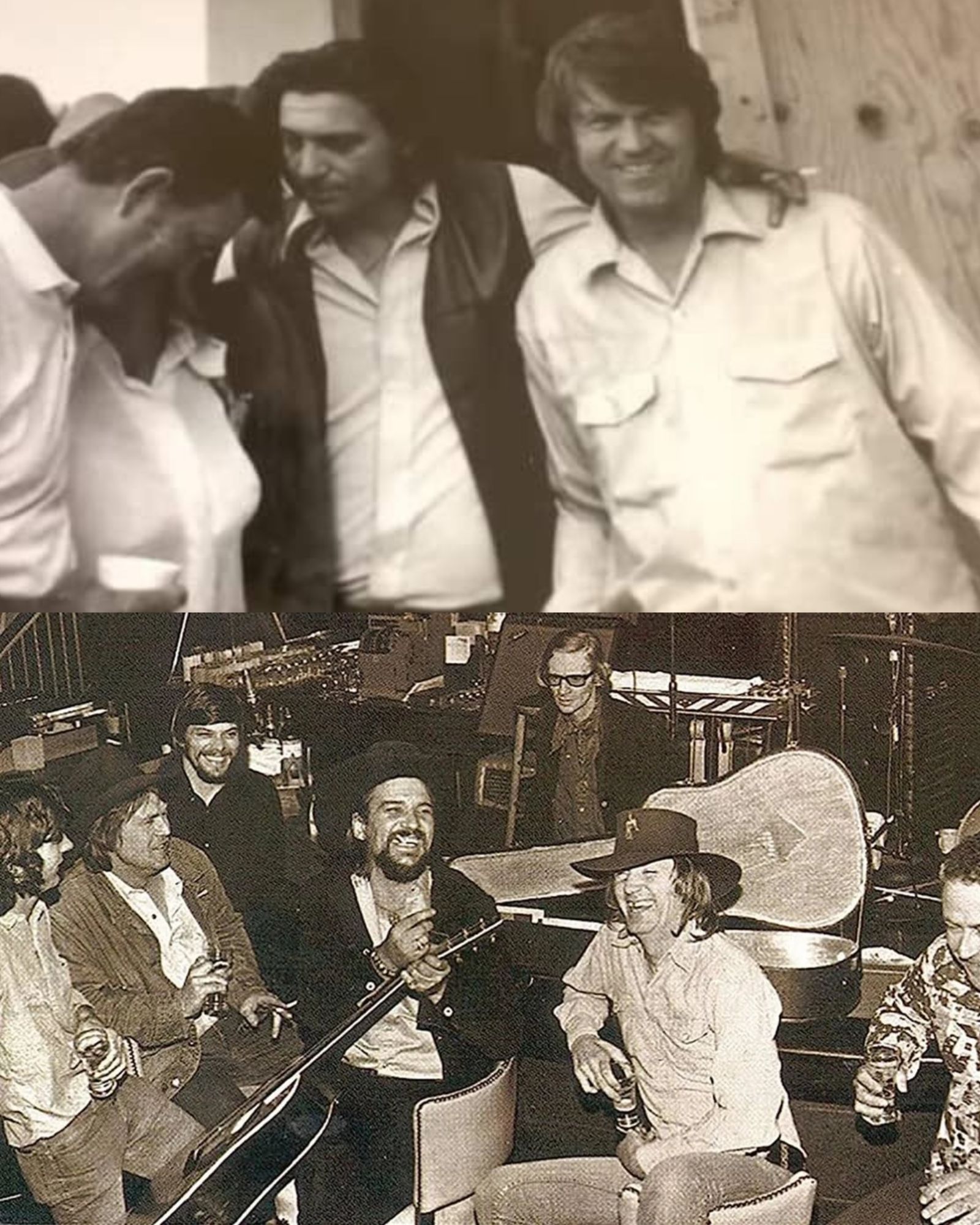
In 1972, Billy Joe Shaver was a struggling Texas songwriter trying to get Waylon Jennings to keep a promise. After months of unanswered calls and unsuccessful attempts to arrange a meeting, Billy Joe Shaver finally confronted Waylon Jennings inside a Nashville recording studio. According to Billy Joe Shaver’s later account, Waylon Jennings even tried to send the songwriter away with a $100 bill.
Billy Joe Shaver refused the money. Instead, Billy Joe Shaver threatened to whip Waylon Jennings in front of everyone unless the country star agreed to listen to the songs.
What followed became one of the most memorable stories behind the rise of outlaw country music.
The Promise That Started at Dripping Springs
The story began at the Dripping Springs Reunion in Texas in March 1972. During the gathering, Waylon Jennings heard Billy Joe Shaver perform “Willy the Wandering Gypsy and Me” and became interested in the songwriter’s unusual style.
Billy Joe Shaver had been writing songs for years, drawing inspiration from working-class life, hard times, and the independent spirit of Texas. The songs were direct, occasionally rough around the edges, and unlike much of the polished country music dominating Nashville radio.
According to Billy Joe Shaver, Waylon Jennings liked the material enough to promise an entire album of Billy Joe Shaver’s songs.
But returning to Nashville did not produce the opportunity Billy Joe Shaver expected.
For approximately six months, Billy Joe Shaver tried to reach Waylon Jennings. Calls went unanswered, meetings never happened, and the songwriter continued struggling to make a living.
The $100 Offer That Billy Joe Shaver Refused
Eventually, a Nashville disc jockey known as Captain Midnight helped Billy Joe Shaver enter a recording session where Waylon Jennings was working.
In interviews years later, Billy Joe Shaver remembered waiting in a hallway crowded with visitors and members of Waylon Jennings’ entourage.
When Waylon Jennings learned that Billy Joe Shaver was there, a folded $100 bill was sent down the hallway with instructions for the songwriter to leave.
For someone who needed money, $100 was a considerable amount in 1972. But Billy Joe Shaver rejected the offer.
When Waylon Jennings appeared, Billy Joe Shaver demanded that the singer honor the earlier promise to hear the songs. The confrontation became heated enough that Billy Joe Shaver threatened a physical fight.
Waylon Jennings had companions nearby, making the challenge particularly risky. Rather than allowing the confrontation to escalate, Waylon Jennings took Billy Joe Shaver into another room.
Waylon Jennings agreed to listen to one song. If the song failed to impress, the meeting would end.
The Songs That Changed Waylon Jennings’ Mind
According to Billy Joe Shaver’s recollection, the first song performed was “Ain’t No God in Mexico.” Waylon Jennings asked for another, and Billy Joe Shaver continued with “Old Five and Dimers (Like Me).”
Eventually, Billy Joe Shaver reached “Honky Tonk Heroes.”
Years later, in a 2017 interview with The Washington Post, Billy Joe Shaver recalled the expression on Waylon Jennings’ face and the words that followed:
“Damn it. I know what I got to do now.”
The two musicians did not remember every detail identically. In Waylon Jennings’ autobiography, the singer recalled “Old Five and Dimers (Like Me)” as the first song performed, rather than “Ain’t No God in Mexico.” Waylon Jennings also remembered the original promise more narrowly than Billy Joe Shaver did.
But both accounts agree on the essential outcome: Waylon Jennings heard the songs and decided Billy Joe Shaver’s writing deserved to be recorded.
Nine Songs on One Landmark Album
In 1973, Waylon Jennings released “Honky Tonk Heroes” through RCA Victor. Nine of the album’s ten original tracks were written or co-written by Billy Joe Shaver.
The collection included “Honky Tonk Heroes,” “Old Five and Dimers (Like Me),” “Willy the Wandering Gypsy and Me,” “Black Rose,” “Ride Me Down Easy,” and “Ain’t No God in Mexico.” Billy Joe Shaver and Waylon Jennings also shared songwriting credit on “You Ask Me To.”
The only track without Billy Joe Shaver’s songwriting contribution was “We Had It All,” written by Donnie Fritts and Troy Seals.
The album arrived as Waylon Jennings was gaining greater control over recording decisions and moving away from Nashville’s highly polished production conventions. Billy Joe Shaver’s songs suited the rawer, more independent sound that would become closely associated with outlaw country.
Even the recording process brought disagreements. Waylon Jennings later recalled becoming frustrated when Billy Joe Shaver objected to changes being made to the title song. The singer insisted on having room to interpret the material.
Despite those tensions, the collaboration produced an album widely regarded as a defining recording of the outlaw country movement.
What Happened After “Honky Tonk Heroes”?
The success of the collaboration helped establish Billy Joe Shaver as a songwriter other major country performers wanted to record. Later in 1973, Billy Joe Shaver released the debut album “Old Five and Dimers Like Me,” produced by Kris Kristofferson.
Waylon Jennings continued building a career defined by artistic independence, while Billy Joe Shaver became recognized as one of the distinctive songwriting voices associated with outlaw country.
The most remarkable part of the story remains the contrast between the beginning and the outcome. Billy Joe Shaver entered the studio unable to convince Waylon Jennings to return a telephone call. The songwriter left having persuaded one of country music’s biggest stars to build much of an album around those songs.
More than five decades later, the original recordings explain why Billy Joe Shaver refused to walk away with $100. The songs were worth far more than that.