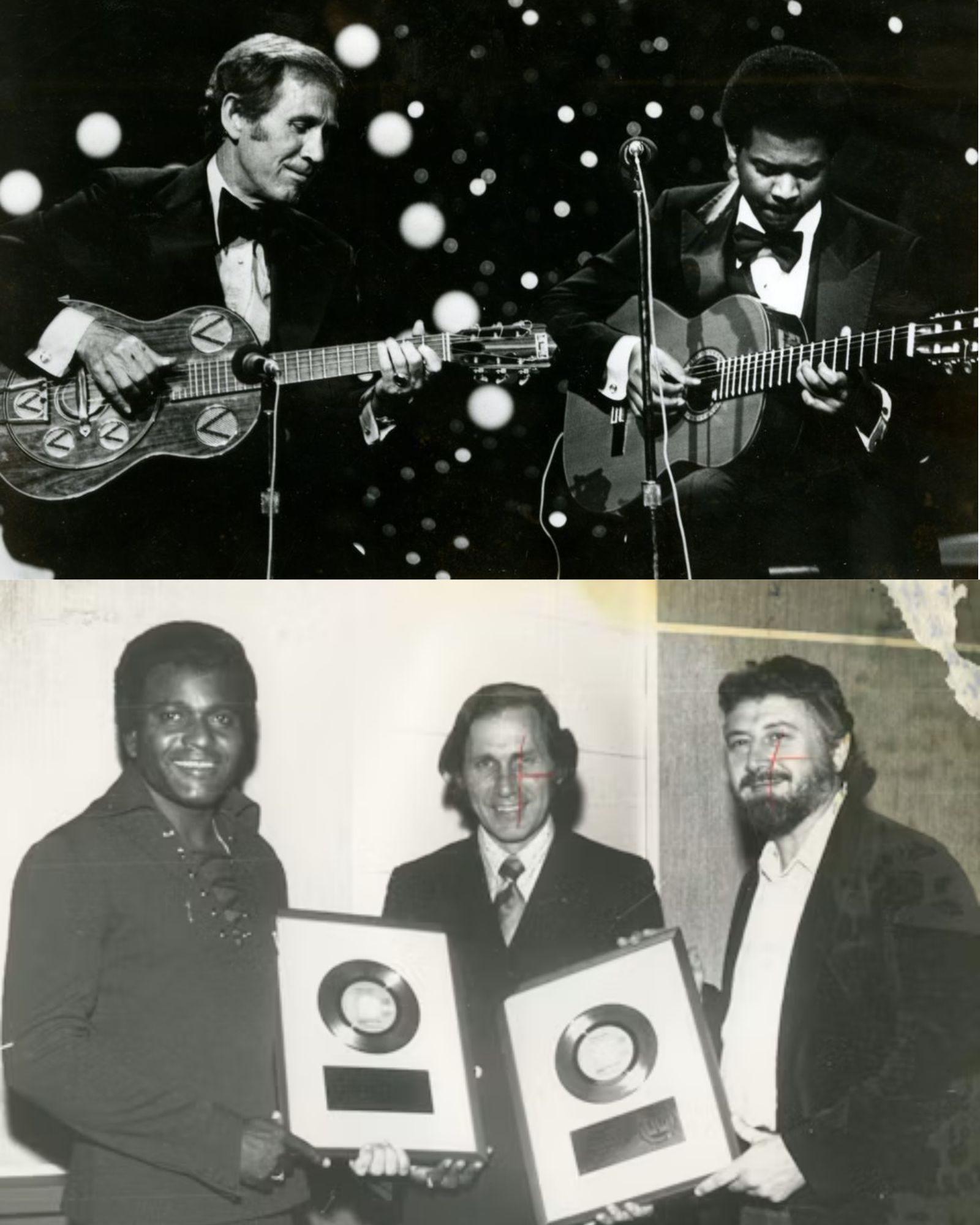
In 1965, Cowboy Jack Clement had a habit that people on Music Row still talked about decades later. He would invite someone into his office, put on a record by a singer almost nobody had heard of, turn it up as loud as his big speakers allowed, and say nothing until the song was over. Only then did he hand over a photograph of the man who had been singing.
The singer was Charley Pride. The routine was Clement’s way of making sure people heard the voice before they saw the face.
The man behind the voice
By the time he reached Nashville, Charley Pride had already lived several lives. He grew up the son of a sharecropper in Sledge, Mississippi, bought his first guitar with money he earned picking cotton, and spent years chasing a baseball career, pitching for the Memphis Red Sox in the Negro American League. After two years in the Army, he ended up in Helena, Montana, working at a smelter by day and singing in clubs at night.
In March 1964, a Nashville manager named Jack D. Johnson signed him. For more than a year after that, Johnson carried Pride’s tapes around town and got very little in return. A Black man singing straight, traditional country music was something few people in the business believed radio would ever play.
A tape across the street from the Professional Club
Clement had just moved back to Nashville in January 1965. He had already lived a full career by then: he discovered Jerry Lee Lewis at Sun Records, engineered the famous Million Dollar Quartet session, and wrote hits for Johnny Cash. Now he wanted to find and develop new talent of his own.
One night, Clement was having drinks at the Professional Club, a Music Row hangout where songwriters like Tom T. Hall and Kris Kristofferson spent their evenings. Jack Johnson was there too, and he would not stop talking about Charley Pride. Eventually he talked Clement into walking across the street to his office to hear a tape.
Clement later said he knew almost right away. The man could sing, he was for real, and he was deeply country. Clement went back to the club for another drink and told Johnson to bring Pride in so he could cut a song on him.
August 16, 1965: the session Clement paid for himself
On August 16, 1965, Clement took Charley Pride into RCA Studio B. No record label was paying for it. Clement covered the session out of his own pocket.
Word had spread around Music Row that Cowboy was producing a Black singer, and the control room filled with curious onlookers. Clement remembered that Pride was a nervous man by nature, but that having an audience seemed to make him sing better. After that first day, Clement kept Pride’s sessions more open than he usually allowed.
One of the people in that control room was Connie B. Gay, a well-known promoter and one of the founders of the Country Music Association. Gay would later help persuade Chet Atkins to sign Pride.
“Loud, man. Like, really loud.”
After that session, Clement liked to say, he owned the only Charley Pride record in town. He decided to use it.
Clement rented two offices on the third floor of the new RCA building on Music Row, just steps from Studio B. His landlords were Chet Atkins and Owen Bradley, and Atkins worked downstairs in the same building. Clement brought visitors up, sat them down, and played them Charley Pride.
“Loud, man. Like, really loud.” — Cowboy Jack Clement, describing how he played Pride’s first record for visitors
Then he showed them the picture. Clement later said it had been fun. The people watching that picture land on the desk understood the point without being told. They had already decided the man could sing.
Letting the record speak for itself
Clement gave Chet Atkins first crack at most of his productions, and Charley Pride was no exception. Atkins took the recording to RCA executives in California. As Pride later told the story, the executives listened, learned that he was Black, and agreed to sign him anyway. Their plan was to put the record out and let it speak for itself.
When his first single, “The Snakes Crawl at Night,” went out to radio stations, it went without the usual publicity photograph. The label credited him as “Country Charley Pride.”
Pride himself never fully accepted the idea that the missing photo was a deliberate trick. In his view, the bigger obstacle was not radio at all. It was getting promoters to book a Black country singer on their shows.
The night Detroit saw him for the first time
Neither “The Snakes Crawl at Night” nor his second single, “Before I Met You,” made the national country chart. But the records found listeners, and in 1966 Pride was booked for the biggest show of his life so far, at Olympia Stadium in Detroit, on a bill with Buck Owens.
Around 10,000 country fans were there. Many of them knew the voice from the radio. Very few knew what Charley Pride looked like. When he walked out, the applause faded into silence.
Pride decided to say out loud what everyone was thinking. He told the crowd he realized it was a little unusual to see him up there, joking that he was coming out with “a permanent suntan” to sing country music to them. The room broke into applause. Then he sang, and the crowd stayed with him.
It was the same order Clement had set up in his office a year earlier, only now it was happening in front of thousands of people at once.
The hit Clement wrote when they needed one
RCA still needed a hit, and Clement wrote one. “Just Between You and Me” was recorded on May 10, 1966, and released that September as Pride’s third single.
This time it worked. On January 7, 1967, Pride walked onto the stage of the Grand Ole Opry, the first Black performer to appear there since harmonica player DeFord Bailey left the show in 1941. In February 1967, “Just Between You and Me” reached No. 9 on Billboard’s country chart, and it earned Pride his first Grammy nomination.
Clement went on to produce or co-produce Pride’s first thirteen RCA albums and wrote more of his early hits, including “I Know One.” The two men stayed close for the rest of Clement’s life.
But the picture of how it all started stays fixed in one room: a producer on the third floor of the RCA building, a record turned up loud, and a photograph waiting face down until the song was over. By the time most of America saw Charley Pride, they had already heard him sing.
Do you remember the first time you heard Charley Pride on the radio, and when you first saw his face?