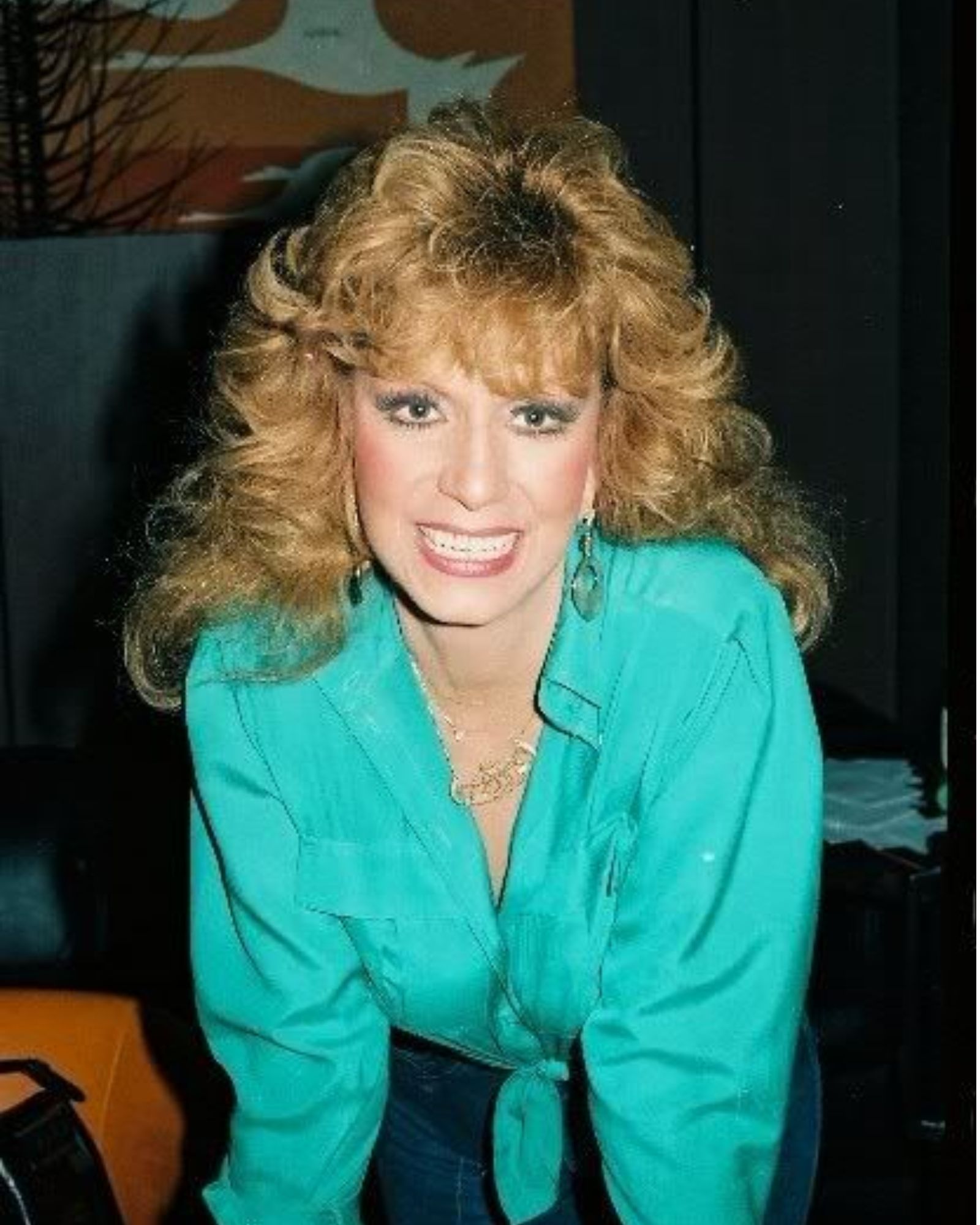
On the evening of August 30, 1991, Dottie West was on her way to the Grand Ole Opry when her car stalled. She was running late. A neighbor, 81-year-old George Thackston, stopped and agreed to drive her the rest of the way to Opryland.
She never made it to the stage. Five days later, the woman whose 1964 hit “Here Comes My Baby” had made her the first female country artist to win a Grammy was gone at 58.
What She Had Left by 1991
By that summer, the Opry was one of the few things Dottie West still had. The duets with Kenny Rogers, “Every Time Two Fools Collide” and “What Are We Doin’ in Love,” were more than a decade behind her. The money had gone with them.
In August 1990 she filed for bankruptcy, listing more than $1 million in debts, much of it owed to the IRS. A month later the bank took her colonial mansion, and she moved into a condominium. Her Corvette was seized. Kenny Rogers lent her a car so she could keep getting to her shows.
In the spring of 1991, after an anonymous tip, the bankruptcy trustee opened two storage lockers that had not been listed in her filing. Inside were porcelain figurines and a guitar with her name on it. Press photographers watched him open the boxes.
That June, during Fan Fair week in Nashville, her belongings went up for auction to cover creditor claims that reached about $2.4 million. Her baby grand piano was sold. So was her 1976 Cadillac. Dottie came to the auction, signed autographs for the fans who were there, and bid on some of her own things. A few fans bought items and gave them back to her.
She kept working. She had begun performing with her daughter, Shelly West, who had scored her own No. 1 records in the early 1980s. And she kept showing up at the Opry, where she had been a member since 1964.
The Opryland Exit
When her car stalled that Friday, Dottie flagged down Thackston as he drove past. He agreed to take her.
On Briley Parkway, he took the exit ramp toward Opryland at an estimated 55 miles per hour. The posted speed on the ramp was 25. The car left the road, went airborne and struck an embankment.
At the scene, Dottie did not appear to be badly hurt. Thackston was taken to the hospital in critical condition.
Five Days at Vanderbilt
At Vanderbilt University Medical Center, doctors found what could not be seen from the roadside: a ruptured spleen and a lacerated liver. She was bleeding internally. Early on, they also feared she might be paralyzed.
Surgeons operated for about 90 minutes, then went back in a second time. She lost a great deal of blood. Dr. John Morris Jr. explained that patients do survive this kind of injury, but most of them are young. He put it simply:
Most of them are in their 20s, not in their 60s.
Her son Kerry later said she was lucid for a short time and was able to squeeze his hand. Kenny Rogers came to the hospital and sat with her, talking to her without knowing whether she could hear him.
On the morning of Wednesday, September 4, 1991, as she was being prepared for a third operation to stop the bleeding from her liver, her heart stopped. The medical team could not bring her back.
The Ride Patsy Turned Down
There was an old, painful echo in the way Dottie West died.
In March 1963, she was on the bill in Kansas City, Kansas, for the benefit show that turned out to be Patsy Cline’s last. Patsy had been a mentor to her, the singer who told her that if she could not sing a song with feeling, she should not sing it at all.
When bad weather grounded Patsy’s flight, Dottie offered her a ride back to Nashville in her car. By Dottie’s own later account, Patsy accepted and was carrying her suitcase to the car when she changed her mind and decided flying would be faster. Patsy left on her manager’s small plane. It went down near Camden, Tennessee, on March 5, 1963.
Dottie later remembered sitting with black coffee, asking out loud why Patsy had not come with them. Twenty-eight years later, it was the road, not the air, that took her.
After
Her funeral was held on September 7, 1991, at Christ Church in Nashville. Her granddaughters played an original song for her, and Steve Wariner sang “Amazing Grace.” In his eulogy, Kenny Rogers spoke about what made her different from other singers.
While some performers sang words, she sang emotions.
She was buried at Mount View Cemetery in McMinnville, the Tennessee town where she had grown up the oldest of ten children on a poor farm.
George Thackston survived. His blood-alcohol level was measured at 0.08 percent, which police said was below the legal limit at the time. He later pleaded no contest to reckless endangerment and received probation.
In 2016, on the 25th anniversary of the crash, her friend and fellow Opry member Jeannie Seely placed a memorial cross at the exit where it happened. Two years later, in 2018, Dottie West was inducted into the Country Music Hall of Fame.