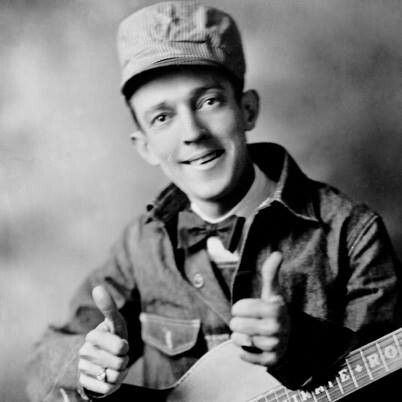
In the spring of 1933, Jimmie Rodgers was the biggest name in what people then called hillbilly music. He was also dying. Tuberculosis had been in his lungs since 1924, and by that May he could barely stand. He went to New York anyway, to record one more time for RCA Victor. Over eight days he cut twelve songs, resting on a cot between takes. The last one was called “Years Ago.” About 36 hours after he finished it, he was gone.
Why He Went Back to New York
Rodgers had been a railroad brakeman before he became a star, and he never lost the habit of hard work. But by 1933 the work was also about money. The Depression had cut into record sales, his heavy spending had cost him his home in Kerrville, Texas, and his income had fallen as his health failed. In 1932 he had signed a new deal with Victor that paid $250 for every side he recorded.
He wanted to leave something for his wife, Carrie, and their daughter, Anita. The May sessions would bring in about $3,000 in cash. Rodgers talked his producer, Ralph Peer, into setting them up, even though Peer was not in the studio when they took place.
He arrived in New York by ship on May 14, 1933, with a private nurse, Cora Bedell. He checked into the Taft Hotel and spent a few days resting. A driver named Castro was assigned to take him wherever he needed to go.
A Cot Between Takes
The sessions began on May 17 at Victor’s studio on East 24th Street, with engineer Fred Maisch running the room. On that first day Rodgers recorded four songs, including “Blue Yodel No. 12” and “The Cowhand’s Last Ride.”
After that, his strength went quickly. Peer’s assistant, Bob Gilmore, tried to get the remaining work postponed. Rodgers kept going. By May 20 he was singing from an easy chair, propped up with pillows so he could reach the microphone. A cot was set up in a rehearsal hall so he could lie down between takes and gather enough breath for the next one. Most of those last songs feature only Rodgers and his own guitar.
“Years Ago”
On May 24, Victor brought in two session musicians to help him, steel guitarist John Cali and guitarist Tony Colicchio. Together they recorded “Old Love Letters,” “Mississippi Delta Blues” and “Somewhere Down Below the Dixon Line.”
Then the musicians were sent home. Rodgers recorded the final song of the session alone with his guitar. It was “Years Ago,” and it would be the last thing he ever put on record. Counting all four days, he had cut twelve songs since May 17.
The Night at the Taft Hotel
The next day, May 25, Rodgers went out to Coney Island with his driver. Coming back, he walked the last few blocks to the Taft Hotel and needed help getting up to his room. Once inside, he had a severe coughing spell.
Around midnight the coughing came back, and his lungs began to hemorrhage. Hotel staff could not find the house doctor. Castro was out on an errand and did not get back in time to take him to a hospital. Rodgers slipped into a coma and died on May 26, 1933. He was 35 years old.
The Train Home to Meridian
The railroad brought him home. His pearl-gray casket was placed on a raised platform covered with lilies inside a converted baggage car, and the Southern Railway carried him south to Meridian, Mississippi. The trip was run by men he had once worked alongside. Accounts of the journey say the engineer blew the whistle the whole way, and hundreds of people were waiting when the train came into Meridian.
On May 29, his body lay in state at the Scottish Rite Cathedral in Meridian. He was buried at Oak Grove Cemetery. Two years later, Carrie published a book about their life together, My Husband, Jimmie Rodgers.
What He Left Behind
The songs from that final week were released after his death. In 1961, when the Country Music Hall of Fame named its very first members, Jimmie Rodgers was one of the three, alongside Hank Williams and Fred Rose. The Hall later put his importance in one line:
Created and defined the role of the singing star in country music.
Ernest Tubb, Hank Snow and many others who came after him named Rodgers as the singer who showed them the way. Carrie later gave Tubb one of Jimmie’s guitars.