Scroll to the end of the article to hear the song.
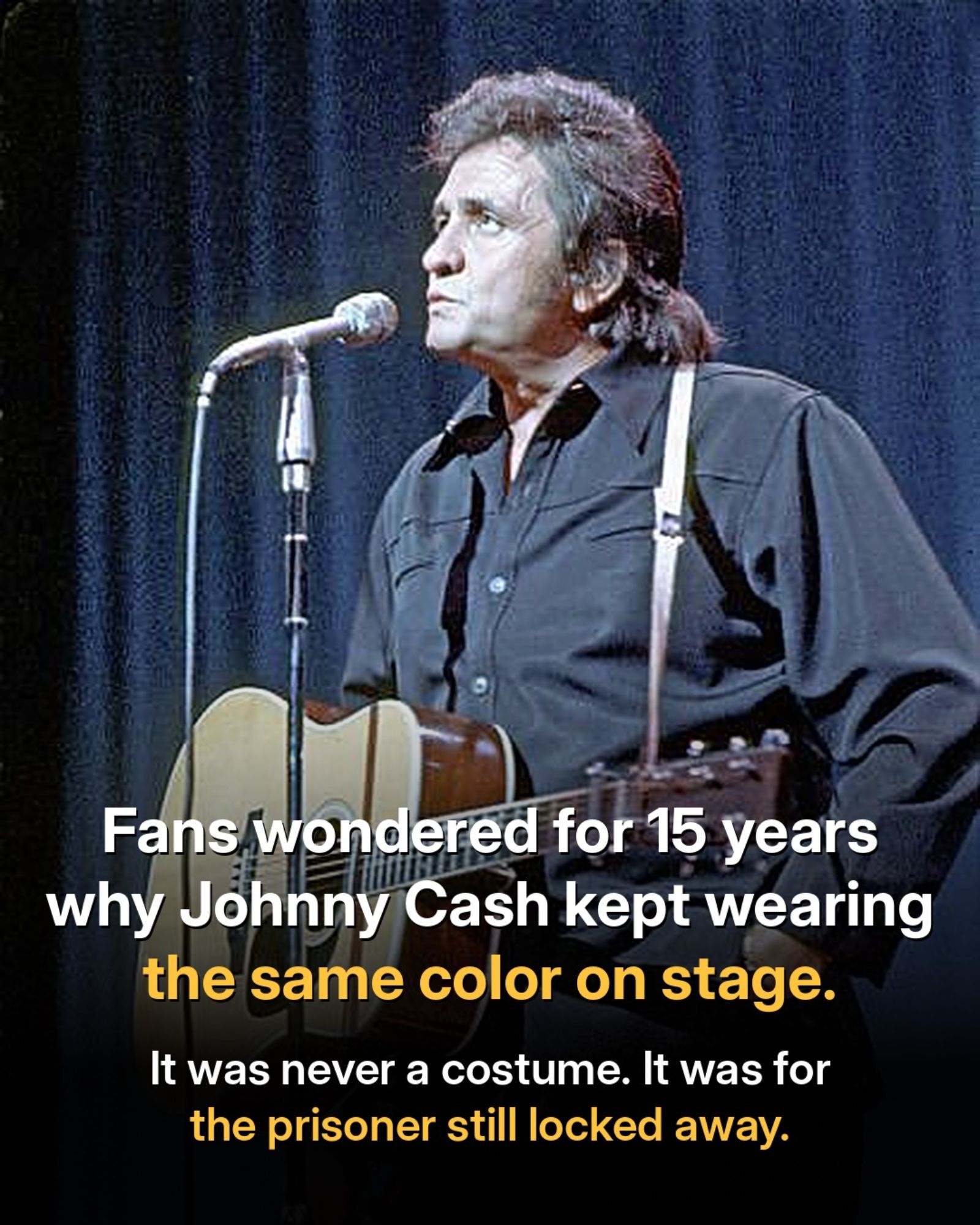
Picture country music at the end of the 1960s. Rhinestones, bright suits, embroidered cowboy shirts that caught every stage light. Then Johnny Cash walks out in one dark color, head to toe, the same way he had done for years.
People saw it as a costume, the outlaw look that fit the voice and the prison concerts. Almost nobody knew there was a reason behind it. For a long time, Johnny Cash did not explain it either.
The Question That Would Not Go Away
Johnny Cash began recording for Sun Records in Memphis in 1955. By his own account, he had worn black almost from the moment he started in music. As his fame grew, the question followed him to every interview, every backstage door. Why always black?
By 1971 he was one of the biggest stars in America, hosting The Johnny Cash Show on ABC every week from the Ryman Auditorium in Nashville. He had a new baby son at home. He had a full touring schedule. And he still had not given the world a real answer.
A Walk Across Nashville
In February 1971, Johnny Cash and his television crew went across town to Vanderbilt University. He came to listen. They sat around him on the campus and talked about the things young Americans were talking about that winter: the war in Vietnam, poverty, race, drugs.
In the days that followed, those conversations turned into lines on paper.
The Night He Finally Answered
On February 16, 1971, Johnny Cash recorded a new song at Columbia Studios in Nashville. The next night, the special episode called “Johnny Cash on Campus” aired, taped in front of an audience made up of students. Before he sang, he told them the song was very personal and that it came partly from those talks at Vanderbilt.
Then he gave the answer fans had wondered about for about fifteen years.
The color was never about looking tough. It was a reminder.
In the song, Johnny Cash explains that he wears the dark color for the poor and the beaten down. For the prisoner who paid for his crime long ago and is still behind bars. For the sick and the lonely old. For the young men dying every week in a war far away. He admits he would love to wear brighter colors, and he promises to do it the day the world gives him a reason. Until then, the dark stays.
The Song Was “Man in Black”
The song was “Man in Black,” written, sung and produced by Johnny Cash. It became the title track of his album Man in Black, released in May 1971, and climbed to No. 3 on Billboard’s country chart.
It was a bold move. Johnny Cash was an Air Force veteran with a huge country audience, and he was singing about the cost of the war on national television.
A Nickname That Became a Promise
Years later, in his 1997 autobiography, Johnny Cash added an honest twist. He admitted he also simply liked the color, and that wearing it still meant something to him. Both things could be true. A habit from his early days had turned into a statement he could stand behind.
Johnny Cash died in 2003. The nickname did not. Today, “the Man in Black” is still how millions of people remember him, often without knowing it began as a promise to people who rarely get a song written about them.
Why It Still Matters
Most stage outfits are chosen to make a singer look good. Johnny Cash chose one that made him think about everyone who was hurting. Every time he walked on stage, the poor, the prisoners, the forgotten old folks and the young soldiers came with him, folded into the fabric.
The next time you hear “Man in Black,” listen past the deep voice and the slow, steady beat. It is not a song about clothes. It is a man explaining, as plainly as he could, who he was carrying with him.