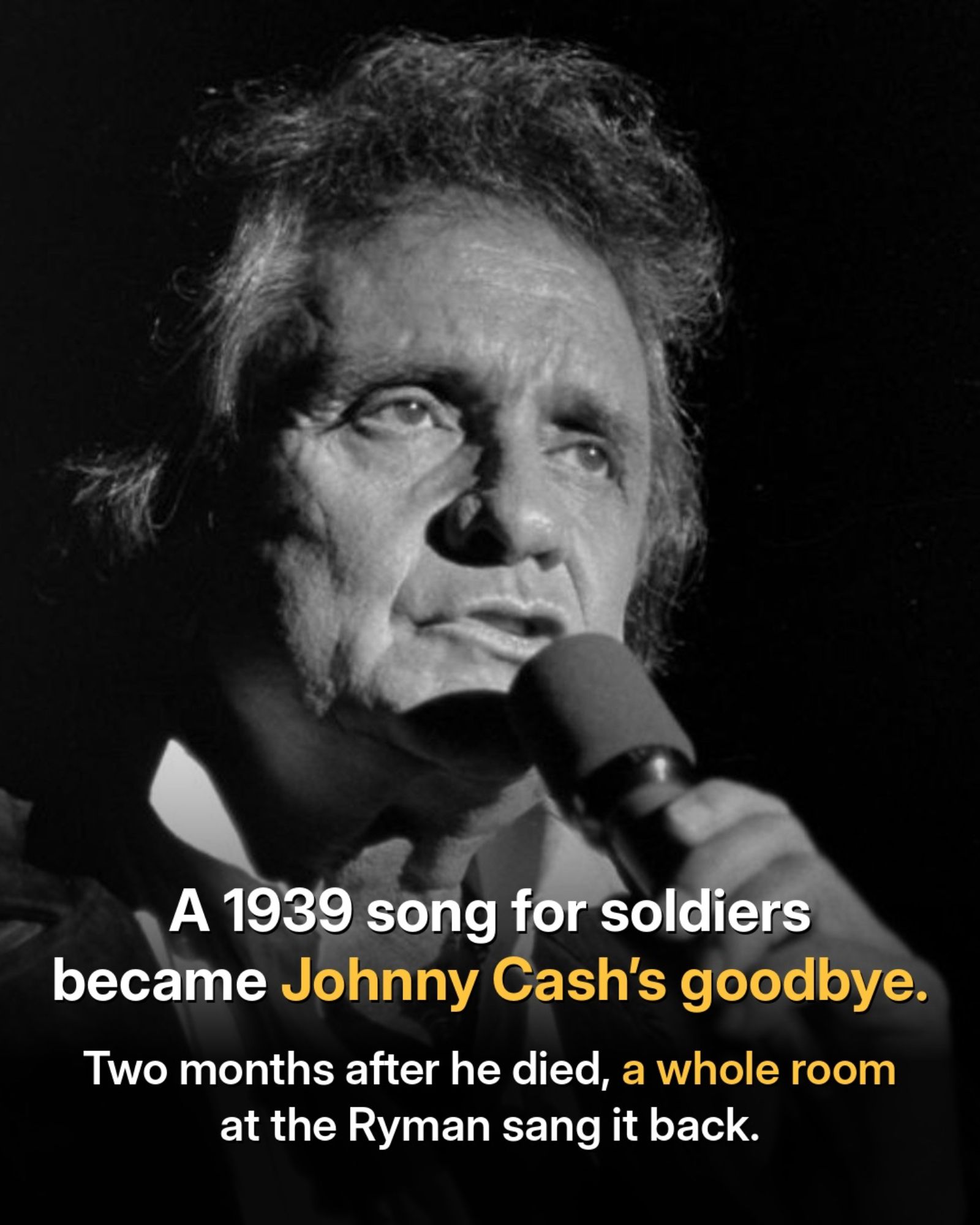
Some songs change because someone rewrites them. This one changed without a single word being touched. It took sixty-three years, an ocean, and one old man in black to turn a wartime promise into the most personal farewell in country music.
A Song Built for Railway Platforms
In 1939, Britain was sending its young men to war. Two English songwriters, Ross Parker and Hughie Charles, wanted to write something for the families being left behind. Most parting songs of the time were heavy and sad. They wanted one that held on to hope.
The result was “We’ll Meet Again,” and the voice that carried it was a young singer named Vera Lynn. The song promised a reunion. It couldn’t say where or when, only that it would come on a brighter day. It asked the one staying home to keep smiling until the storm passed.
It became one of the defining songs of the Second World War. Soldiers carried it overseas. Families held on to it at home. Vera Lynn became known as the Forces’ Sweetheart, and the song became something close to a national vow.
Over the decades it traveled further than anyone expected. In 1964, Stanley Kubrick used Vera Lynn’s recording in the final scene of Dr. Strangelove, a bitterly ironic choice. Pink Floyd later name-checked it on The Wall. Through all of it, though, the song kept one fixed meaning: it belonged to soldiers, and to the people waiting for them.
The Man Who Didn’t Write a Word of It
In 2002, Johnny Cash was deep into his late-career series with producer Rick Rubin, the American Recordings albums that had introduced him to a whole new generation. He was seventy years old, and his health was failing. Some days in the studio, his voice simply wasn’t there.
Johnny Cash didn’t write “We’ll Meet Again.” He had no connection to the war it came from. But when it came time to finish American IV: The Man Comes Around, he knew exactly which song he wanted to close it.
Rick Rubin later explained why. Johnny Cash believed this would be his last album. In his mind, the series was over, and this was the last thing he wanted people to hear from him.
“Everyone Sings”
Then came the request that turned a recording session into something else. When they cut the song, Johnny Cash insisted that everyone in the studio join in on the final chorus. The engineers, the musicians, every person in the room. Hearing all those voices together mattered to him.
Listen closely to the end of the track and you can hear it: a frail, weathered voice surrounded by a room full of people singing along. In November 2002, it sounded warm. Almost cheerful. A gentle way to close the curtain.
September 12, 2003
Ten months after the album came out, Johnny Cash died at the age of 71.
And the song quietly turned inside out.
Its last verse has always been a strange, tender favor. The one leaving asks the one left behind to say hello to the people he knows, to tell them he won’t be gone long, and to let them know that as he walked away, he was singing this very song.
For sixty years, that was a soldier talking. Now it wasn’t. The “where” no longer meant a foreign shore. The “when” no longer meant after the war. The man walking away, still singing, was Johnny Cash himself.
The words were the same. The person saying them had changed.
The Night Nashville Sang It Back
On November 10, 2003, two months after his death, family, friends, and fellow musicians filled the Ryman Auditorium in Nashville for a public memorial tribute. It was the room where Johnny Cash had stood so many times, the old home of the Grand Ole Opry. Rosanne Cash opened the night with her father’s “I Still Miss Someone.” Artist after artist took the stage to honor him.
And when the evening came to a close, it ended exactly the way Johnny Cash had ended his album. The entire Cash family stood on stage, and the whole room sang “We’ll Meet Again” with them.
In the studio, he had asked everyone to sing the last chorus with him. At the Ryman, everyone sang it back to him.
Why It Still Hits So Hard
Plenty of artists leave behind final songs that seem to predict the end. What makes this one different is that Johnny Cash never pretended it was his. He borrowed a promise written for other people’s sons and husbands, and simply sang it honestly, knowing what time he had left.
He didn’t make it tragic. He made it hopeful, and he made sure he wasn’t singing it alone.
The song never changed. It just finally learned who was leaving.
Has a song ever changed for you without a single word being different? Share it in the comments.