Scroll to the end of the article to hear the song.
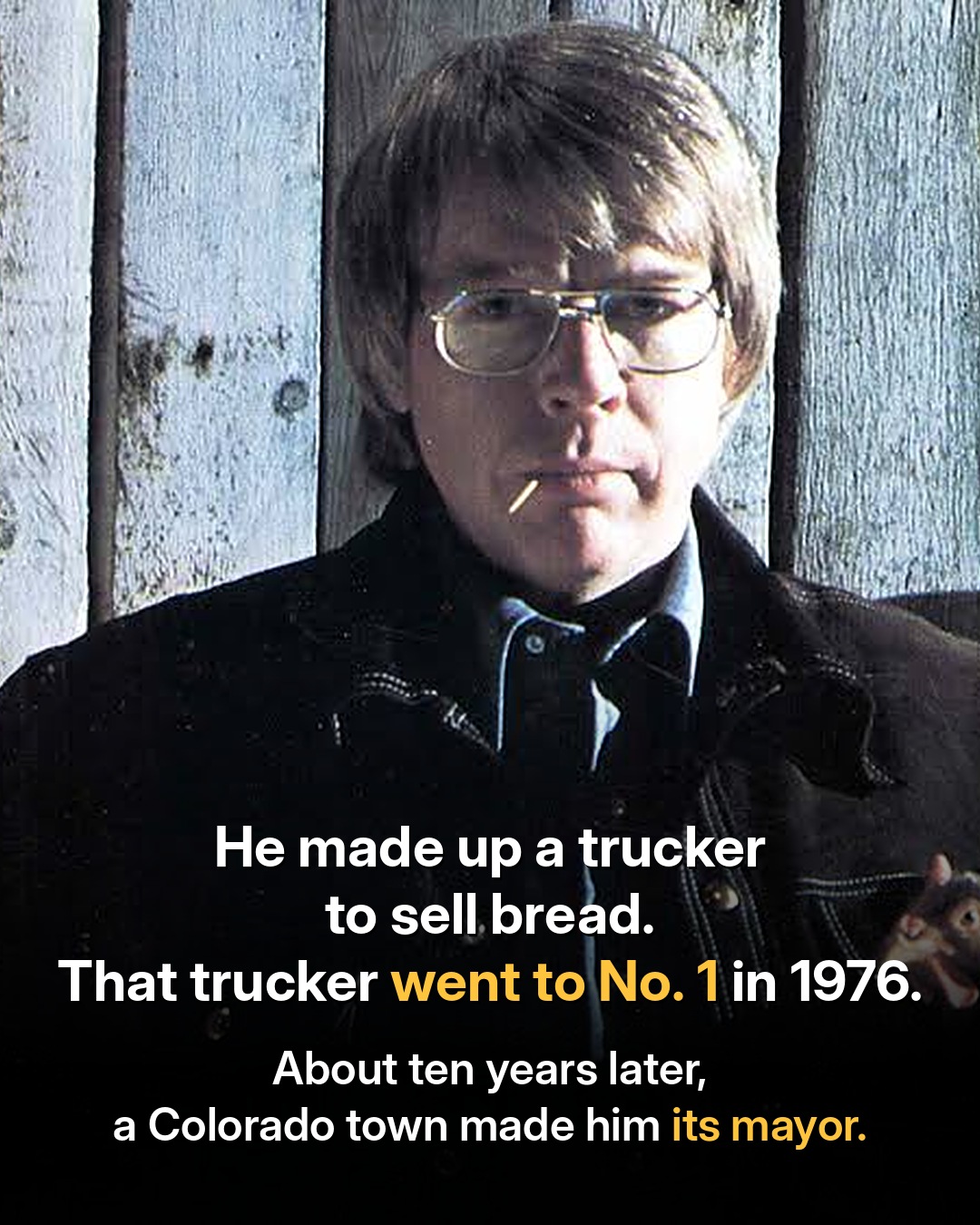
In the week of January 10, 1976, the No. 1 song in America on both Billboard’s country chart and the all-genre Hot 100 was “Convoy” by C.W. McCall. Millions of people knew that voice. Almost none of them knew that C.W. McCall had never existed. He was a character an Omaha ad man named Bill Fries had made up a few years earlier to sell loaves of bread.
A trucker made up for a bread commercial
In the early 1970s, Bill Fries was the creative director at Bozell & Jacobs, an advertising agency in Omaha, Nebraska. One of his jobs was a campaign for Old Home Bread, baked by the Metz Baking Company in Sioux City, Iowa. The company’s big semi-trucks with the Old Home logo were a familiar sight on Midwestern highways, so Fries built the ads around a truck driver.
The trucker’s name was C.W. McCall. Accounts of where it came from differ a little. One version says Fries took “McCall” from a copy of McCall’s magazine on his desk and chose “C.W.” for country and western. The local paper in Ouray later reported that he simply liked the way the initials looked embroidered on a shirt.
In every spot, C.W. hauled a load of bread to a little café that kept getting a longer name until it became the Old Home Filler-Up an’ Keep On a-Truckin’ Café. Waiting there was Mavis, a gum-chewing waitress. In the first of the twelve commercials, she asks him who he is, and he answers that he is C.W. McCall and he hauls for Old Home.
On screen, C.W. was played by an actor named Jim Finlayson. The voice telling the story belonged to Bill Fries, who drew on his own boyhood in rural Iowa. The ads won a Clio Award, one of advertising’s top honors, in 1974. Real café owners in Pisgah, Iowa, renamed their restaurant after the one in the commercials, and viewers began calling radio and TV stations to ask when the bread ads would be on again.
The ad man steps up to the microphone
That kind of demand led to records. Fries wrote the words, and Chip Davis, a jingle composer at the same agency, wrote the music. Davis would later become famous as the creative force behind Mannheim Steamroller. An early C.W. McCall single sold about 30,000 copies regionally on a small Omaha label, and MGM Records picked the act up for national distribution.
“Convoy” came out in November 1975 on the album Black Bear Road. The story was fiction, but Fries owned CB radios himself and picked up the handle “Rubber Duck” from the chatter he heard on the air. The song landed when long-haul drivers were angry about the new 55 mph national speed limit and rising fuel costs, and many listeners heard it as a working man’s protest song.
Bill Fries was 47 years old. He barely sang on the record. He talked his way through it in a low, steady baritone, full of CB lingo, while backing singers handled the chorus. “Convoy” reached No. 1 on the country chart in December 1975 and held it for six straight weeks. On January 10, 1976, it also took the top spot on the Hot 100. In 1978, Sam Peckinpah turned it into a movie, with Kris Kristofferson playing the Rubber Duck.
A snowy morning in Ouray
Long before any of that, in 1961, Bill Fries, his wife Rena, their children and the family dog were driving toward the Grand Canyon and Disneyland. They stopped for the night in Ouray, Colorado, a former mining town tucked into the San Juan Mountains, and camped at a spot called the Amphitheater. In the morning they woke up to fresh snow.
Fries later recalled telling Rena that someday they would live there. By 1977 he owned a vacation home in Ouray. By the end of the decade he had stepped away from recording, and he eventually left advertising and settled in Ouray for good.
Mayor Bill
Roughly ten years after “Convoy” topped the charts, the voters of Ouray elected Bill Fries as their mayor. He served from 1986 to 1992, about six years. Money was tight, the pool house caught fire, and the water system needed work. The project he became best known for was raising money to restore the historic City Hall, which had been badly damaged by a fire back in 1950.
He raised some of that money the way an old showman would. Bill Fries staged variety shows and parodies for the city, and in one of them he talked the police chief into playing the Tin Man. A former council colleague, Dee Williams, remembered that side of him:
“Not only that, he was funny. That was such a plus in a mayor.”
The rest of the country never forgot C.W. McCall. Fans would walk into the local variety store and ask, “Where does C.W. live?” But in Ouray, people knew the man, not the character. His daughter-in-law, Sue Fries, put it simply after his death: “He didn’t have to be C.W. McCall.”
Bill Fries died at his home in Ouray on April 1, 2022, at 93, after a battle with cancer. He had stayed out of public life after leaving office, but he kept answering fan mail. Shortly before he died, he signed a baseball for a child with leukemia and mailed it back.