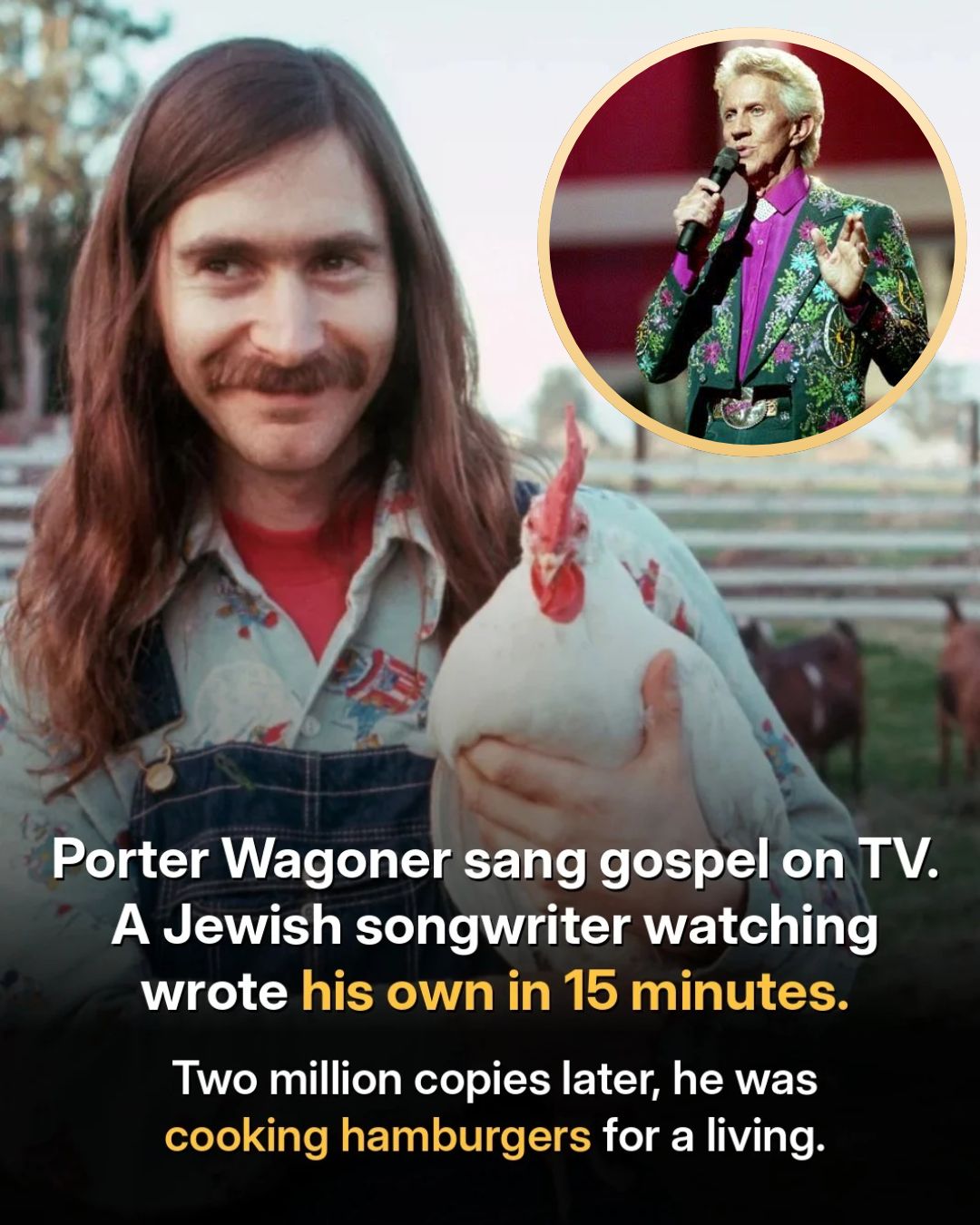
The song was “Spirit in the Sky.” Norman Greenbaum wrote the words in about 15 minutes in 1969, after watching a country star sing gospel on television. It sold two million copies, climbed to No. 3 on the Billboard Hot 100 in April 1970, and went to No. 1 in the U.K. Yet for most of the next two decades, the man who wrote it got almost nothing from it.
A greeting card, a country TV show, and a few minutes at home
Norman Greenbaum grew up Jewish in Malden, Massachusetts, came up through the Boston folk scene, and moved to Los Angeles in the mid-1960s, where he played in a jug band called Dr. West’s Medicine Show and Junk Band. Nobody would have picked him to write a gospel song.
Two pieces came together by accident. First, he came across a greeting card showing Native Americans praying to a spirit in the sky. He told Rolling Stone he thought it was Hopi artwork, found it interesting, and put it in the back of his head.
Then, one evening at home, he had The Porter Wagoner Show on. Wagoner’s program regularly made room for a gospel number, and Greenbaum, who had never written a religious song and knew nothing about gospel music, watched the country singer deliver one and decided he could do that too. He sat down and wrote his own. As he told The New York Times in 2006:
“It came easy. I wrote the words in 15 minutes.”
He has also said the Westerns he grew up on fed into it, with heroes who died with their boots on. The talk of Jesus came from imitating the gospel songs he heard on country TV, not from any faith of his own.
The verse that still brings letters
Writing that fast, from the outside, had one consequence he did not see coming. In the third verse, the singer declares that he has never been a sinner. Norman Greenbaum later admitted he did not know that Christian teaching holds that everyone is born a sinner. Decades later, he said, he still gets letters from devout Christians who find that line appalling.
Fifteen minutes for the words, weeks for the sound
The lyrics were quick. The music was not. Norman Greenbaum had been playing an old blues riff since his college days in Boston without knowing what to do with it. In the first few weeks after writing the song, he worked it up as a jug band number, then as folk-rock, then as Delta blues.
What finally made it work was a guitar. After he moved to Los Angeles, an acquaintance fitted a fuzzbox inside his Fender Telecaster, and that buzzing tone became the sound people recognize from the first bar. Producer Erik Jacobsen, who had made the Lovin’ Spoonful records, brought in the Stovall Singers, a gospel group whose church-style handclaps became part of the groove. When the finished mix played back, Greenbaum later said, it “sent shivers up my spine.”
Warner Bros., parent of his label Reprise, told him a four-minute single about Jesus would never get played on pop radio. It eventually relented, and the single took off.
Two million copies, then a kitchen job
Norman Greenbaum never found a follow-up. His next albums, “Back Home Again” and “Petaluma,” did not chart, and after 1972 he left the business for the farm in Sonoma County where he had been raising goats with his then-wife. In time the money ran out. He later told The New York Times he was broke and saw no other option but to go to work in kitchens, starting by cooking hamburgers and working his way up to sous chef.
When a Petaluma reporter first interviewed him in 1985, he was cooking at a restaurant owned by a friend. He was still working as a cook in 1986 when the British band Doctor and the Medics took a cover of his song to No. 1 in the U.K. Under his original writer’s contract, his producer owned the publishing, with Greenbaum entitled to half. Looking back, he told the same Petaluma paper that until the song’s revival, he had seen essentially nothing from it.
How the movies brought it back
The turn came in 1987, when he allowed the song to be used in the film “Maid to Order.” After that, the requests kept coming. “Spirit in the Sky” has turned up in more than 60 movies, including “Apollo 13,” “Remember the Titans,” “Wayne’s World 2” and “Guardians of the Galaxy,” along with dozens of commercials.
Norman Greenbaum has been careful not to overstate it. He told The New York Times in 2006 that the song never made him rich, but that thanks to it he no longer has to work, which he called a comfortable living. That is the real story behind the popular claim that he has lived on its royalties for 50 years: the money only started flowing after nearly two decades of next to nothing.
The song people want at the end
The lyrics he dashed off after a country gospel segment have taken on a weight he never planned. “The words have become more important as people get older and die,” he said in 2020. More and more people tell him they want it played at their funerals. He recalled that Emmylou Harris once told him the same thing backstage at the Luther Burbank Center in Santa Rosa.
In 2015, Norman Greenbaum was critically injured as a passenger in a car crash near Santa Rosa, and he later said he spent three weeks in a coma. Speaking to The Guardian in 2025, he said he felt he had been granted another life. These days, he said, he prays every day and gives thanks to the spirit in the sky.