Scroll to the end of the article to hear the song.
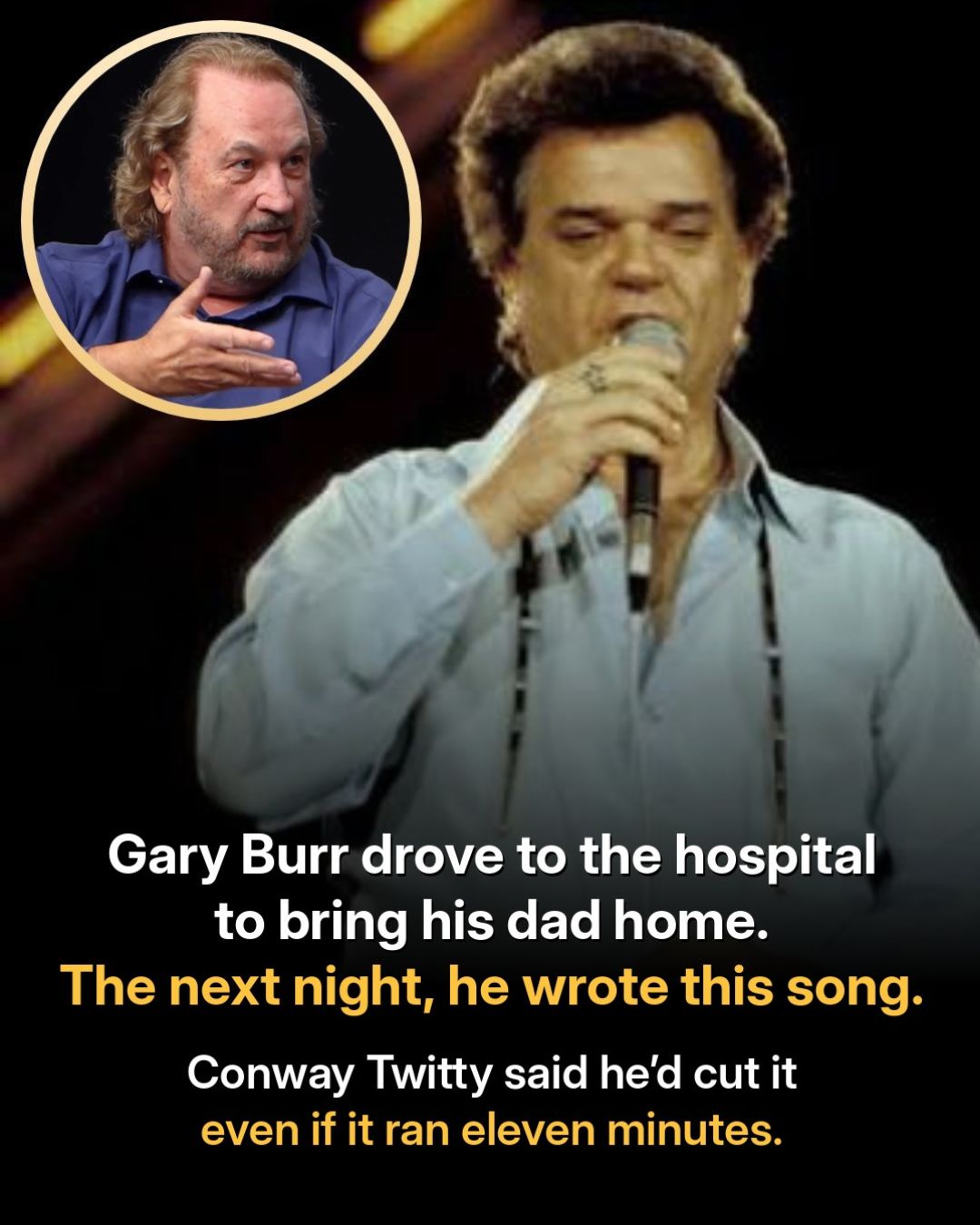
The song is “That’s My Job.” Conway Twitty took it to No. 6 on Billboard’s country chart, and for many fans it became one of the defining father-and-son songs in country music. But it was not written for Conway, and it was never meant to be a hit. Songwriter Gary Burr wrote it for one man: his own father, right after he lost him.
The ride that never happened
In 1986, Gary Burr was still living in his home state of Connecticut. His father had a bad heart and had already been through five heart attacks. When Burr went to the hospital, he expected to bring his dad home.
Instead, as Burr later described it in an oral history interview for Middle Tennessee State University, he was asked to go wait in another room. That is where he was told his father had died suddenly. He had come to drive his father home, and his first words were:
“I’m his ride, where’d he go?”
A father who wanted his son to have a trade
Burr’s father was an electrician who owned a small electrical contracting company in Meriden, Connecticut. Gary worked with him in the summers, but his heart was set on music, and the two of them did not always see eye to eye about it.
Burr has said he grew up with his dad asking him, “Why don’t you get a job?” Even after he became an established songwriter, he said that question is part of why he kept a strict daily writing routine. He needed to feel like he had a job.
By the time his father died, Gary Burr had already scored a pop hit as a writer and was singing lead in the country-rock band Pure Prairie League. He wrote the song while he was still in that band.
One night, one take
The next night, by Burr’s account, he sat down with a tape recorder running and played “That’s My Job” pretty much from start to finish. He says he never changed a word, and that he has never had a song arrive that way before or since.
The song moves through a whole lifetime in a few verses: a little boy waking from a nightmare and being comforted by his father, a young man pushing toward his own dreams, and finally a grown son facing his father’s death. Through every stage, the father’s answer stays the same.
In a separate telling on his band’s website, Burr wrote that the song came a few weeks after his father died. The details differ, but in both versions the song came quickly and came straight from the loss.
Too personal, too long, too sad
Burr did not think anyone would ever cut it. In his mind it was too personal and too long, and far too heavy for country radio. He sent the tape to Harold Kleiner. Kleiner played it for Chuck Howard, and Chuck Howard played it for Conway Twitty.
As Burr tells it, Conway said he didn’t care if the song ran eleven minutes long. He was cutting it.
Conway Twitty recorded “That’s My Job” for his 1987 album Borderline, produced by Jimmy Bowen, Conway Twitty and Dee Henry. The finished track ran 4 minutes and 54 seconds. MCA released it in November 1987 as the album’s third single.
A long song on short-song radio
The length Burr worried about did cost the song some airplay. He recalled that a couple of stations refused to put it into heavy rotation because it was nearly five minutes long. It still reached No. 6 on Billboard’s Hot Country Singles & Tracks chart and No. 4 on Canada’s RPM country chart. Burr remembered it peaking a little higher, but the charts show No. 6.
Some of its impact showed up in Burr’s mailbox. He has said he still gets letters about it, including from people who heard it on Father’s Day and called a father they had been estranged from for ten years.
The words he didn’t remember hearing
Long after the song’s run on the radio, Gary Burr went back to Meriden to play the town’s Daffodil Festival. After the set, a man came up who had once worked for Burr Electric. As a young hire, he had been told to take the boss’s son out on jobs and teach him the trade. He remembered Gary sitting in the front seat playing air guitar to the radio.
He also remembered Burr’s father, cutting conduit with a hacksaw and getting worked up about his son’s plans. Gary’s father wanted him to have a trade to fall back on in case music didn’t work out. The man said Burr’s father told him he just wanted his son to be okay and to have a future. Then he added:
“I worry about him. That’s my job.”
Burr wrote that he had no idea why he chose that phrase for the song all those years earlier. He didn’t remember ever hearing his father say it. He called that conversation in Meriden one more moment with his dad.