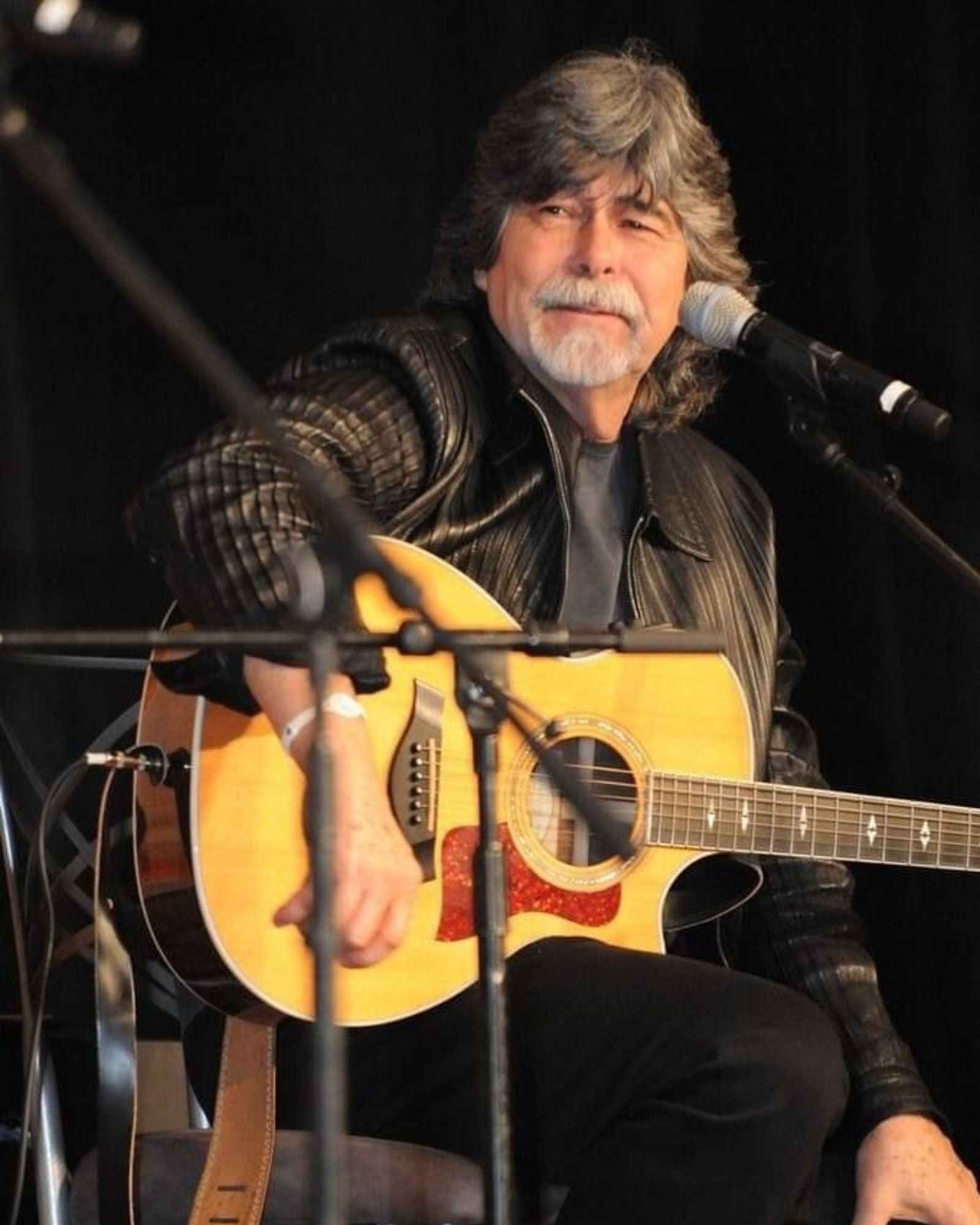
The song was “Tennessee River,” and it began with a little boy in the passenger seat. Long before Alabama sold tens of millions of records, Randy Owen was the oldest child of Gladstone and Martha Owen, raised in a frame farmhouse near Adamsburg, on Lookout Mountain in DeKalb County. In 1980 the song he wrote about those childhood drives became the band’s first No. 1. In that same year, his father was gone.
First Mondays in Scottsboro
When Randy was three or four years old, his father began taking him to First Monday, the big open trade sale held in Scottsboro, about thirty miles from home. Owen later remembered the variety: dogs, cows, cats, goats, sheep, hunting knives, whatever a person could haul to town and swap. An old caption in the Alabama state archives says that anything that could be driven, hauled, led or toted was likely to change hands several times before Monday night.
But it was not the sale that stayed with him. It was the road. Coming down off Sand Mountain toward Scottsboro, the Tennessee River opened up below them. Owen said that view, taken in on those drives to First Monday, is where the song’s name came from.
The Man Who Taught Him the Guitar
Gladstone Owen was a farmer, and the family barely got by. The Owens worked land they sharecropped and rented, and Randy picked cotton in those fields as a boy. His parents worked all the time because there were always chores. Owen later wrote that his father never took a vacation and that he never once heard him use the word.
Music was the one thing that was never in short supply. Gladstone finally bought a Stella guitar and showed his son three chords, E, A and B. Randy said his father could thumb-pick like Merle Travis and sing high tenor harmony, the way Don Rich sang with Buck Owens. Martha played piano, and the children sang gospel together as the Singing Owen Family.
1980: The Hit and the Loss
After years of club dates, including long summers at The Bowery in Myrtle Beach, Alabama signed with RCA Records in early 1980. “Tennessee River,” recorded that April and released on May 16, went to No. 1 on the Billboard country chart. It was the first of 21 consecutive No. 1 singles.
That same year, two weeks past his 59th birthday, Gladstone Owen died. Randy was 30. Public accounts list the cause as unknown. Owen has said the part that stays with him is simple: his father never saw what came next. He never got to go to the Grand Ole Opry with his son.
The fact that my father never saw my success will always haunt me.
No Time to Mourn
There was no pause in the schedule. In a 2008 television interview about his memoir, Born Country, Owen explained that the loss came at the very moment Alabama exploded. Everyone around him, he said, wanted him back on the road earning money. He was suddenly one of the most successful people in music, and he was overwhelmed.
I didn’t have a chance to mourn his death.
The grief did not go away because it was postponed. An Atlanta newspaper review of Born Country found little drama in the book beyond one thing: delayed anger over his father’s death. Asked in another interview whether that loss had thrown him, Owen answered that it had, and that it still did.
When the memoir came out, Owen was 59, the age his father had been when he died. He told a reporter he was trying to eat right and take care of the only body God gave him.
The First Christmas
In a 2017 essay for Country Living, Owen wrote that the first Christmas without his father did not feel like Christmas at all. The date came, but there was nothing to be happy about. Christmas had been the farm’s one real break from work, the day Gladstone played football with the kids, sang, told funny stories and laughed. Owen called him the spirit behind the happiness in the family.
What brought the holiday back, he wrote, was his own little girl, old enough by then to enjoy Santa and presents. When Alabama released American Christmas in 2017, Owen put the memory into a song called “First Christmas Without Daddy.”
The Ranch Named for the Song
Owen never moved away. His working cattle ranch on Lookout Mountain, roughly 3,000 acres raising registered Hereford and Angus cattle, was assembled from land acquired from relatives and family friends, much of it the same ground his family once sharecropped. The ranch office sits just behind his home on the boyhood family farm. Its name is Tennessee River Music, taken from that first No. 1.
His daughter Randa and her husband, John Starnes, now help run the operation, and in October 2025 Randy and Kelly Owen received the American Hereford Association’s Hall of Merit Award. Owen has said it is country music that let him carry on the cattle tradition of his two grandfathers.
Early in Born Country, Owen begins not with a stage but with a truck: a 1968 Ford pickup Owen bought from his dad, parked out by a big gray barn under the sign that reads Tennessee River Music, Inc.