Scroll to the end of the article to hear the song.
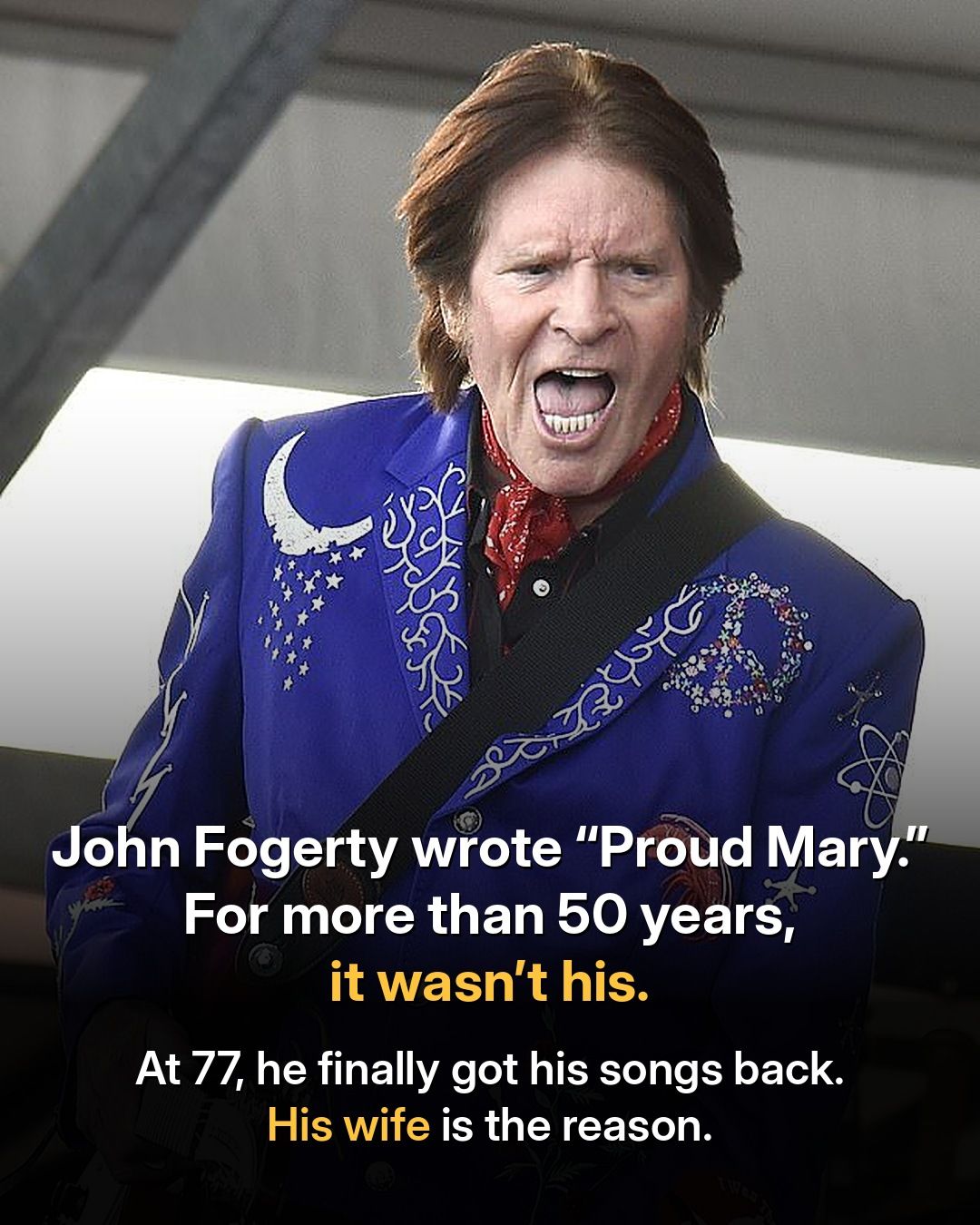
For more than 50 years, the man who wrote “Proud Mary,” “Bad Moon Rising,” “Fortunate Son” and “Have You Ever Seen the Rain” could hear those songs on any oldies station in America and know they were not his. In January 2023, at 77, John Fogerty finally bought a majority stake in the worldwide publishing rights to his Creedence Clearwater Revival songs. He had tried for decades and nearly quit. The deal got done because his wife, Julie, found a way in that he had stopped looking for.
The Offer Julie Fogerty Made
By the 2020s, the songs belonged to Concord, the company that bought Fantasy Records in 2004. Julie Fogerty, who is also John’s manager, knew something important about the calendar. Under U.S. copyright law, a songwriter can reclaim certain rights to songs written before 1978 once they reach 56 years old. John’s Creedence songs were getting close.
That law only covered the United States, though. The rest of the world would stay with the company. So instead of waiting, Julie proposed buying. As she told Billboard, the idea was to pay for the remaining years rather than have the rights simply handed back:
“Whatever the value plus a little bonus. We’ll figure out how to come up with the money and we’ll just buy that.”
Her argument was simple: Concord would not lose, because it would be paid what the songs were worth. Concord still said no at first. The Fogertys then brought in Irving Azoff, the powerful music executive who had managed John years earlier, and with his help both sides reached an agreement. The price was never made public.
On January 12, 2023, John told the world, “As of this January, I own my own songs again.”
How John Fogerty Lost His Songs
Creedence Clearwater Revival signed with Fantasy Records, run by Saul Zaentz, in the 1960s. Under that deal, Fantasy owned both the band’s recordings and the publishing on the songs John wrote. Between 1969 and 1972, those songs became some of the most played records in America, and none of that ownership was his.
The band broke up in 1972, and John left the label in the mid-1970s, but the contract still tied him to Fantasy. In 1980, to get out of it for good, he paid a steep price: he handed his artist royalties to Zaentz. For more than two decades after that, he was not paid royalties on those Creedence records at all.
Sued for Sounding Like Himself
The fight did not end when he walked away. In 1985, John returned with his solo album Centerfield. Fantasy then sued him, claiming its lead single, “The Old Man Down the Road,” was really the Creedence song “Run Through the Jungle” with new words. John had written both.
The case went to a jury in San Francisco in 1988, and John reportedly brought his guitar to the witness stand to show how the two songs were built differently. The jury found him not liable. His fight to recover his legal fees went all the way to the U.S. Supreme Court, which ruled in his favor 9 to 0 in 1994.
The Songs He Would Not Sing
The cost was not only money. For about 15 years after Creedence ended, John refused to sing those songs on stage. He later said that every time he heard his own voice on the radio, it felt as if somebody else owned it “and was almost laughing at me.”
He did not sing “Proud Mary” again until a 1987 jam session in Los Angeles, when Bob Dylan leaned over and warned him that if he didn’t, everybody would think it was a Tina Turner song.
Over the years he tried to buy the songs back, first from Zaentz and later from Concord, and failed each time. When Concord took over Fantasy in 2004, it restored John’s royalties, but the songs themselves stayed with the company. Zaentz died in 2014. By the time Julie made her offer, John had nearly given up. As he told GRAMMY.com, he had grown tired of “getting slapped in the face.”
Not a Perfect Ending, But His Ending
The 2023 deal was not total victory, and John has been honest about that. He owns a majority of the publishing, not all of it. Concord kept the original Creedence master recordings and agreed to keep administering his share for a limited time.
“It’s not a 100% win for me, but it’s sure better than it was.”
What it did give him was something he never had in his 20s: a say in where and how his songs are used. He described the songs as his children, and the loss as a “hijacking” that left a massive hole in him.
What Happened Next
Two years after the deal, John Fogerty went back into the studio and re-recorded his Creedence songs with his sons Shane and Tyler, who also play in his touring band. The album, Legacy: The Creedence Clearwater Revival Years (John’s Version), came out on August 22, 2025. Julie came up with the title.
He has given her the credit every time he tells the story. Speaking to NPR, he put the old feeling plainly: he was proud of the songs he wrote, but he didn’t own them, and he “felt like a sucker.”
In 2026, at 81, John Fogerty is still on the road, and his shows still close with “Proud Mary.” Only now, the song is his.