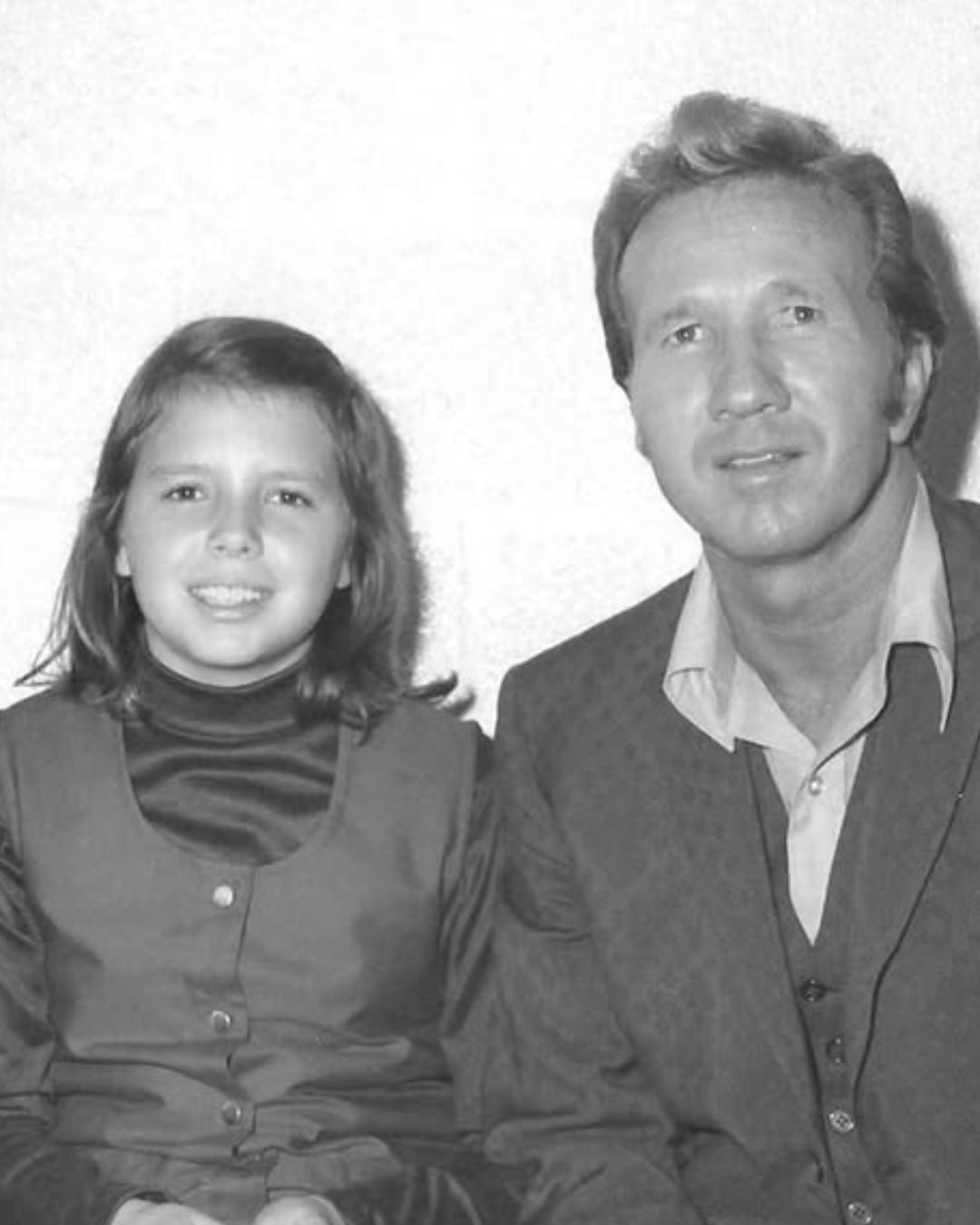
Janet Robbins never knew whether her father had listened to the songs she mailed him. Marty Robbins never brought it up. It was only on the day of his funeral in December 1982 that an old friend told her the truth: Marty had played her tape for that friend, and he had said his daughter was so talented that he didn’t know how to tell her.
Janet shared that memory with biographer Diane Diekman, and it appears in Diekman’s 2012 book Twentieth Century Drifter: The Life of Marty Robbins.
A cassette sent home from California
Janet, Marty’s only daughter, was born in January 1959. She left Tennessee at 18 and later moved to California, where she kept writing and playing music.
From there she recorded a few songs onto a cassette and sent it to her father. One of them was a song she had written herself. Marty never mentioned the tape.
The father she knew
That silence fit the father Janet described years later. Marty Robbins kept his public life and his family life apart. Diekman writes that he would not allow his wife and daughter to attend his shows. Janet later said she didn’t see her father perform until she was 19, at a show in Florida.
He rarely sat her down to talk about life or careers, she recalled in a 2011 interview. But on one subject he was clear. She could do anything she wanted, he told her, as long as it wasn’t the music business. Janet believed he saw a restless, wandering streak in her, and that it scared him a little.
She also called him a good person and a good provider who meant well. And she put the hard part plainly:
“He was a character, sometimes he didn’t know about fathering.”
December 1982
In October 1982, Marty Robbins was inducted into the Country Music Hall of Fame. Two months later, on December 8, he died in Nashville after a heart attack and emergency bypass surgery. He was 57. Janet was about 23.
His funeral was held on Saturday morning, December 11, at Woodlawn Funeral Home in Nashville. It rained that morning, and about 1,500 people crowded into the chapels and hallways to say goodbye.
That day, Janet heard what her father had never said to her face. The tape had reached him. He had listened. He had played it for someone else. And he had thought she was so gifted that he didn’t know how to tell her.
What she did with the music
Janet Robbins did not take her father’s advice. She kept making music, though not the kind he made. Drawn to sixties rock and British progressive music, she began releasing her own independent recordings in the 1990s, writing, playing and producing much of it herself.
In March 2012, when Diane Diekman’s biography of Marty Robbins was launched at the Country Music Hall of Fame in Nashville, Janet was there, at the launch of the book that now carries her memory of that cassette, and of the words her father never said to her himself.