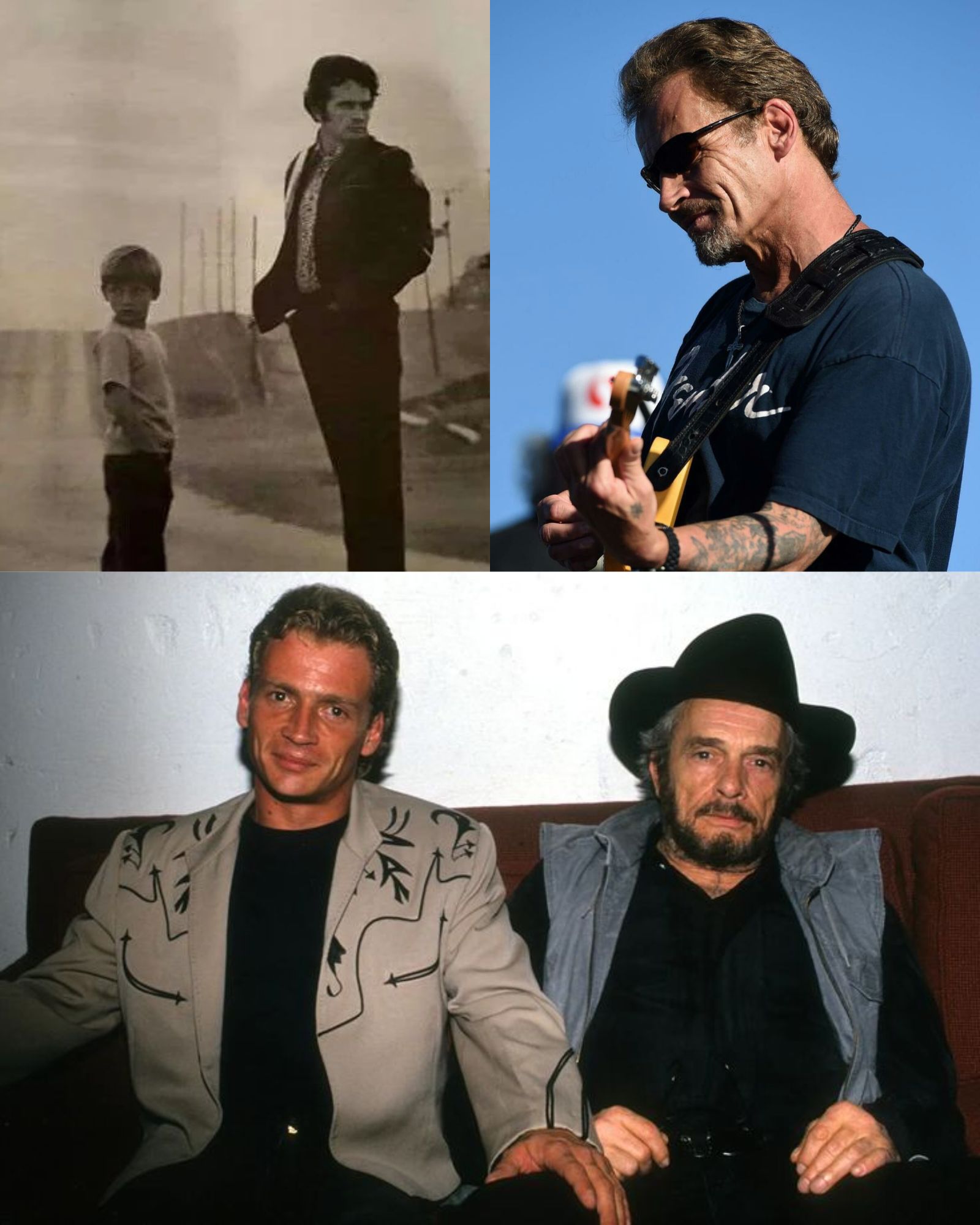
When Noel Haggard released a debut album in 1997, comparisons to Merle Haggard were inevitable. The family name was famous, the voices sounded remarkably alike, and audiences already knew the songs they wanted to hear.
But behind that familiar country music name was a father-son story that many fans had never heard.
Noel Haggard grew up in Bakersfield, California, on the same property where Merle Haggard had spent part of childhood living in a converted railroad boxcar. The little home was an important part of Merle Haggard’s history, a reminder of the difficult beginnings that eventually helped shape one of country music’s greatest songwriters.
Yet despite growing up so close to that history, Noel Haggard said it took nearly 18 years to truly spend meaningful time with Merle Haggard.
Growing Up With a Father Who Was Always on the Road
In a May 12, 1997, interview with the Los Angeles Times, Noel Haggard spoke openly about childhood and the realities of having a famous father.
According to Noel Haggard, Merle Haggard was away working approximately 250 to 300 days each year. The touring schedule meant that the children often had limited opportunities to become familiar with their father.
Noel Haggard even remembered a period when the children called Merle Haggard “Hey you!” instead of Dad.
During one family dinner, Merle Haggard firmly reminded the children that the proper name was Dad. It was a revealing detail from a family whose everyday life looked very different from the public image of country music success.
Noel Haggard explained that each homecoming could feel like getting acquainted again. The relationship began to change when Noel Haggard joined Merle Haggard on the road at approximately 18 years old.
Traveling together finally provided the time that had been difficult to find during childhood.
A First Album and a Familiar Voice
On March 4, 1997, Noel Haggard released the debut album “One Lifetime” through Atlantic Records. Produced by respected Nashville musician and producer Barry Beckett, the ten-song collection introduced Noel Haggard as a recording artist rooted in traditional country music.
The album included “Cowgirl Blues,” “Once You Learn,” “Left, Leavin’, Goin’ or Gone,” and “Tell Me Something Bad About Tulsa.”
One interesting detail was the absence of original Noel Haggard compositions. Although Noel Haggard wrote songs, Noel Haggard explained in the 1997 interview that Nashville had so many talented songwriters that the available material seemed stronger than the songs Noel Haggard could contribute at the time.
It was an unusually modest explanation from a new singer with one of country music’s most recognizable surnames.
And Noel Haggard had no objection when audiences compared the new recordings to Merle Haggard’s music.
Fans frequently requested classics such as “Okie From Muskogee” and “Swinging Doors.” Instead of resisting those requests, Noel Haggard considered performing the songs an honor.
The Song That Connected Merle Haggard, Noel Haggard, and George Strait
One track from “One Lifetime” has a particularly interesting history.
“Tell Me Something Bad About Tulsa,” written by Red Lane, had already been recorded by Merle Haggard for the 1986 album “Out Among the Stars.”
Noel Haggard included a version on the 1997 debut album and released the song as a single.
Six years later, George Strait recorded “Tell Me Something Bad About Tulsa” for the 2003 album “Honkytonkville.” The George Strait recording became a country radio hit, reaching No. 11 on Billboard’s country singles chart.
That recording history gives listeners an opportunity to hear how three traditional country voices approached the same composition across different generations.
What Merle Haggard Thought of the First Album
For all the public comparisons, one opinion carried particular significance: what Merle Haggard thought about the record.
In the Los Angeles Times interview, Noel Haggard recalled that Merle Haggard liked “One Lifetime,” considered the album a good first effort, and believed the next record would be better.
There was approval in that assessment, but there was also room for improvement. It was a straightforward response that fit Merle Haggard’s reputation for speaking plainly.
Noel Haggard wasn’t expecting to duplicate a legendary career. The ambition described in 1997 was considerably simpler: earn an honest living making music, achieve some chart success, and build a lasting career doing something personally meaningful.
Nearly three decades later, the album remains an interesting chapter in the Haggard family’s musical history. It captures Noel Haggard at the beginning of a recording career, carrying the influence of a famous father while trying to establish a place of his own.
And perhaps the most memorable part of that beginning is still Merle Haggard’s uncomplicated reaction: a good first record, with the expectation that the next one could be even better.