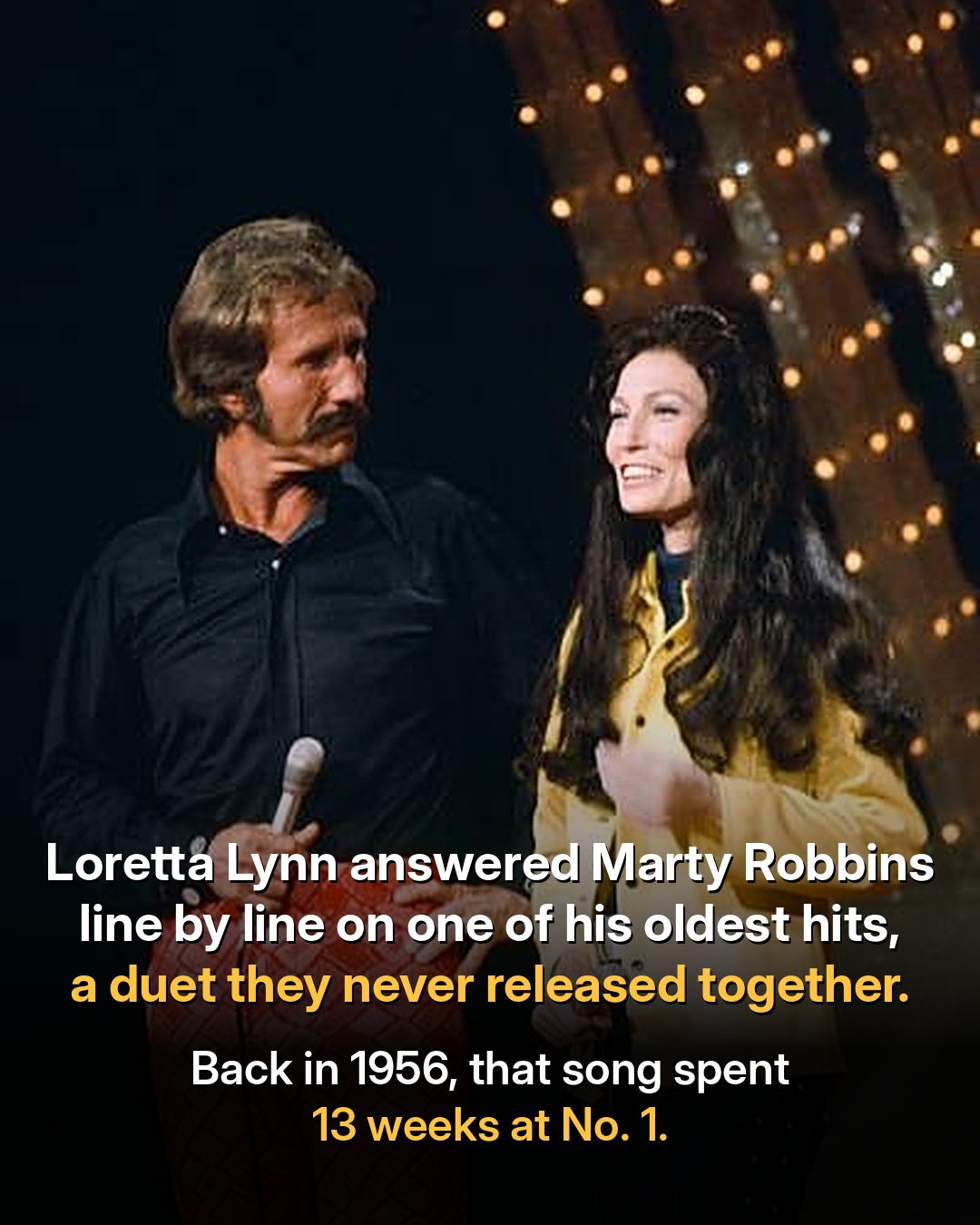
In August 1973, late-night television looked a little different. NBC’s The Midnight Special had become the place where America stayed up past midnight to catch live music, and its stage usually belonged to soul singers, rock bands and comedians. Only weeks earlier, Al Green, the Bee Gees and Richard Pryor had taken their turns as hosts.
Then, for one night, the show went country.
Two Country Legends Take Over Late-Night TV
Loretta Lynn and Marty Robbins stepped in as co-hosts, and the lineup they welcomed read like a roll call of Nashville royalty. Conway Twitty was there. So were George Jones and Tammy Wynette, Charlie Rich and Tom T. Hall. And standing among those giants was a teenage Tanya Tucker, still at the start of what would become a long career.
For country fans watching at home, it must have felt like the whole Grand Ole Opry had been carried onto a late-night stage. Loretta Lynn performed her own hits, the songs that had made her the voice of working women across America. She also teamed up with Conway Twitty, the duet partner fans had come to love. That pairing was exactly what everyone expected.
What came next was not.
A Duet That Never Made It to Record
At one point in the show, Loretta Lynn and Marty Robbins stood side by side and began trading lines on one of Marty Robbins’ oldest songs. It was “Singing the Blues.”
The two hosts never released a recording of the song together. No album and no single ever carried both their names on it. For a few minutes on The Midnight Special, though, the song stopped being a solo lament and turned into a conversation. One voice answered the other, two artists from different corners of country music met in the middle, and an old hit sounded new again.
For one night only, a song about loneliness was sung by two people standing together.
Where “Singing the Blues” Began
To understand why that moment mattered, you have to go back seventeen years, to 1956.
The song was written by Melvin Endsley, a young songwriter from Arkansas. He had contracted polio as a child and used a wheelchair, but he carried a deep love for country music and a notebook full of songs. Endsley made his way to the Grand Ole Opry and pitched “Singing the Blues” backstage. The song reached Marty Robbins, who heard something special in it.
Marty Robbins became the first artist to record “Singing the Blues,” and the decision changed his career. His version climbed to No. 1 on Billboard’s country chart and stayed there for 13 weeks, an extraordinary run that helped turn him from a promising singer into a star.
A Song Too Big for One Chart
The story didn’t end on the country side. Guy Mitchell recorded his own version, and it went all the way to No. 1 on the pop chart. The same simple, heartfelt song was topping two different worlds at once. Across the Atlantic, Tommy Steele’s version reached No. 1 in the United Kingdom.
For Melvin Endsley, it was the kind of breakthrough most songwriters only dream about. One song, pitched backstage, had become a hit on country radio, pop radio and the other side of the ocean.
Why the 1973 Performance Still Feels Special
By 1973, “Singing the Blues” was a standard, a song generations of listeners already knew by heart. Marty Robbins had sung it countless times since 1956, and he had gone on to classics like “El Paso” and a career that stretched from gunfighter ballads to Hawaiian tunes to pop crossovers.
Hearing it with Loretta Lynn beside him gave it a different shape. Her voice brought the plain-spoken honesty of Butcher Hollow, Kentucky, and his brought the smooth warmth that had carried him from Arizona to the Opry. Together, they turned a familiar hit into something that felt fresh, personal and fleeting.
Because they never recorded it as a duet, that performance lives on as a rare moment, the kind fans still talk about when they look back at country music’s golden era on television. It is a reminder that the best musical moments sometimes happen just once, under the lights, with no studio session to follow.
The Song That Keeps Finding New Voices
From a young songwriter’s backstage pitch in 1956 to a late-night duet in 1973, “Singing the Blues” traveled a long road. It made Marty Robbins a star and gave Melvin Endsley his place in songwriting history. For one August night, it also brought Loretta Lynn and Marty Robbins together on a song neither of them would ever forget.
Some songs belong to one singer. “Singing the Blues” has always had room for one more voice.