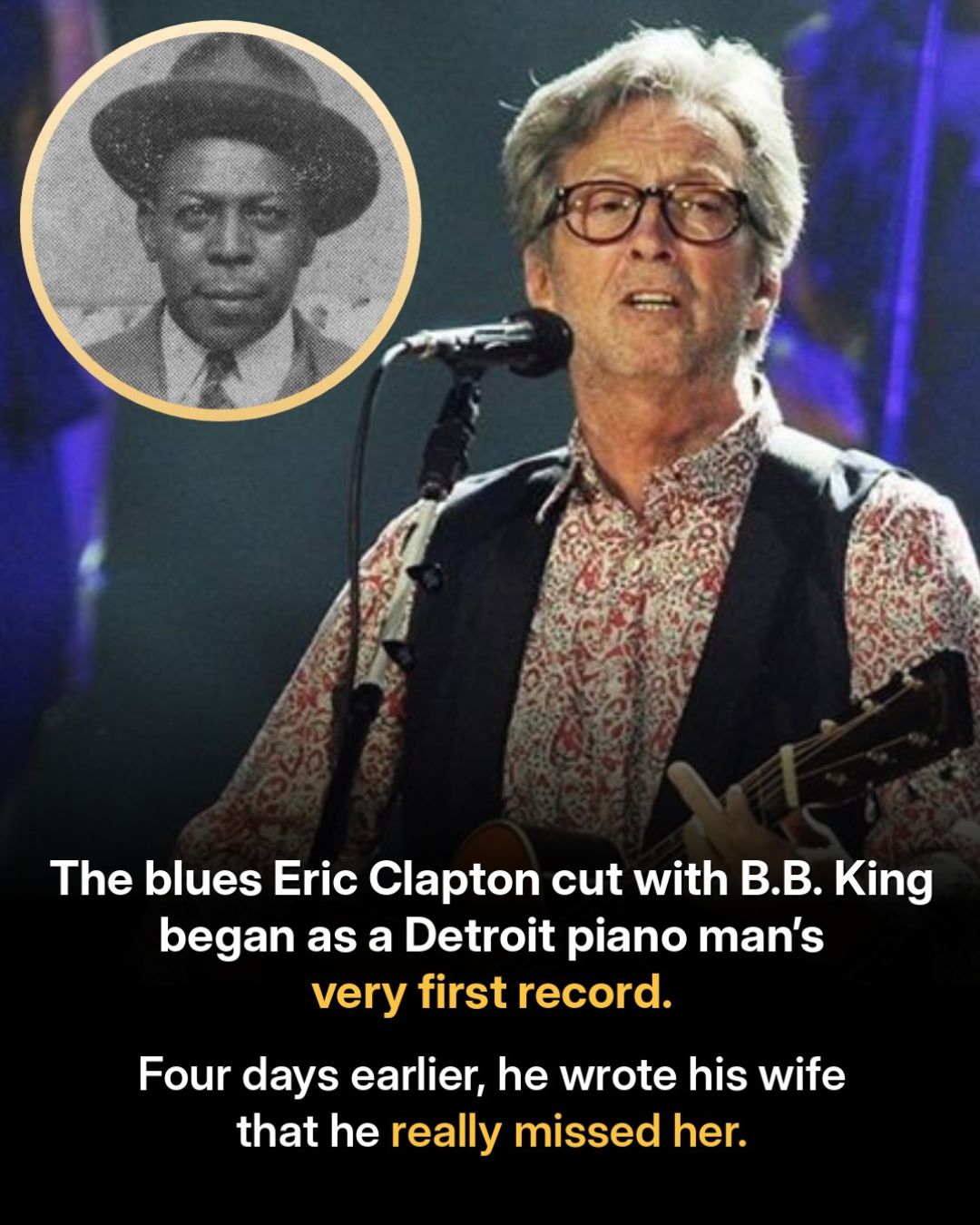
Scroll to the end of the article to hear the song.
The song is “Worried Life Blues.” Eric Clapton stretched it past eight minutes at Tokyo’s Nippon Budokan on December 4, 1979, a performance that landed on his live album Just One Night. Twenty years later he recorded it again with B.B. King for Riding with the King, the album that won the 2001 Grammy for Best Traditional Blues Album. But the song began on a summer Tuesday in Chicago in 1941, as the very first record of a piano player from Detroit.
A Letter From South State Street
His name was Major Merriweather, and the blues world knew him as Big Maceo. Born in Georgia in 1905, he had spent years in Detroit playing house parties on the East Side. His wife, Hattie, later told blues historian Mike Rowe that she was the one who urged him to go after a recording contract and sent him to Chicago. Detroit had plenty of blues in those days, but Chicago had the studios.
In Chicago, Maceo fell in with Big Bill Broonzy and Tampa Red, two leading lights of the Chicago blues scene. Tampa Red brought him to Lester Melrose, the producer who controlled much of the blues recording business for RCA Victor and its Bluebird label.
On June 20, 1941, Maceo sat down at Tampa Red’s house on South State Street and wrote home. He told Hattie he had arrived safely, that he had been in Chicago two weeks, that Melrose had set a recording date for Tuesday, and that he really missed her. He signed it as her husband, then added a postscript in his own spelling:
“Write soon and let me no just how you are getting along.”
The letter survived. Rowe included it in the notes he wrote in 1975 for a collection of Maceo’s recordings.
Tuesday, June 24, 1941
Four days later, Maceo walked into the session. He played piano behind Tampa Red on eight sides that day and recorded six songs under his own name. One of them was “Worried Life Blues,” with Maceo singing at the piano, Tampa Red on guitar and Ransom Knowling on bass. Bluebird issued it as record B-8827, with “Texas Blues” on the other side. It was his first single.
The song was not built from nothing. Maceo reworked Sleepy John Estes’ earlier “Someday Baby Blues,” and his version ended up overshadowing the original. The sources that survive do not say who, if anyone, he had in mind when he sang it.
What the record did do was sell. “Worried Life Blues” became a hit and made Big Maceo’s name. Hattie remembered that back in Detroit, people at house parties kept asking him to play it. In 1983, the Blues Foundation chose it for the Blues Hall of Fame in the very first year of voting.
The Hand He Lost
The good years did not last. In 1946 Big Maceo suffered a stroke in Milwaukee that paralyzed his right side and took away the piano-playing hand that had made him famous. He kept going as best he could, singing while younger players such as Eddie Boyd or Johnnie Jones handled the keys. After one more Melrose session in February 1947, Melrose let him go. Hattie nursed him through the hard years that followed. Big Maceo died in February 1953 in Chicago, only 47, and was buried at Detroit Memorial Cemetery in Warren, Michigan.
Fifty-Five Years Without a Stone
For 55 years, his grave had no headstone. In 2008, the White Lake Blues Festival in Whitehall, Michigan, raised money to change that, and a headstone was placed that June. It was the first marker from the effort that became the Killer Blues Headstone Project, which has since placed more than 170 headstones for blues artists across the country.
How Eric Clapton and B.B. King Kept It Alive
By then, the song had traveled far beyond the South Side. Eric Clapton made it part of his 1979 Japan shows, with Albert Lee on organ, and he kept coming back to it on stage over the years. B.B. King had recorded it too.
When the two men finally made a full album together, Clapton was 55 and King was 74. They chose “Worried Life Blues” for it, a slow, rolling take built around both their voices. Rolling Stone heard the contrast clearly: Clapton sang it with a kind of “gentlemanly melancholy,” while King answered with a buoyant kind of hope, the sound of a man who had come through hard times.
Two of the most famous bluesmen in the world, trading verses on a song that a Detroit piano man first cut four days after writing home to tell his wife he missed her.