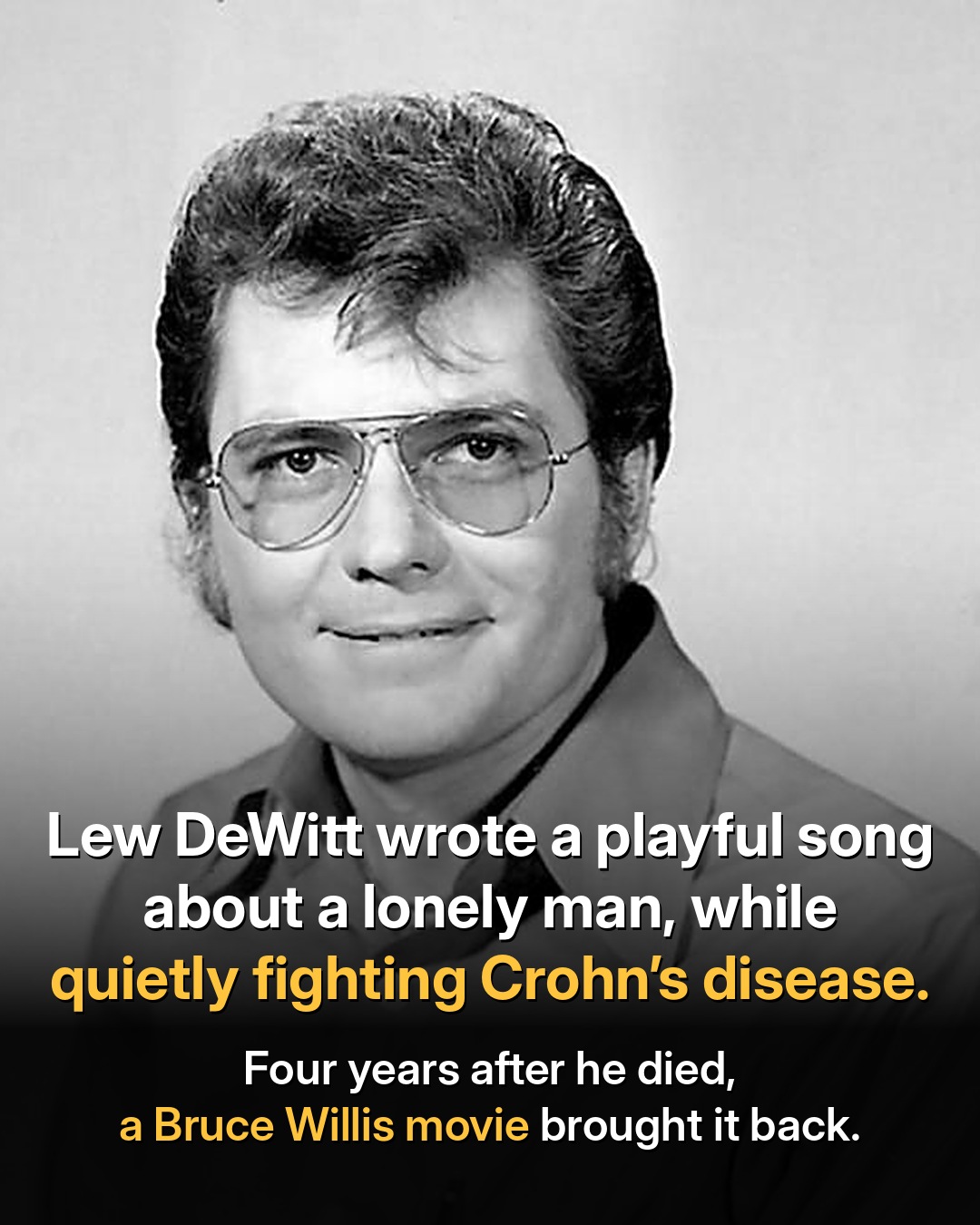
In 1994, millions of moviegoers watched Bruce Willis’s character in Pulp Fiction sit behind the wheel of a car and sing along to an old country record. For a lot of younger viewers it was the first time they had heard it. Most of them had no idea who wrote it, and the man who wrote it wasn’t around to see it happen. Lew DeWitt had died four years earlier, at just 52.
A Quiet Tenor From Virginia
Lew DeWitt was born in Roanoke County, Virginia, on March 12, 1938. He was a founding member of The Statler Brothers and the group’s original tenor. In their four-part harmony, his voice sat at the very top, clear and light, holding the blend together without ever pushing to the front.
The group had a funny origin story. They took the name The Statler Brothers after spotting it on a box of tissues during a rehearsal. Only two of them, Harold Reid and Don Reid, were actually brothers, and none of them was named Statler. With Phil Balsley and Lew DeWitt, they became one of the most loved vocal groups in country music.
The B-Side That Changed Everything
The song that broke them nationally was one Lew DeWitt wrote himself: “Flowers on the Wall.” There’s a famous story behind the session. In March 1965, Johnny Cash had been booked to record that day but couldn’t make it, so Columbia Records let The Statler Brothers use the time instead.
The single came out in June 1965, and “Flowers on the Wall” wasn’t even supposed to be the main side. It was planned as the B-side, until radio DJs flipped the record over and started playing it. By January 1966 it had spent four weeks at No. 2 on Billboard’s country chart, reached No. 4 on the Billboard Hot 100 and gone to No. 1 in Canada. It also won the 1966 Grammy for Best Contemporary (R&R) Performance by a Group.
What the Song Is Really About
On the surface, “Flowers on the Wall” is playful and witty. It’s about a man whose love has left him, and he keeps telling everyone he’s doing just fine, busy even. But listen closely and the joke turns on him. Everything he describes is just a lonely way to kill time alone in a room. He’s trying so hard to sound fine that it shows how much he isn’t.
It’s a song about a man who would rather make you laugh than let you see him hurting.
The Battle Fans Never Saw
While The Statler Brothers kept rising, toured with Johnny Cash, appeared on his television shows and performed at the White House three times, Lew DeWitt was carrying something most fans knew nothing about. He had lived with Crohn’s disease since he was a teenager.
His bandmates looked out for him. They took over the band’s business and other non-musical duties so Lew could focus on singing. Even so, life on the road became harder and harder. In November 1981 he took a leave of absence for surgery and treatment, and he eventually retired from the group. Jimmy Fortune took his place.
Lew DeWitt didn’t stop singing, though. When his health got better, he started a solo career and released two albums, Here to Stay in 1984 and On My Own in 1985. He kept performing until late 1989. Then his health declined quickly, and on August 15, 1990, Lew DeWitt died at his home near Waynesboro, Virginia.
Hearing It Differently Now
Four years later, Pulp Fiction put “Flowers on the Wall” in front of a whole new audience. In 2000, country singer Eric Heatherly recorded his own version, which reached No. 6 on the country chart. Waynesboro named a street Lew Dewitt Boulevard in his honor in 1992, and in 2008 he was inducted into the Country Music Hall of Fame as a member of The Statler Brothers.
Today it’s hard to hear “Flowers on the Wall” the way people heard it in 1965. Once you know what Lew DeWitt was carrying all those years, the man in the song who keeps insisting he’s okay doesn’t sound like just a punchline anymore. He sounds like someone smiling so nobody asks how much it hurts.
That may be why the song never really went away, and why people still put it on and listen again.
Which Statler Brothers song still stays with you the most?