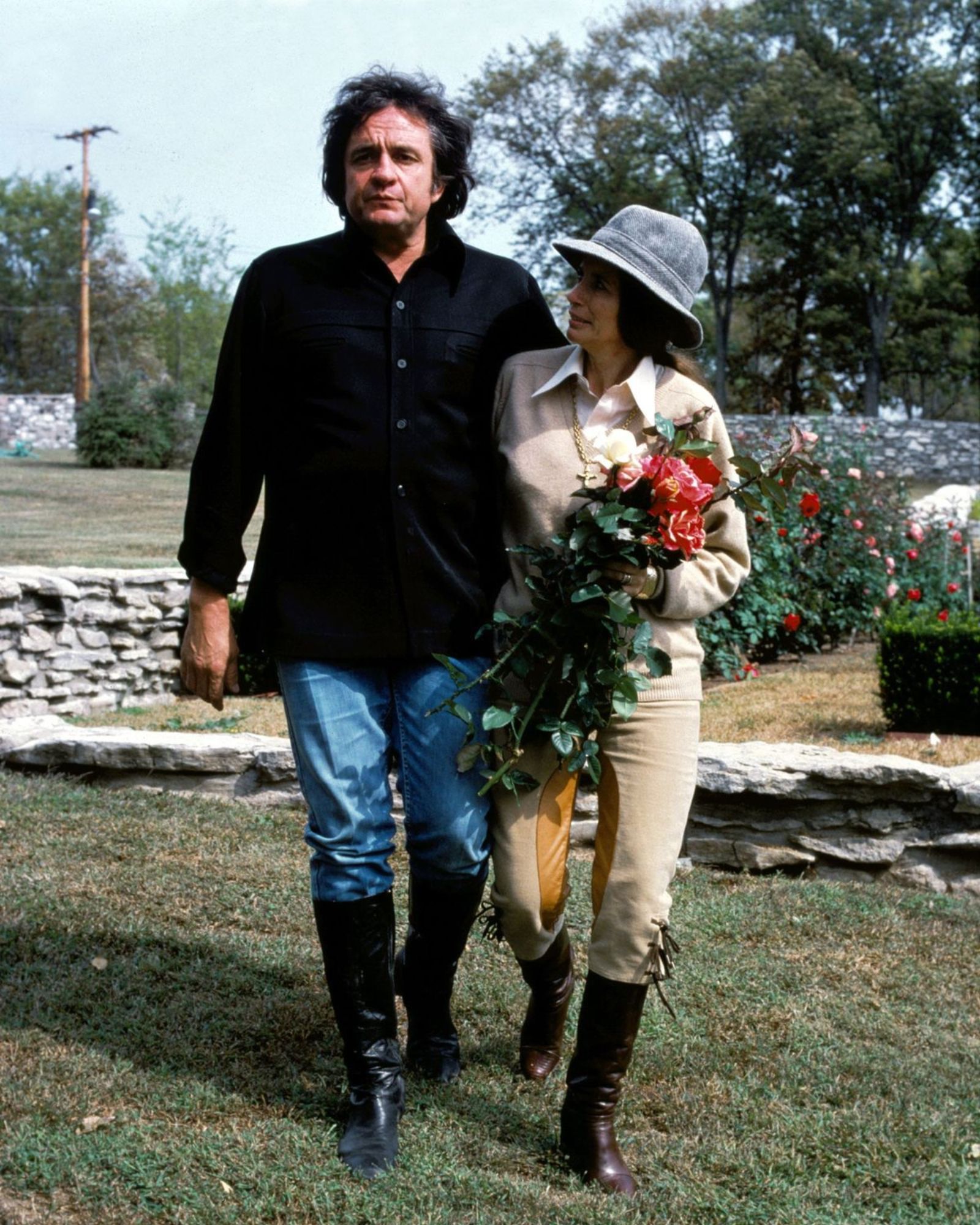
When June Carter Cash passed away on May 15, 2003, Johnny Cash lost the woman who had shared more than 35 years of marriage, music, and life with him. For many fans, the thought of Johnny Cash continuing without June Carter Cash was almost impossible to imagine. Yet what happened in the days following her funeral revealed something remarkable about their relationship.
Just three days after June Carter Cash’s funeral, according to Johnny Cash’s own recollection, Johnny Cash was back in the studio recording music. Some people thought the decision was too soon. But Johnny Cash had a reason for returning, and that reason came from something June Carter Cash had told him long before her death.
The Promise June Carter Cash Asked Johnny Cash to Keep
In an interview with music journalist Sylvie Simmons approximately six weeks after June Carter Cash’s death, Johnny Cash explained why recording had become so important during those difficult weeks. June Carter Cash had once given Johnny Cash a simple instruction: “If something happens to me, you keep working.”
Those words became especially meaningful after May 15, 2003. Johnny Cash understood that June Carter Cash knew how deeply music was connected to his daily life. The recording studio was not simply a place to make another album. It was a place where Johnny Cash could continue doing something familiar when almost everything else had changed.
Johnny Cash recalled that some people questioned the decision to resume recording almost immediately after the funeral. They believed Johnny Cash should allow more time before returning to work. Johnny Cash disagreed. Continuing to make music was how Johnny Cash intended to face the loss.
What John Carter Cash Remembered About Those First Recordings
Years later, John Carter Cash shared another remarkable detail about that period. John Carter Cash remembered the first recording session taking place four days after June Carter Cash’s funeral, rather than the three days Johnny Cash had recalled. Both accounts agree that Johnny Cash returned to music within days of the service.
According to John Carter Cash, the recording session took place inside Johnny Cash’s own bedroom. John Carter Cash was working on a project celebrating the musical heritage of the Carter Family, and Johnny Cash participated in recording several songs.
Among the recordings was “Unclouded Day,” a traditional gospel song that eventually appeared on the Carter Family project The Unbroken Circle: The Musical Heritage of the Carter Family.
John Carter Cash later explained that recording music gave Johnny Cash a way to express himself and something meaningful to continue working toward. For Johnny Cash, singing had always been more than a profession. During those weeks, the familiar act of recording became an important part of dealing with grief.
Rick Rubin and the Music Johnny Cash Continued Making
Producer Rick Rubin had already been working closely with Johnny Cash for nearly a decade. Their collaboration on the American Recordings albums had introduced Johnny Cash’s unmistakable voice to another generation of listeners.
As Johnny Cash continued recording during 2003, Rick Rubin helped maintain a flexible recording process. Music could be recorded at Johnny Cash’s Tennessee home, while arrangements and additional production work could be handled elsewhere. That arrangement allowed Johnny Cash to continue contributing whenever circumstances permitted.
The sessions produced recordings that would remain unheard by the public until after Johnny Cash’s death. On July 4, 2006, American V: A Hundred Highways was released, featuring songs from Johnny Cash’s final recording period, including “Like the 309,” “If You Could Read My Mind,” and “Rose of My Heart.”
The Meaning Behind Johnny Cash’s Final Months
Johnny Cash passed away on September 12, 2003, less than four months after June Carter Cash. The short interval between their deaths has often shaped the way fans remember their extraordinary love story.
But the historical record tells a more complete story than the familiar saying that Johnny Cash died the day June Carter Cash died. Johnny Cash continued working, continued recording, and continued honoring an instruction June Carter Cash had given him.
There was no need for a mysterious final conversation or an invented farewell inside the studio. The most touching detail was already there, preserved in Johnny Cash’s own words and the memories of John Carter Cash.
June Carter Cash had asked Johnny Cash to keep working. And in the days following June Carter Cash’s funeral, that was exactly what Johnny Cash did.