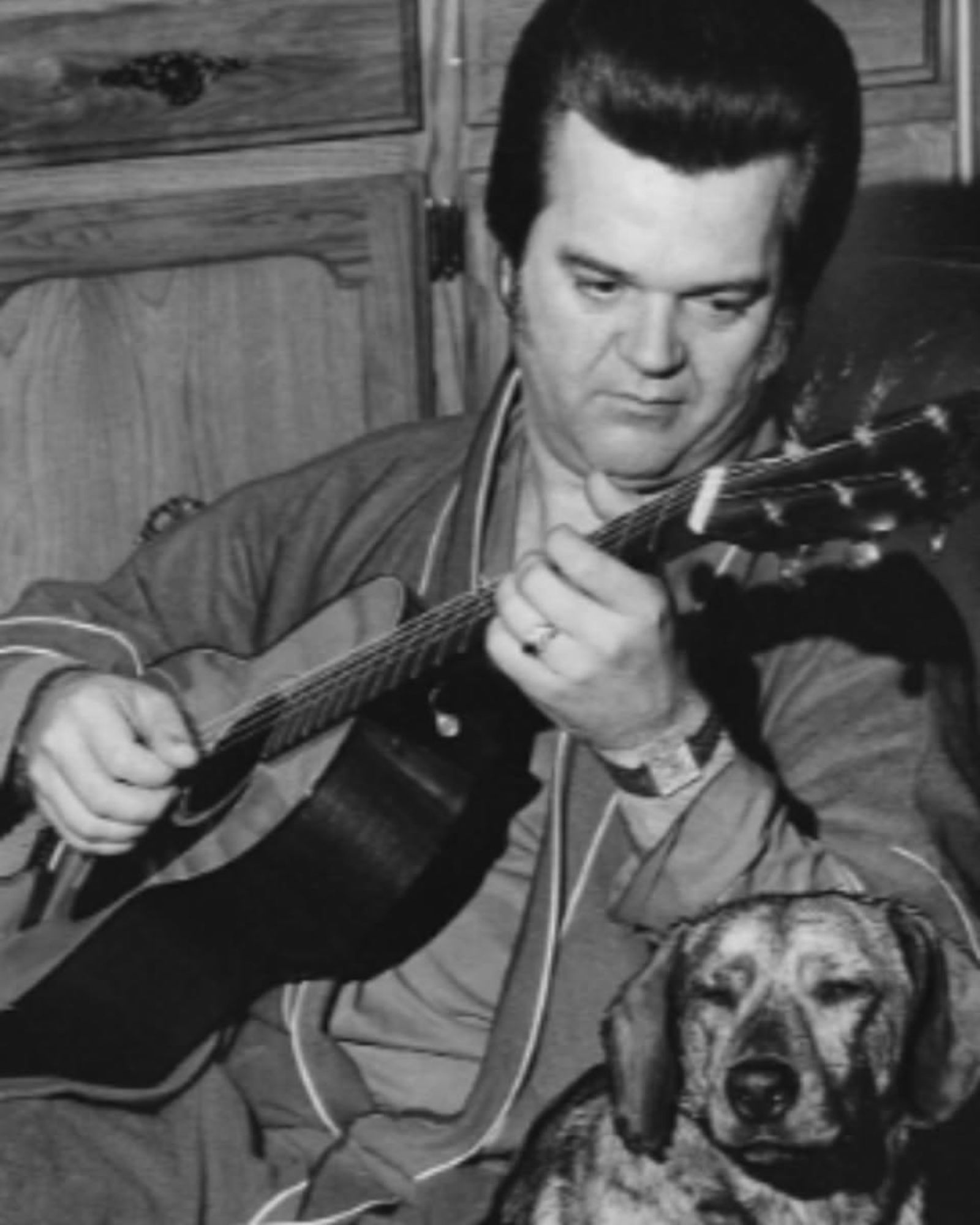
In April 1975, Conway Twitty entered a recording studio in Oklahoma City to sing one of the most familiar songs in country music. But this time, the man helping Conway Twitty record “Hello Darlin’” wasn’t a producer or another musician.
It was a Russian-language professor who kept correcting Conway Twitty’s pronunciation.
The unusual session would produce a recording heard aboard two spacecraft during one of the most important international missions in space history. And it all began with a telephone call from an American astronaut.
An Unexpected Request From Astronaut Tom Stafford
In March 1975, astronaut Tom Stafford was preparing to command the American spacecraft in the Apollo–Soyuz Test Project, a joint mission between the United States and the Soviet Union.
The two nations had spent years competing in space. Now, American astronauts and Soviet cosmonauts were preparing to meet in orbit, dock their spacecraft, shake hands, and exchange gifts.
Tom Stafford, a fellow Oklahoman and admirer of Conway Twitty’s music, wanted to include country music in that exchange.
According to contemporary music-industry reporting, Tom Stafford contacted Conway Twitty on March 27, 1975, about taking recordings into space. David Barnes, who was present at the studio, suggested an even more memorable idea: record Conway Twitty’s biggest country hit in Russian.
The choice was “Hello Darlin’,” the 1970 No. 1 hit Conway Twitty had written years earlier.
Conway Twitty initially thought the astronaut’s request might be a joke. Once the request was confirmed, the singer agreed to the unusual assignment.
The Recording Session That Took Longer Than Expected
Conway Twitty enlisted Gurij Chemelev, a Russian-language professor at the University of Oklahoma, to translate the song and teach its pronunciation.
Contemporary Billboard reporting described two days of phonetic instruction before Conway Twitty recorded the Russian vocal on April 14, 1975, at Benson Sound Studio in Oklahoma City.
One particularly interesting detail is that Conway Twitty recorded the new vocal over the original instrumental track. The familiar music remained, but the words were now Russian.
Years later, Conway Twitty described the difficult session in an authorized biography.
Gurij Chemelev sat on a stool beside Conway Twitty, listening carefully and repeatedly correcting the singer whenever the Russian pronunciation sounded wrong.
Conway Twitty had expected the work to take roughly an hour. It took considerably longer.
But the disagreement wasn’t limited to pronunciation.
Conway Twitty wanted the opening greeting to sound gentle, just as it did in the English recording. Gurij Chemelev kept insisting on a stronger delivery.
Conway Twitty argued that a man shouldn’t shout a greeting at a woman. According to the singer’s recollection, the professor responded, “In Russia they do.”
That small disagreement revealed something familiar about Conway Twitty. Even while learning unfamiliar words, Conway Twitty wanted to preserve the conversational quality that made the original recording so recognizable.
Eventually, the Russian recording was completed and delivered to Tom Stafford.
When “Hello Darlin’” Was Heard in Space
On July 15, 1975, the Soviet Soyuz spacecraft and the American Apollo spacecraft launched from their respective countries.
Two days later, on July 17, the spacecraft docked in Earth orbit. American astronauts Tom Stafford, Vance Brand, and Deke Slayton joined Soviet cosmonauts Alexei Leonov and Valeriy Kubasov for a historic exchange of greetings and gifts.
Conway Twitty’s recording became part of that extraordinary cultural exchange.
On July 19, shortly before the spacecraft’s final separation, the Russian version of “Hello Darlin’” was played from orbit and transmitted to listeners on Earth.
The date is worth noting because some later accounts place the broadcast on July 17. NASA’s mission commentary identifies July 19 as the actual playback date.
Mission Control in Houston even joked that the music sounded as though it came from western Oklahoma, somewhere around Kiev.
Tom Stafford identified the singer as Conway Twitty and explained that the recording was intended for the Soyuz crew and the people in the control center.
A Thank-You That Came Back to Nashville
The story didn’t end when the spacecraft returned to Earth.
Later in 1975, Conway Twitty met the Soviet cosmonauts in Nashville at the Country Music Hall of Fame. Contemporary music-industry reports recorded that the visitors personally thanked Conway Twitty for the musical gift.
Conway Twitty also received an autographed photograph of all five Apollo–Soyuz crew members as a token of appreciation.
It was an unusual ending for a recording that had started with a professor sitting beside a country singer, correcting Russian pronunciation.
“Hello Darlin’” was already one of Conway Twitty’s signature songs. But in 1975, those familiar words found an entirely different audience.
A country song written for an earthly conversation had become a small, memorable part of a historic handshake between two nations in space.