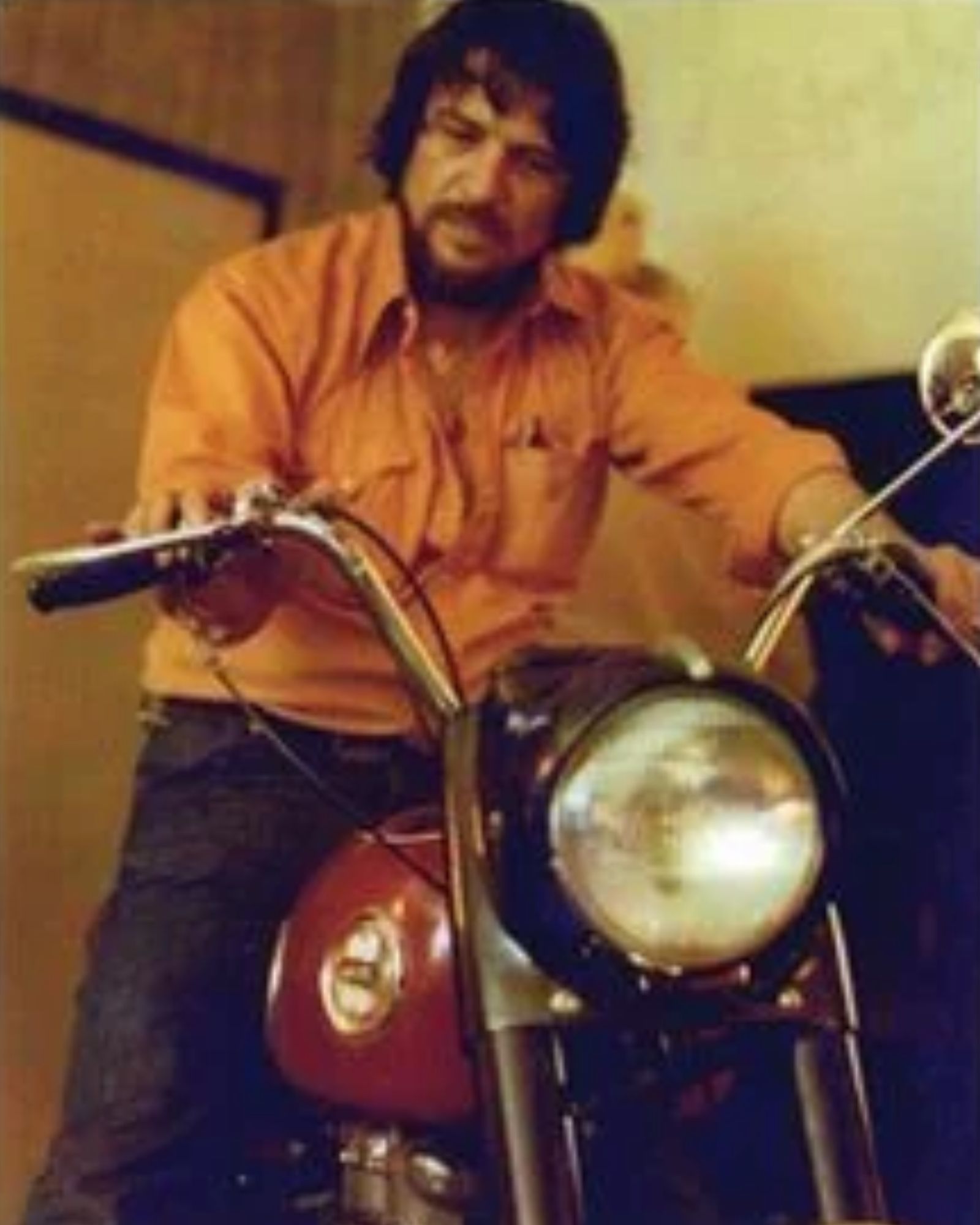
Waylon Jennings was trying to make one of the most important albums of his career when producer Cowboy Jack Clement began making cow noises through the studio headphones.
It happened at Glaser Sound Studios in Nashville, better known as Hillbilly Central, during the first night of sessions for the 1975 album Dreaming My Dreams.
The musicians were ready to play. The recording equipment was running. But Cowboy Jack Clement had apparently found something more entertaining than producing a record.
Recording engineer Kyle Lehning witnessed the whole thing and later shared the story with Mix magazine.
A Blue Button and One Very Unhappy Singer
Inside the control room, Cowboy Jack Clement sat beside a large blue talkback button. The button allowed the producer to speak directly into the musicians’ headphones.
As Waylon Jennings and the band began playing, Cowboy Jack Clement pressed the button and let out a long, exaggerated moo.
The musicians immediately removed their headphones and looked toward Kyle Lehning, who tried to stop the interruption.
They started another take.
Cowboy Jack Clement did it again.
That was enough for Waylon Jennings.
According to Kyle Lehning, Waylon Jennings stood up and declared:
“This isn’t going to work, Hoss.”
The session was over for Cowboy Jack Clement that evening. The producer was taken home.
Remarkably, that awkward beginning did not end the partnership. Kyle Lehning recalled that nothing similar happened again and that Cowboy Jack Clement settled into the work.
Why Cowboy Jack Clement Understood Waylon Jennings
Beneath the unusual first impression was a serious musical partnership.
Waylon Jennings had spent years pushing against Nashville’s conventional recording methods. The singer wanted more control over arrangements, musicians, and the sound of the finished records.
Cowboy Jack Clement understood something important about Waylon Jennings: the electric guitar and singing belonged together.
Instead of treating Waylon Jennings simply as a vocalist backed by studio musicians, Cowboy Jack Clement wanted to capture the complete performer.
The recording setup reflected that decision.
According to Kyle Lehning, drummer Ritchie Albright played in a booth while pianist Charles Cochran and bassist Duke Goff performed nearby. Waylon Jennings occupied the center of the small studio, playing electric guitar and singing into a Neumann U47 FET microphone.
Many performances were recorded live, sometimes preserving the original vocal rather than replacing it later.
Waylon Jennings frequently played the familiar leather-covered Fender Telecaster. Pedal steel guitarist Ralph Mooney contributed the distinctive sound that helped give the recordings their character.
The musicians were creating a record that sounded like Waylon Jennings playing with a band, rather than a carefully assembled collection of separate performances.
The Unexpected Experiment Behind a Country Classic
One of the most revealing moments came during the mixing of Are You Sure Hank Done It This Way.
Cowboy Jack Clement later explained that the producer experimented with the recording while Waylon Jennings was away from the studio.
Cowboy Jack Clement added a rhythm guitar part and changed the arrangement from its original form.
When Waylon Jennings heard the result, the singer approved.
The recording was unusual for mainstream Nashville country music. Its layered guitars, heavy rhythmic sound, and atmospheric production matched the song’s challenge to established country music traditions.
Released in 1975, Are You Sure Hank Done It This Way reached No. 1 on Billboard’s country singles chart. The album Dreaming My Dreams also topped the country albums chart.
The Album Waylon Jennings Never Forgot
Years later, Waylon Jennings identified Dreaming My Dreams as the favorite album of the singer’s career.
Cowboy Jack Clement also remembered the project fondly. In a later interview, the producer described the effort to create something different and recalled how hard the musicians worked to complete it.
Despite the disastrous first night, Waylon Jennings and Cowboy Jack Clement had created one of the defining recordings of the outlaw country era.
The two never officially produced another album together, but their friendship continued.
For country music fans, the story offers a wonderful contrast: one of Waylon Jennings’ most respected albums began with an impatient singer, an unpredictable producer, and a blue button that should probably have been left alone.