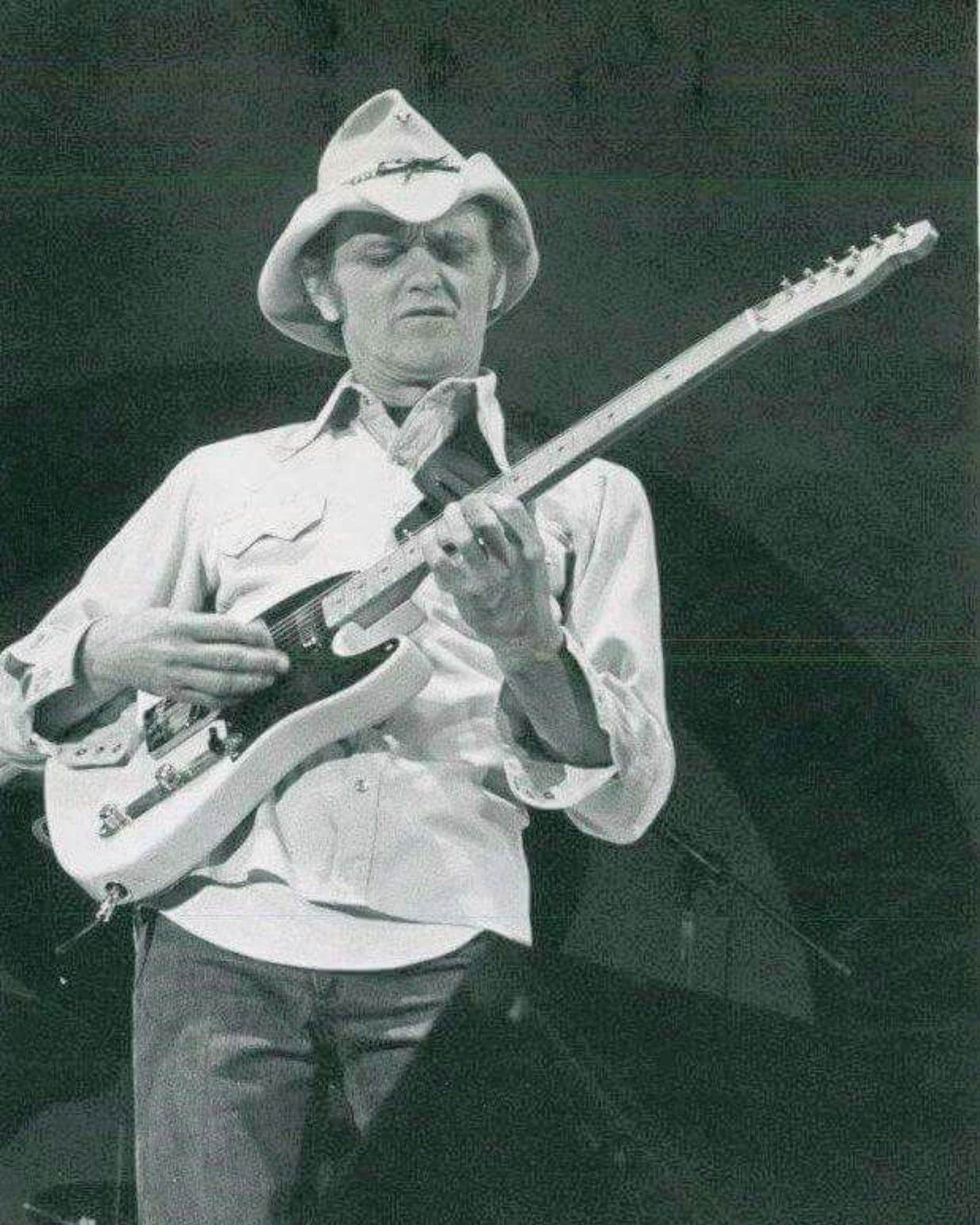
On September 10, 1967, Elvis Presley was recording at RCA Studio B in Nashville with some of the finest musicians in country music. Scotty Moore, Harold Bradley, and Chip Young were among the guitarists in the studio.
But there was one problem. Elvis Presley wanted to record a song called “Guitar Man,” and nobody could quite reproduce the unusual guitar sound that made the original recording so distinctive.
The man who knew how to play it wasn’t in the studio. According to Jerry Reed’s own recollection, Jerry Reed was out fishing on the Cumberland River.
The Guitar Sound Nobody Could Duplicate
Jerry Reed had written and recorded “Guitar Man” earlier that year, releasing it on the RCA Victor album The Unbelievable Guitar and Voice of Jerry Reed, produced by Chet Atkins.
The song reached No. 53 on Billboard’s country chart. It wasn’t a major commercial hit, but it caught the attention of Elvis Presley.
What made the recording special was Jerry Reed’s guitar playing. Jerry Reed used a distinctive fingerpicking technique and unconventional string tunings to produce a rhythmic sound that was difficult to imitate.
Elvis Presley wanted that particular sound on the new recording.
Producer Felton Jarvis, who had known Jerry Reed for years, understood the difficulty. Bringing Jerry Reed into the session was the most practical solution.
A Phone Call From RCA Studio B
Jerry Reed later recalled receiving a call from Felton Jarvis while fishing. The producer explained that Elvis Presley was trying to record “Guitar Man” but wanted the guitar part to sound like Jerry Reed’s original.
Jerry Reed knew why the musicians were having trouble. The song required more than learning the right notes. Its opening depended on a particular combination of tuning, timing, and fingerpicking.
Jerry Reed agreed to come to the studio.
In a 2005 interview, Jerry Reed explained that there was little reason to be nervous about playing for Elvis Presley. Jerry Reed already knew exactly how to produce the sound everyone was trying to capture.
Two Strings Made the Difference
When Jerry Reed arrived, Jerry Reed adjusted the guitar’s tuning, lowering the E string and raising the B string.
Then Jerry Reed played the famous opening figure.
Those adjustments were part of the distinctive technique that had made Jerry Reed’s original recording recognizable. Nashville’s session players were accomplished professionals, but Jerry Reed had developed an approach that didn’t follow ordinary picking conventions.
The recording still required work. Surviving session documentation identifies take twelve as the master of “Guitar Man.” The musicians also recorded “Big Boss Man” that evening, with Jerry Reed contributing guitar to both performances.
For listeners familiar with Elvis Presley’s version, the connection is worth remembering: the distinctive guitar heard on the recording belongs to the man who wrote the song.
Then Came an Unexpected Disagreement
There was another significant development connected to that Nashville session.
After Jerry Reed had recorded with Elvis Presley, a disagreement arose over the publishing rights to “Guitar Man.”
Freddy Bienstock, who handled music publishing matters associated with Elvis Presley, wanted an arrangement involving a share of the song’s publishing.
Jerry Reed resisted giving up those rights simply because Elvis Presley had recorded the composition.
According to the official Elvis Presley recording history, the disagreement became serious enough that Jerry Reed left the session. An agreement was eventually reached that gave Bienstock a publishing interest limited to Elvis Presley’s version.
That episode adds another dimension to Jerry Reed’s appearance at Studio B. Jerry Reed wasn’t merely a guitarist hired to reproduce a difficult part. Jerry Reed was also the songwriter responsible for the material Elvis Presley wanted to record.
The Guitar Part That Still Tells the Story
Elvis Presley’s recording appeared on the Clambake album in 1967 and was released as a single in early 1968. “Guitar Man” also became associated with Elvis Presley’s celebrated 1968 television comeback.
For Jerry Reed, the Nashville session remains one of the clearest examples of what made Jerry Reed such an exceptional guitarist.
The room already contained remarkable musical talent. The producer had experienced professionals ready to work. Elvis Presley knew the song he wanted.
But the unmistakable guitar sound belonged to Jerry Reed.
And on that September evening in 1967, the only way to get it was to bring Jerry Reed into the studio.