Scroll to the end of the article to hear the song.
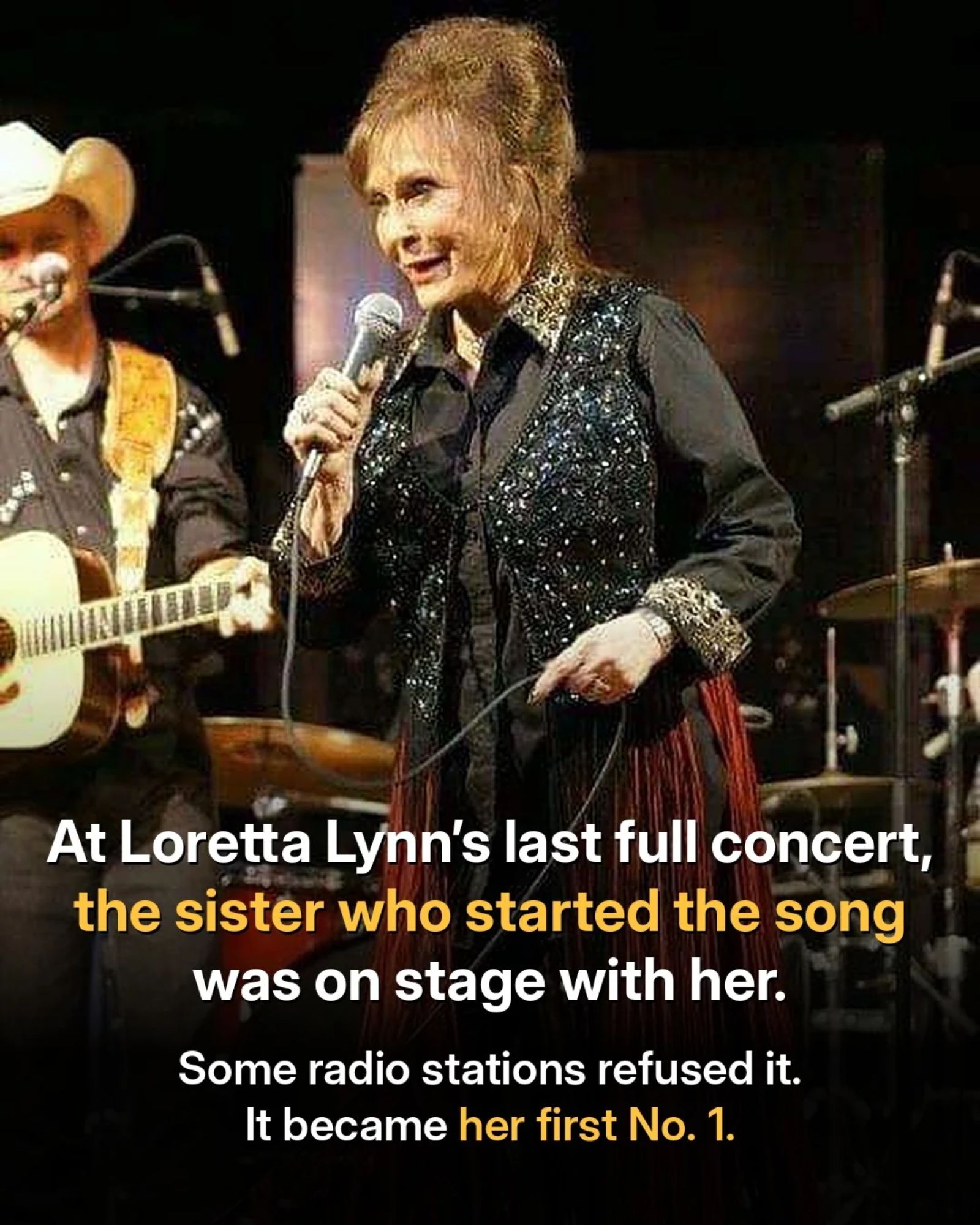
On the night of April 22, 2017, about eight hundred people found their seats inside the Tarrytown Music Hall, a small, old theater roughly 25 miles north of New York City. It was an ordinary Saturday show on an ordinary spring tour, with no farewell banners and no announcement that this was the end of anything.
Nobody in that room knew they were about to see the last full headlining concert Loretta Lynn would ever give.
A Queen Still on the Road at 85
Loretta Lynn had turned 85 just a week earlier. Nashville had celebrated her with birthday shows at the Ryman Auditorium, the same building where she had first stepped onto the Grand Ole Opry stage back in 1960 as a young singer with one record and a car full of hope.
Fifty-seven years later she was still touring and still singing the songs she had written about her own life. She never cared much for polishing the truth. Her songs were about real kitchens, real marriages and real women who were tired of being told to stay quiet.
She wasn’t alone onstage that night in Tarrytown. Her daughter, Patsy Lynn Russell, was there, and so were her sisters, Crystal Gayle and Peggy Sue, backed by her six-piece band. For ninety minutes the hits kept coming: “Fist City,” “I’m a Honky Tonk Girl,” a tribute to her friend Patsy Cline with “She’s Got You,” and a stirring “Dear Uncle Sam.”
Then she sang the song that had changed her career.
The Song That Started With Peggy Sue
The song was “Don’t Come Home A-Drinkin’ (With Lovin’ on Your Mind).”
Most fans think of it as pure Loretta Lynn: bold, funny, fed-up and honest. But the idea didn’t start with her. It started with her younger sister, Peggy Sue.
Peggy Sue was living through that exact story in her own first marriage. She brought the idea to Loretta, and Loretta understood it right away. Her own marriage to Oliver “Doolittle” Lynn had been famously stormy, and she knew those long nights very well. The two sisters finished the song together.
The song is about a wife who has spent too many nights waiting up alone while her husband is out with the boys. When he finally comes through the door, tipsy and suddenly affectionate, she gives him a choice: the bottle or her. She isn’t begging and she isn’t crying anymore. She’s drawing a line.
“I liked to play around with words.” — Loretta Lynn, looking back on how she shaped the song’s title
Too Honest for Radio, Too Good to Stop
Loretta Lynn recorded the song in October 1966. Country music at the time was full of songs about men drinking, but very few were told from the side of the woman waiting at home. Some radio stations didn’t want to touch it.
That didn’t matter. In February 1967, “Don’t Come Home A-Drinkin'” became Loretta Lynn’s first No. 1 hit. The album of the same name also went to the top, and that year she won Female Vocalist of the Year from the Country Music Association. It was the first of many No. 1 songs, and it set the tone for the fearless songwriter she would become.
Fifty-One Years Later, Same Sisters, Same Stage
So picture that night in Tarrytown. Loretta Lynn is 85 and singing her first No. 1 hit in a small theater. The sister who first brought her the idea is on that stage with her, 51 years after they wrote it.
They weren’t singing it for the charts or for the critics anymore. It was family, music and a crowd that loved them.
Less than two weeks later, Loretta Lynn suffered a stroke, and she cancelled the rest of her tour. She made one more joyful appearance, at her all-star 87th birthday concert in Nashville in 2019, but the Tarrytown show remained the last full concert of her career. Loretta Lynn passed away peacefully at her home in Tennessee on October 4, 2022, at the age of 90.
Why This Moment Still Matters
Fans still share the video from that night, and it’s easy to understand why. It wasn’t planned as a goodbye, and that’s what makes it powerful. It shows Loretta Lynn doing what she had always done: standing up for women who felt unheard, with her family close by.
Some songs are written for strangers on the radio. This one began as a conversation between two sisters about the hard parts of their lives. On one quiet spring night in New York, those two sisters shared the stage while the song was heard live in a full Loretta Lynn concert for the very last time.
What Is Your Favorite Loretta Lynn Song?
If you could hear one Loretta Lynn song live just once, which one would you choose? Tell us in the comments. We’d love to hear the song that still means the most to you.