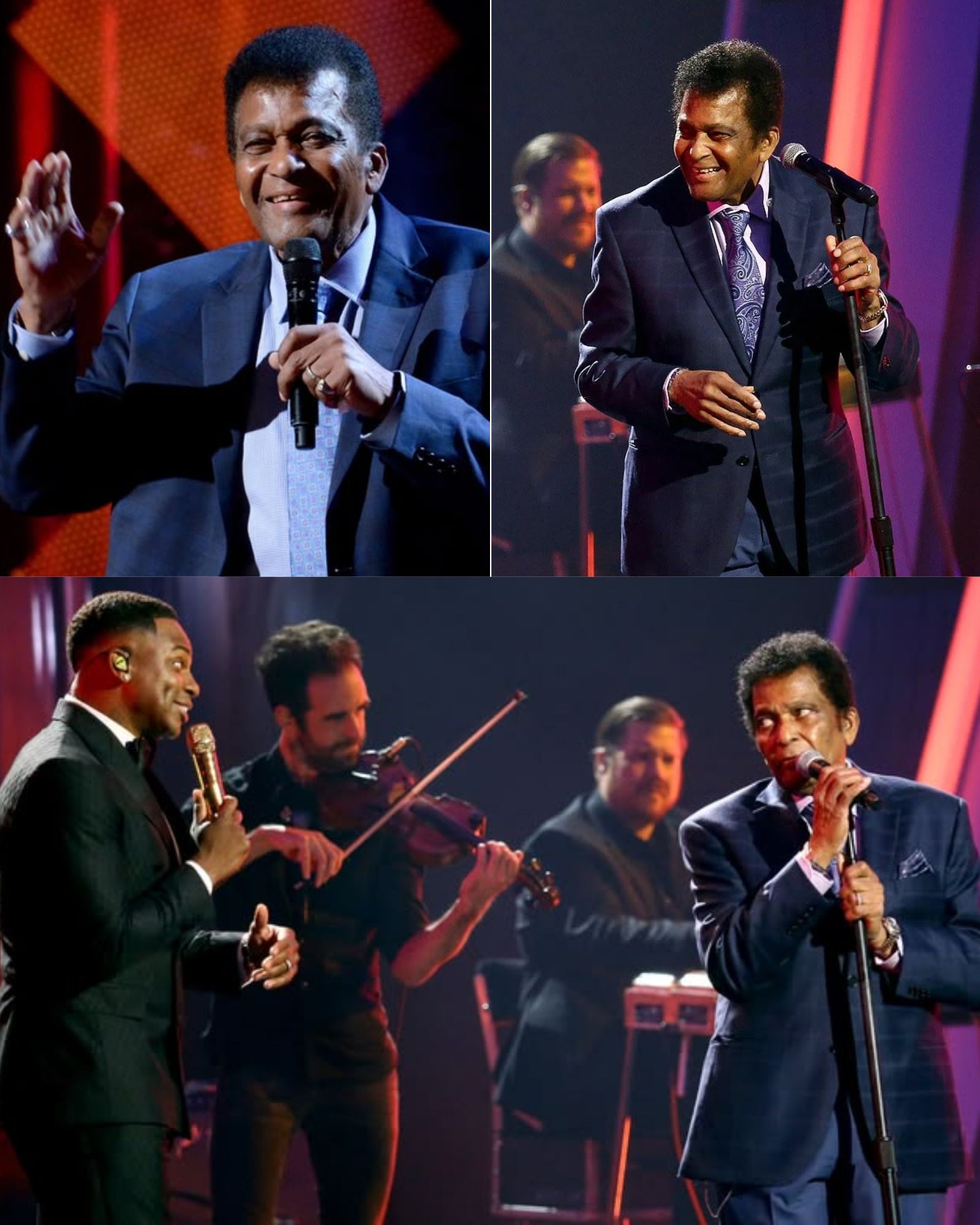
On November 11, 2020, Charley Pride stood on the stage of the CMA Awards in Nashville and admitted something you might not expect from a Country Music Hall of Famer. He said he was “nervous as can be.”
He was 86 years old. He had been Entertainer of the Year. He had dozens of No. 1 country hits. And still, standing in front of a room full of country stars, Charley Pride was nervous. Nobody watching knew it would be the last time he ever sang in public.
A Lifetime Achievement Honor
Charley Pride was in Nashville that night to receive the Willie Nelson Lifetime Achievement Award, the highest honor the Country Music Association gives. The list of people who had received it before him tells you what it meant: Willie Nelson, Kenny Rogers, Johnny Cash, Dolly Parton and Kris Kristofferson.
The show itself looked different that year. It was held indoors at Music City Center during the pandemic, with a small audience made up mostly of artists, cast and crew. But the tribute to Charley Pride became one of the moments people talked about most.
The Young Star Who Handed Him the Award
The man chosen to present the award was Jimmie Allen, a rising country singer nominated that year for New Artist of the Year. Jimmie Allen was the first Black artist nominated in that category since Darius Rucker won it in 2009, and he never hid where he believed that path began.
Before the show, Jimmie Allen said that without Charley Pride, there would be no Darius Rucker, no Kane Brown, no Mickey Guyton and no Jimmie Allen. He called Charley Pride his hero.
After performing his own song “Best Shot,” Jimmie Allen welcomed Charley Pride to the stage. Then the two of them sang “Kiss an Angel Good Mornin'” together.
The Song Everybody Knew
“Kiss an Angel Good Mornin'” came out in 1971 and became the biggest hit of Charley Pride’s career. It spent five weeks at No. 1 on the country charts and crossed over to the pop charts too. Nearly fifty years later, the room still knew every word. The audience rose to its feet and sang along.
Charley Pride then accepted his award and spoke from the heart. He thanked Jack Clement, the producer who had helped launch his career in the 1960s. He thanked his fans. And more than once, he reminded everyone how nervous he was.
A Career That Started Without a Face
To understand why that night mattered so much, you have to go back to the beginning.
Charley Pride was born in 1934 in Sledge, Mississippi, the son of sharecroppers. He picked cotton as a boy and dreamed of baseball, playing in the Negro American League before music took over his life.
When RCA began sending his first records to country radio in the 1960s, they went out without the usual publicity photo. Radio heard Charley Pride’s rich baritone before anyone saw his face. By the time audiences did, the voice had already won them over.
The hits kept coming. In 1971 the CMA named him Entertainer of the Year. In 1975 he co-hosted the CMA Awards. In 1993 he joined the Grand Ole Opry, and in 2000 he became the first Black member of the Country Music Hall of Fame.
So on that night in 2020, the picture was hard to miss. The man whose early records went out without a photo was singing on national television, next to a young Black artist who said he owed his career to him. And the show’s co-host, Darius Rucker, was the first Black artist to host the CMA Awards since Charley Pride himself.
Thirty-One Days Later
Charley Pride returned home to Texas. According to his family, he was admitted to the hospital in late November. On December 12, 2020, he died in Dallas from complications of COVID-19. He was 86.
Questions followed about whether he could have been exposed at the awards show. The CMA and Charley Pride’s representatives released a joint statement saying he tested negative before traveling to Nashville, on arrival, on the day of the show, and several more times after returning to Texas.
Tributes poured in from across country music. Dolly Parton called him one of her dearest and oldest friends, and wrote:
“What a horrible, horrible virus. Charley, we will always love you.”
The Last Song
Charley Pride spent more than fifty years breaking ground in a genre that had rarely seen anyone like him. He did it with a voice, a smile and a lot of hard work.
His final public performance was not a farewell concert. It was a few nervous minutes on an awards show, singing the song everybody already knew by heart, with one of the many artists who followed the road he opened standing right beside him.
For a man who never liked to make a big speech about being a pioneer, it may have been the most fitting goodbye of all.