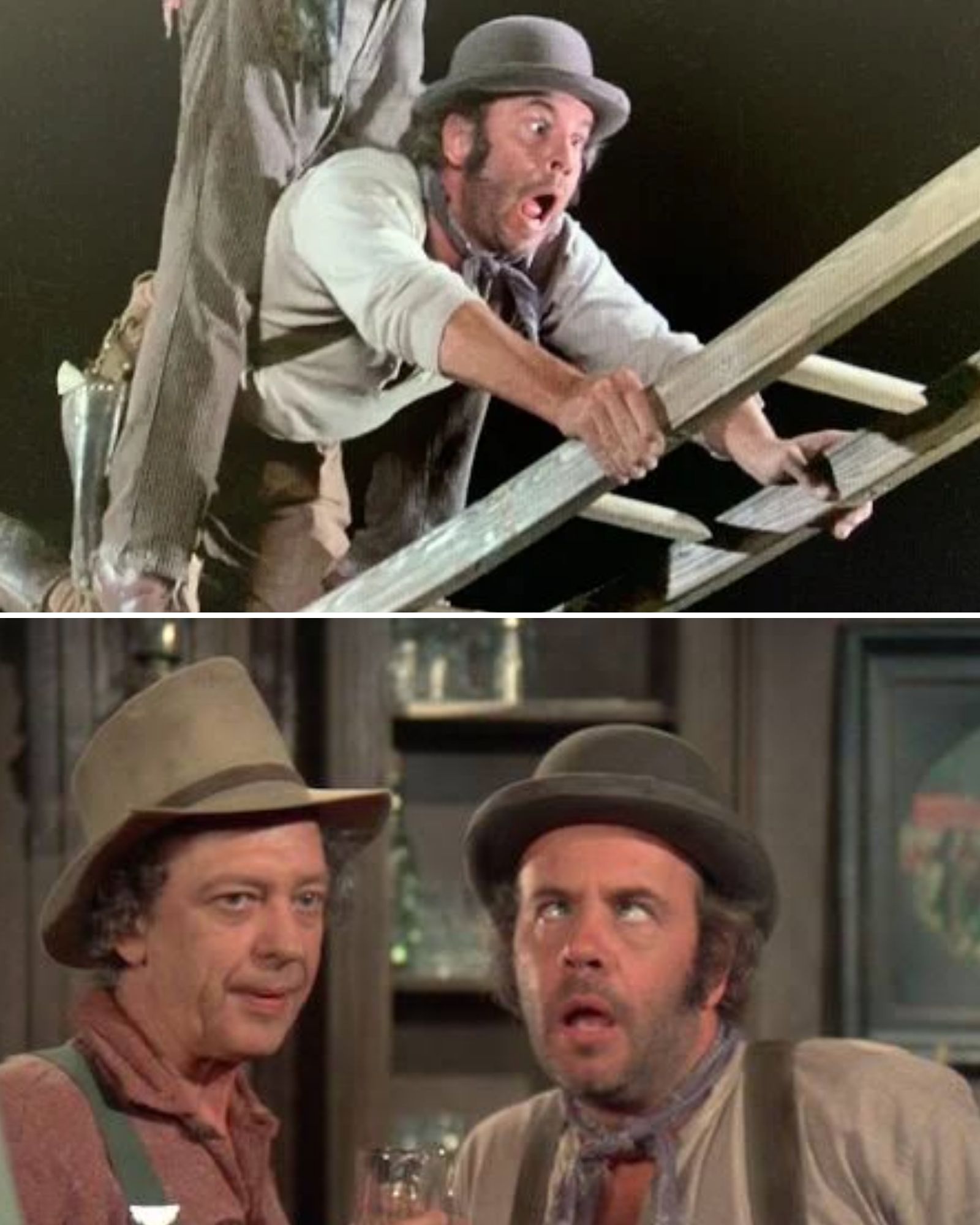
In The Apple Dumpling Gang, Tim Conway and Don Knotts attempt a task that sounds simple enough: sneak a ladder out of a firehouse without disturbing the sleeping chief. The operation becomes a series of obstacles, awkward movements, and escalating mistakes.
Behind that apparent incompetence was a very particular skill. Tim Conway and Don Knotts could respond to each other’s movements while keeping the scene going. Director Norman Tokar gave that partnership room to develop.
Finding Different Ways to Be Ridiculous
Released in 1975, Disney’s The Apple Dumpling Gang follows a gambler, played by Bill Bixby, who unexpectedly becomes responsible for three orphaned children. The discovery of gold brings further complications, including two would-be outlaws: Amos, played by Tim Conway, and Theodore, played by Don Knotts.
The supporting characters gave the comedians an opportunity to build a double act. That required some adjustment. In recollections collected in The Incredible Mr. Don Knotts, Tim Conway described an early scene in which Norman Tokar noticed that both performers were using similar comic walks.
Don Knotts also explained that Theodore needed to become the character who believed the situation was under control, while Tim Conway’s Amos supplied the more outlandish behavior. Both characters could be foolish, but the foolishness needed different shapes.
A Meticulous Director Who Allowed Surprises
Don Knotts remembered Norman Tokar as a careful director who could take considerable time explaining a scene and filming repeated takes. Yet that attention to detail also left space for the performers.
In Barney Fife and Other Characters I Have Known, as quoted by Turner Classic Movies, Don Knotts credited Norman Tokar with avoiding overly restrictive staging during camera rehearsals:
“Most of the time he just turned us loose.”
The firehouse ladder sequence benefited from that freedom. Don Knotts remembered the characters’ attempt to remove the ladder ending with a broken window in the neighboring building. The pleasure came from watching an ordinary object become increasingly difficult for two supposedly capable adults to manage.
The Signals Inside the Slapstick
Tim Conway’s account adds another detail: the coordination could happen through the ladder itself.
In recollections published in The Incredible Mr. Don Knotts, Tim Conway explained that a pull on the ladder could tell Don Knotts when to stop or move. Tim Conway identified business involving climbing over the sleeping man and colliding with bells as improvised.
Those details help explain the scene’s rhythm. A change at one end of the ladder required an immediate response at the other. Don Knotts understood how to follow Tim Conway’s movements and contribute to the joke without interrupting the action to discuss the next step.
Don Knotts acknowledged another challenge in the autobiography: keeping a straight face around Tim Conway, whose next move could remain uncertain until the camera was rolling.
From Supporting Characters to the Main Attraction
Disney’s own history of the film records that the pairing worked well enough to continue in later productions. In 1979, Tim Conway and Don Knotts returned as Amos and Theodore in The Apple Dumpling Gang Rides Again, receiving top billing.
The sequel, directed by Vincent McEveety, gave the characters another attempt at an honest life, followed by further Western misadventures.
Four years earlier, Tim Conway and Don Knotts had been supporting players trying to get a ladder out of a firehouse. By the sequel, the two bumbling outlaws were the reason for another movie.