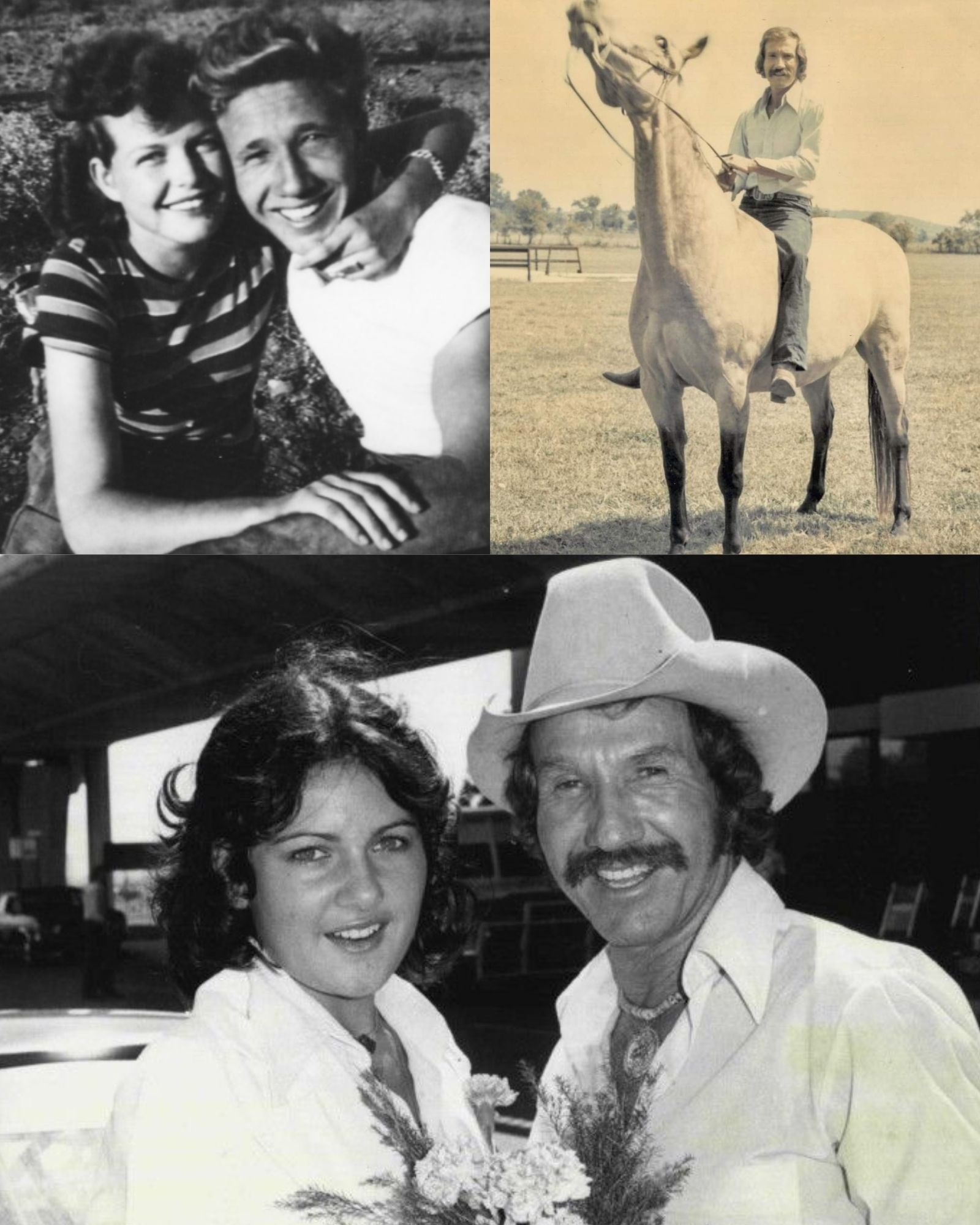
On January 23, 1970, Columbia Records released a new Marty Robbins single called “My Woman, My Woman, My Wife.” It was a plain, grateful love song, and Marty never pretended it was about anyone other than Marizona, the woman he had married in Arizona more than twenty years earlier.
The next day, Marty checked into St. Thomas Hospital in Nashville. He was not there because he felt sick. He was there because racing season was coming, and he wanted a doctor to tell him he was fit to drive.
A Checkup Before Racing Season
The previous August, Marty had suffered a severe heart attack while on tour in Ohio. Contemporary reports placed it at a show in Warren. He recovered, went back to work, and by his own account had not had a bad day since. He had a 1969 Dodge Dart ready to race, but he did not want to start until a doctor said everything was all right.
The tests found two of the main arteries in his heart completely blocked and a third about 75 percent closed. His personal physician, Dr. William Ewers, told him the surgery could not wait.
“I came and took them and found out nothing was all right.”
That was how Marty summed it up for reporters, with the same dry humor he used on stage.
“Hanging by a Thread”
On January 27, 1970, four days after the single came out, surgeons at St. Thomas performed a triple coronary bypass. Bypass surgery was still new. A doctor at the hospital’s news conference said it had only been performed for about two years and that roughly 300 such operations had been done in the entire country. Marty was the seventeenth bypass patient at St. Thomas, and the first there to have all three arteries bypassed.
Marty later described the operation in simple terms: surgeons took about two and a half feet of vein from his legs and used it to route blood around the blocked arteries. A cardiologist on his case told reporters that Marty had gone into the operating room hanging by a thread.
He recovered quickly. About two months later he walked back onto the Grand Ole Opry stage, and the crowd was so loud that, as one Nashville reporter wrote, nobody could hear the words he was singing.
The Girl From Glendale
Marizona Baldwin grew up in Glendale, Arizona, the same town as Marty. They met at Upton’s Ice Cream Parlor not long after he came home from the Navy. Marty reportedly told a friend on the spot that he would marry her. Decades later, Marizona remembered it the same way.
“I guess it was love at first sight.”
She also liked to say she had always wanted to marry a singing cowboy. On September 27, 1948, the day after Marty turned 23, they were married in Parker, Arizona, and spent their honeymoon across the Colorado River in Earp, California. She was 18. He was singing in Phoenix clubs and earning just enough to get by. Their son, Ronny, was born the next summer. Their daughter, Janet, came in 1959, six years after the family moved to Nashville.
A True Song
Many retellings say Marty wrote “My Woman, My Woman, My Wife” from his hospital bed after the bypass. The dates do not allow it. The single was already in stores before he went into surgery. The most widely repeated account is that he wrote it while recovering from the August 1969 heart attack, as a thank-you to the woman who had carried the family through his years on the road.
Marty himself was blunt about who it was for.
“It’s a true song.”
He said the lines were the things a man would want to say to his wife, and that his wife was everything he described. In May 1970 the song reached No. 1 on the country chart. It later won the Grammy for Best Country Song, and Dean Martin cut his own version the same year.
Back Behind the Wheel
The doctors cleared Marty to race again that spring. By that fall he was back in a NASCAR race at Charlotte Motor Speedway.
The scares kept coming. On October 6, 1974, at Charlotte, Richard Childress’s car stopped sideways across the track in front of him. Marty steered into the outside wall at roughly 160 miles an hour rather than hit Childress’s driver’s door. He came away with 37 stitches in his face, broken ribs and a broken tailbone. Childress later credited him with saving his life.
The next spring, after another violent wreck at Talladega, Marty climbed out and sang “El Paso” to himself to make sure his memory was still there. He quit racing for about eighteen months, then came back. His last NASCAR race was in Atlanta on November 7, 1982.
St. Thomas, December 1982
In October 1982, Marty Robbins was inducted into the Country Music Hall of Fame. On December 2, he was admitted to St. Thomas Hospital with chest pains. A blood clot had caused a massive heart attack. Surgeons repaired the three bypasses from 1970 and added a fourth in an eight-hour operation.
He fought for six days. He died at St. Thomas late on the night of December 8, 1982, at age 57. Marizona, Ronny and Janet were at the hospital.
Marizona Robbins lived another nineteen years. She died on July 10, 2001, and was laid to rest at Woodlawn Memorial Park in Nashville, where Marty is buried. The girl who said she wanted to marry a singing cowboy had been married to one for 34 years.