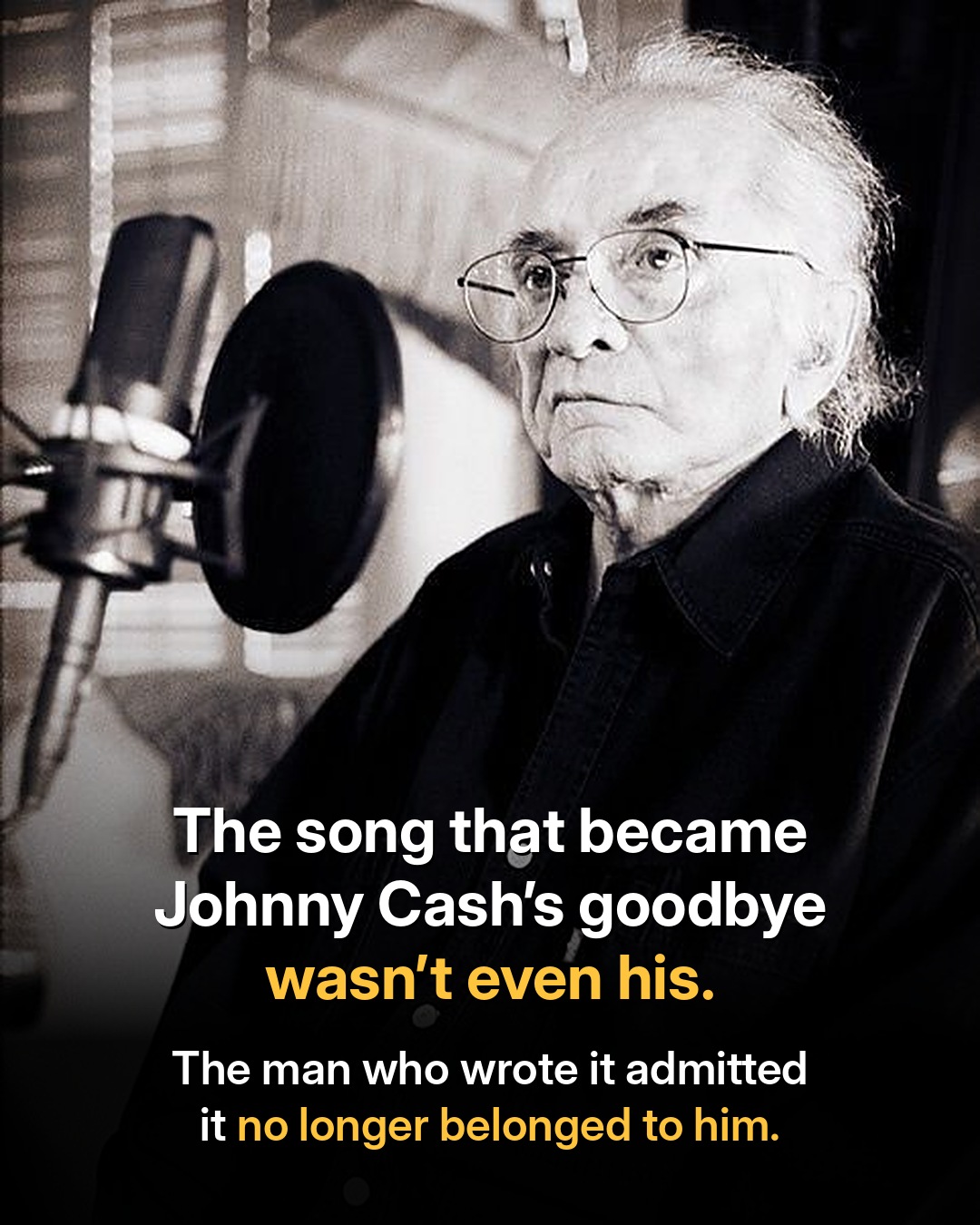
On September 12, 2003, the news came out of Nashville: Johnny Cash, the Man in Black, had died at 71. Within days, record stores saw something strange. His latest album, American IV: The Man Comes Around, suddenly came back to life. Sales jumped 300 percent, and the album climbed from No. 94 back to No. 22 on the Billboard 200.
And people kept reaching for one song Johnny Cash didn’t even write: “Hurt.”
The Man in Black Before the Final Chapter
For decades, Johnny Cash was larger than country music itself. “I Walk the Line,” “Ring of Fire,” “A Boy Named Sue,” the legendary prison albums. He sang for the people nobody else was singing for.
But by the 1990s, Nashville had moved on. Country radio stopped playing him. That’s when producer Rick Rubin stepped in with a simple idea: strip everything away. Just Johnny Cash, his guitar, and songs that meant something. The American Recordings series gave him a second life, and American IV became his first non-compilation album to go gold in thirty years.
A Song From a Very Different World
“Hurt” was written by Trent Reznor of Nine Inch Nails and released in 1994. In its original form, it is a raw, furious song about addiction, depression, and self-destruction, sung by a young man at war with himself.
When Johnny Cash wanted to cover it, even Trent Reznor worried the idea sounded like a gimmick. But Johnny Cash didn’t sing it like a young man in a rage. He sang it like an old man looking back over his whole life, counting the damage, the regrets, and the people he had let down.
The Voice of a Man Running Out of Time
By the time he recorded it, Johnny Cash was frail and battling serious illness. You can hear it. His voice shakes. His breath runs short. The piano builds slowly underneath him until the song feels like it might collapse. Rick Rubin didn’t polish any of it.
The Video That Changed Everything
Director Mark Romanek filmed the music video partly inside the House of Cash, a museum in Hendersonville, Tennessee, that had been damaged by a flood and closed for years. Old footage of a young, wild Johnny Cash is cut against shots of the man he had become: older, slower, and painfully aware of where his road was heading.
June Carter Cash, his wife of 35 years, appears in the video, quietly watching him. Three months after filming, on May 15, 2003, June Carter Cash died. Before she passed, she had asked Johnny Cash to keep making music, and he did.
On July 5, 2003, Johnny Cash gave his final public performance at the Carter Family Fold in Hiltons, Virginia. He had to be helped from his wheelchair to a chair in front of the microphone. Then he smiled and greeted the crowd the way he always had: “Hello, I’m Johnny Cash.” Nine weeks later, he was gone.
When Trent Reznor finally saw the video, he admitted that the song he wrote no longer felt like his own. “That song isn’t mine anymore,” he said.
How the Meaning Changed
When “Hurt” came out in late 2002, people called it a bold, surprising cover. The video earned seven MTV Video Music Award nominations and made Johnny Cash the oldest artist ever nominated. It won for Best Cinematography.
After September 2003, nobody heard it as just a cover anymore. It became Johnny Cash’s goodbye, a final confession recorded by a man who knew time was short. June Carter Cash’s quiet face in the video became heartbreaking, because both of them were gone within months. In 2004, the video won the Grammy for Best Short Form Music Video. Johnny Cash wasn’t there to accept it.
Why We Still Press Play
More than twenty years later, “Hurt” is still one of the most powerful farewells in music history. It reminds us that even legends carry regret, and that love can hold someone together until the very end.
What does “Hurt” mean to you? And which Johnny Cash song do you still go back to?