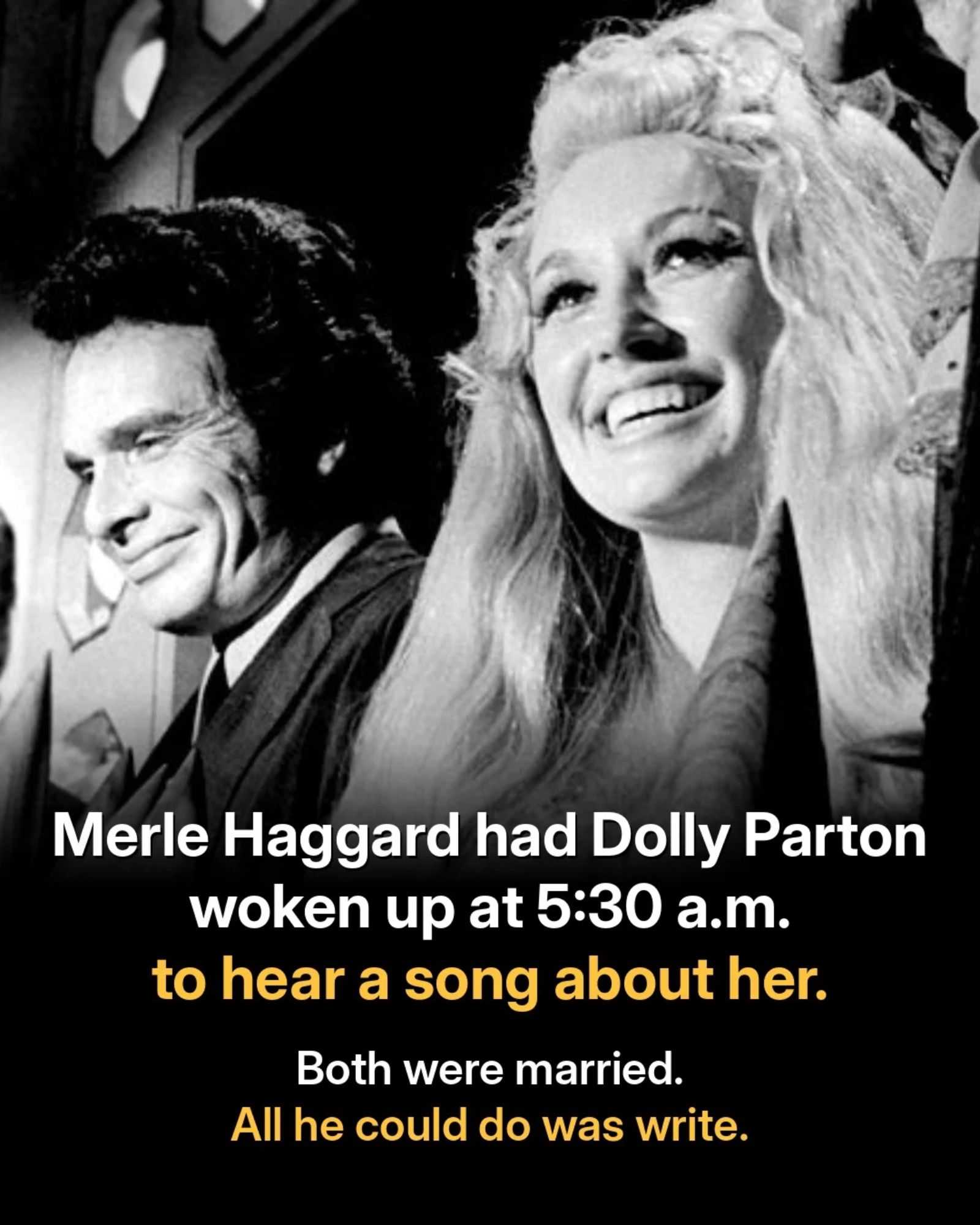
Some love songs are written for no one in particular. This one was written for Dolly Parton, and Merle Haggard made sure she heard it while most of the world was still asleep. The song was “Always Wanting You,” and its story begins with a phone ringing in the dark.
Two Stars on the Same Road
In the mid-1970s, Merle Haggard and Dolly Parton toured together and swapped songs. Merle Haggard recorded “Kentucky Gambler,” a song Dolly Parton wrote, and took it to No. 1. Dolly Parton, in turn, recorded “You’ll Always Be Special To Me,” a song Merle Haggard wrote.
Somewhere in all that time together, Merle Haggard fell in love. He never hid it. Decades later, when Ralph Emery asked him on On The Record whether he had once fallen for Dolly Parton, Merle Haggard did not hesitate.
“Oh yeah, didn’t everybody?”
But there was a problem with no easy answer. Dolly Parton was married to Carl Dean, and she was devoted to him. Merle Haggard was married too, to singer Bonnie Owens. Whatever he felt had nowhere to go, except into a song.
The Night at Harrah’s
Merle Haggard placed the night around 1974. He was in Nevada, working a two-week stand at Harrah’s. After one show, he went back by himself and started writing. By about three in the morning, he had finished not one song but two, and he said later that both of them were about Dolly Parton.
Most songwriters would have gone to bed. Merle Haggard picked up the phone instead.
It was around 3:30 a.m. where he was and roughly 5:30 at Dolly Parton’s home. A woman answered, one of Dolly Parton’s helpers, and told him Dolly was asleep. She offered to have Dolly call him back in the morning. Merle Haggard would not wait. He explained that he had been working on a song all night and that it was about Dolly Parton. Then he asked her to go wake Dolly up anyway.
She did, reluctantly. And Dolly Parton came to the phone.
Nobody recorded what she said that morning. What is known is how the story ended: Dolly Parton stayed faithful to her husband, and Merle Haggard was left with the songs. In his 1981 memoir, Sing Me Back Home, he admitted how much he wished he could have watched her listen.
“I would have given anything to have seen her face.”
The Song Itself
“Always Wanting You” never mentions Dolly Parton by name. It does not need to. The song is a plain, aching confession from a man who loves a woman he can never have. Every new day is hard to face, because he knows he will wake up still longing for her. Loving her without ever being able to reach her hurts almost more than he can bear.
There is no anger in it, only honesty. Merle Haggard was not writing about a character. He was writing about the woman he had just woken up.
What Came After
Merle Haggard recorded the song in late 1974, and Capitol released it as a single in February 1975, from the album Keep Movin’ On. Look closely at that record. The other song he wrote that sleepless night, “I’ve Got a Yearning,” became the B-side. Both songs born at Harrah’s ended up on the same record, one on each side.
“Always Wanting You” went to No. 1 on the country chart. It followed “Kentucky Gambler,” which meant Merle Haggard had back-to-back chart-toppers tied to the same woman: one she wrote, and one he wrote about her.
A Friendship That Lasted
The love was never returned, but the friendship survived. Merle Haggard and Dolly Parton stayed close for decades, and he told the 3:30 a.m. story openly, with humor. When Merle Haggard died in 2016, Dolly Parton remembered him warmly, saying she loved him like a brother.
“Always Wanting You” began as one man’s confession to one sleepy listener on a phone line. It became a No. 1 hit for millions, a song many listeners would come to hear as their own.