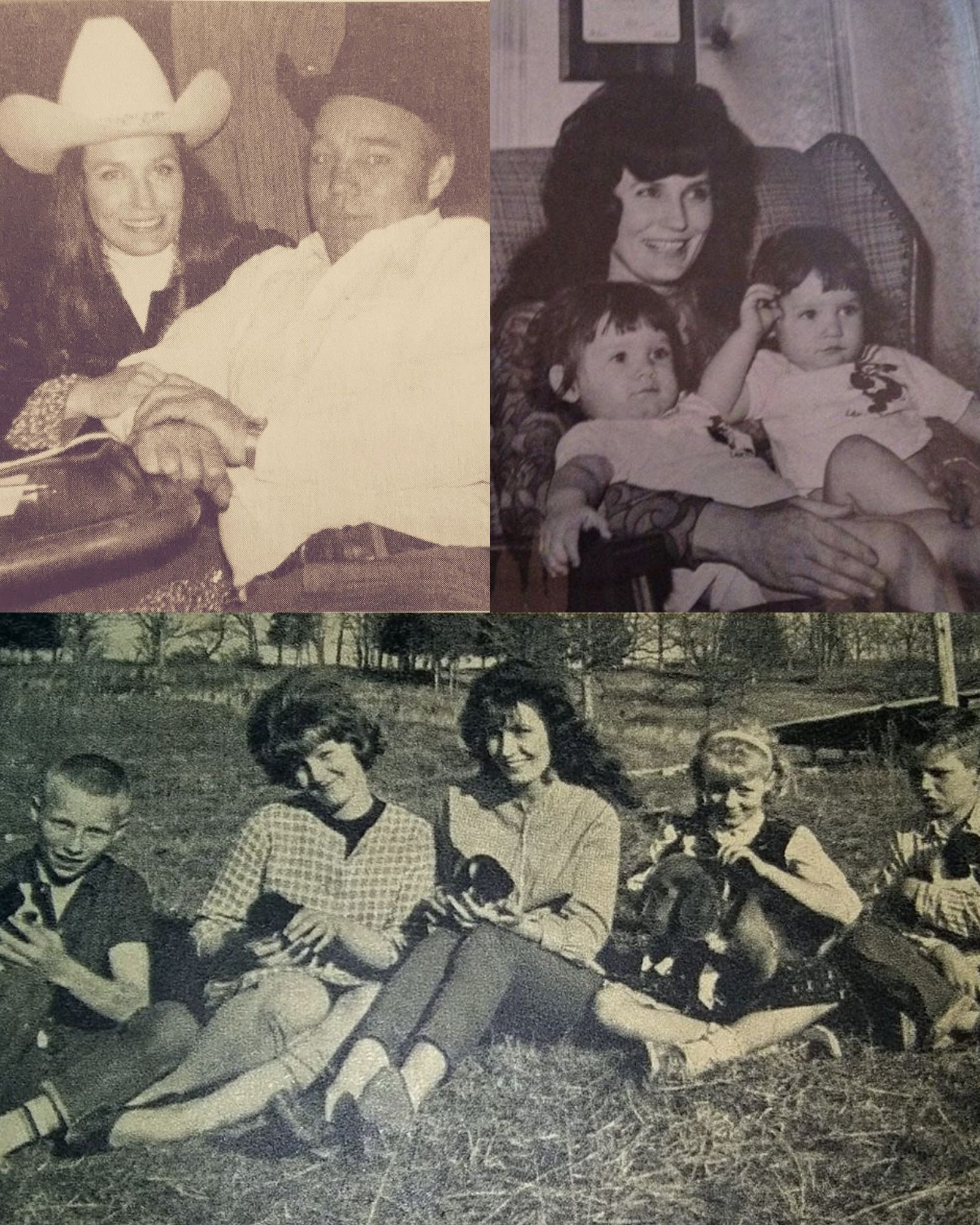
Before Loretta Lynn became one of country music’s most recognizable voices, there were four children to raise, a farmhouse to care for, and 36 ranch hands who needed meals cooked and rooms cleaned.
That last detail sounds almost unbelievable. But it came directly from Loretta Lynn.
In a 2010 interview with Terry Gross on NPR’s Fresh Air, Loretta Lynn recalled the work that helped pay the rent before a recording career ever seemed possible. Both Loretta Lynn and husband Doolittle Lynn worked, and the demands of raising a family were already considerable.
Looking back, Loretta Lynn didn’t try to make those years sound romantic. Life was hard. And the experience would become an important part of what made Loretta Lynn different from other singers arriving in Nashville.
A Young Mother Far From Kentucky
Loretta Lynn grew up in the coal-mining community of Butcher Holler, Kentucky, where singing was part of everyday family life. But after marrying Oliver “Doolittle” Lynn, Loretta Lynn moved thousands of miles away to Washington State.
By the time a recording career began taking shape, Loretta Lynn was already the mother of four children.
There was no professional songwriting background, no established Nashville connection, and no guarantee that country music would ever provide a living.
The farmhouse work was especially demanding. Loretta Lynn later explained that cooking and cleaning for 36 ranch hands helped cover the rent on the house where the family lived.
For someone who would eventually sing about marriage, work, disappointment, and the realities of women’s lives, these were experiences Loretta Lynn knew firsthand.
The $17 Sears Guitar That Opened a Door
Doolittle Lynn recognized something in Loretta Lynn’s singing long before the record companies did.
According to the Country Music Hall of Fame, Doolittle Lynn purchased a $17 Sears guitar and encouraged Loretta Lynn to perform. Loretta Lynn taught herself to play, building on the singing that had been part of family life since childhood.
Doolittle Lynn eventually helped arrange a performance at a local Grange hall, reportedly boasting that Loretta Lynn could sing better than anyone except Kitty Wells.
From there, Loretta Lynn began appearing with local musicians and eventually formed a band.
But one of the most remarkable details from this period concerns the place where the songwriting began.
Where “I’m a Honky Tonk Girl” Was Written
During the 2010 Fresh Air interview, Loretta Lynn recalled sitting outdoors in Washington State, leaning against an old outdoor toilet while writing two early songs: “I’m a Honky Tonk Girl” and “Whispering Sea.”
There was no elaborate writing studio involved. Loretta Lynn was learning to turn ordinary experiences and observations into country songs.
The interview also revealed that Loretta Lynn had started performing at a small bar with a steel guitarist and a brother who played fiddle and sang.
Those early performances introduced Loretta Lynn to the world of honky-tonk music while the songwriting developed.
In February 1960, Loretta Lynn signed with the small Zero Records label. A recording session in Los Angeles followed, and “I’m a Honky Tonk Girl” became the debut single, backed by “Whispering Sea.”
Taking the Music to America, One Radio Station at a Time
Getting a record made was only part of the struggle.
Loretta Lynn and Doolittle Lynn mailed copies to radio stations, then traveled across the country personally promoting the single.
According to the PBS documentary series Country Music, the couple slept in the car, ate inexpensive sandwiches, and visited radio stations hoping someone would play the record.
The persistence paid off. “I’m a Honky Tonk Girl” reached No. 14 on Billboard’s country chart in 1960, opening the door to Nashville and a performance on the Grand Ole Opry that same year.
When Loretta Lynn later recalled that first Opry appearance, the approach sounded remarkably simple: take the guitar onstage and sing much as Loretta Lynn had done at home.
Why Loretta Lynn Said Singing Was Easy
Years after those difficult beginnings, Terry Gross asked Loretta Lynn about caring for four children while working for the 36 ranch hands.
Loretta Lynn confirmed the details and remembered how difficult that life had been.
Then came a wonderfully matter-of-fact observation:
“And so singing was easy.”
It was classic Loretta Lynn: straightforward, funny, and rooted in experience.
That remark says something important about the songs that followed. Loretta Lynn didn’t need Nashville to explain the challenges of marriage, raising children, or making ends meet. Those subjects were already familiar long before the first recording session.
The $17 guitar gave Loretta Lynn a way to put those experiences into music. The work, the family responsibilities, and the years in Washington had already supplied plenty of stories worth telling.
And when Nashville finally heard Loretta Lynn, it was hearing a woman who had lived much of what country music was supposed to be about.