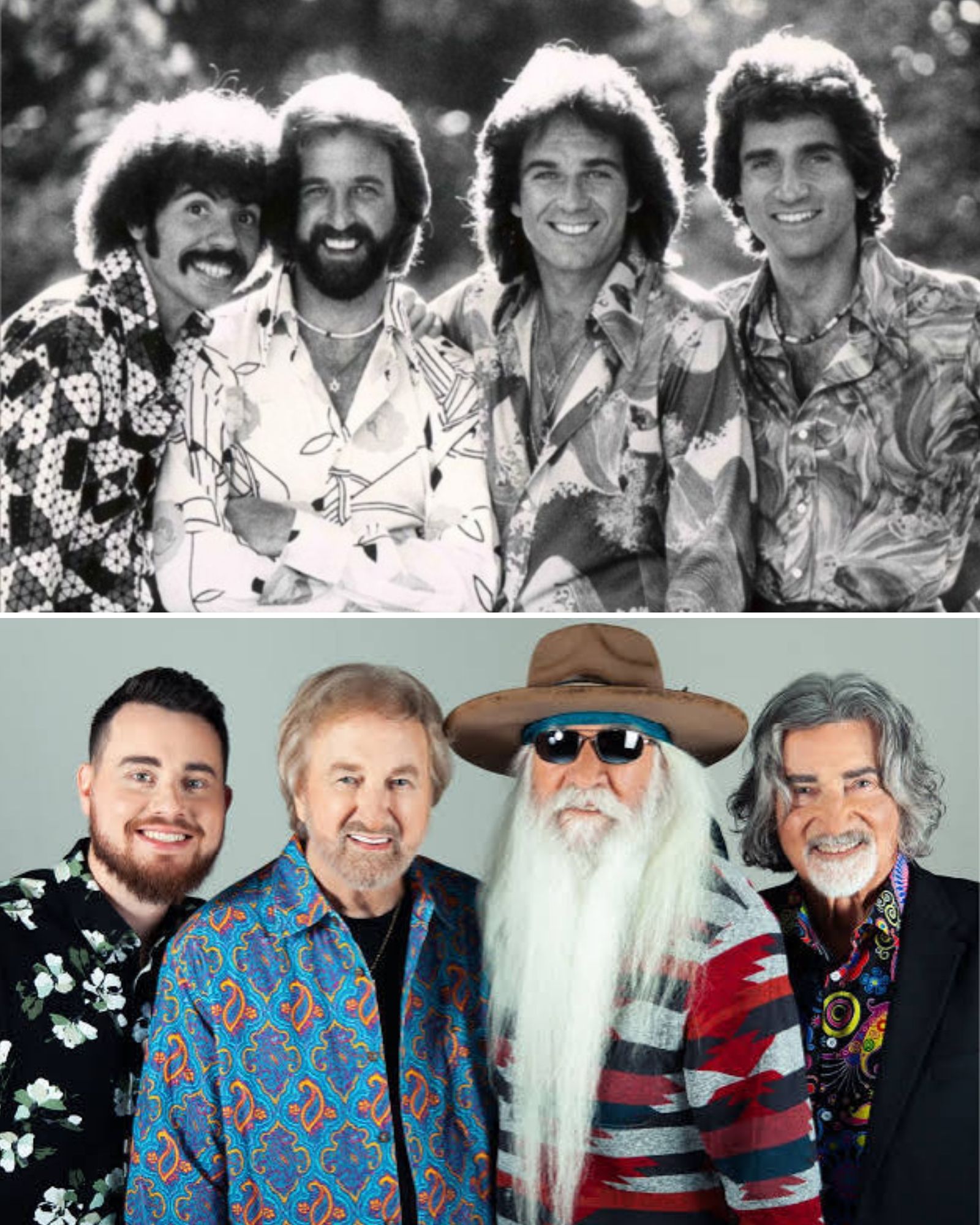
In the mid-1970s, the Oak Ridge Boys were close to giving up. They were opening shows for Johnny Cash at the Las Vegas Hilton, they were nearly broke, and nobody in the music business seemed sure what they were anymore. Cash could see it on their faces. So one day he called all four of them up to his suite and told them not to quit.
Fifty-three years after the group’s classic lineup came together, that conversation is still the one the Oaks point to when they explain how they survived long enough to record “Elvira.”
Four Voices, Finally in Place
The Oak Ridge Boys were already decades old by 1973. The group traced its roots to the 1940s in Oak Ridge, Tennessee, and more than 30 singers would pass through its lineup over the years. Baritone William Lee Golden had joined in 1965, and lead singer Duane Allen came aboard the following year.
In late 1972, bass singer Richard Sterban left J.D. Sumner and the Stamps, the quartet that had been singing behind Elvis Presley, to join the Oaks. Then in October 1973, a 25-year-old tenor from Philadelphia named Joe Bonsall gave up his role leading a gospel group called the Keystones to take the last open spot. Bonsall and Sterban had both sung with the Keystones in the late 1960s, a group that admired the Oaks and covered much of their material.
With Bonsall in place, the four voices that would carry “Bobbie Sue,” “American Made” and “Elvira” were finally standing on the same stage. At the time, though, they were known as a gospel act, and a successful one, already Grammy winners.
Gospel Rebels With No Home
The trouble was that the Oaks wanted more than the gospel circuit could give them. They grew their hair long, dropped the matching suits, played Las Vegas and mixed secular songs into their sets. Gospel traditionalists called them rebels. When they leaned toward country, many country listeners decided they sounded too pop.
Johnny Cash was one of the few who saw something in them. In 1973 the Oaks sang with Cash and the Carter Family on “Praise the Lord and Pass the Soup,” which put the group on the country charts for the first time, and Cash helped them sign with Columbia Records. But splitting their time between gospel and country left them without a clear identity. Sales fell, and the money problems that followed nearly forced them to break up.
Bonsall later described those as gray years, when it was simply hard to keep going. He said Johnny and June Carter Cash took them out on the road, paid them more than they were worth and even handed them bonuses, because they knew the Boys were hurting.
The Talk in the Hilton Suite
The moment the members kept coming back to happened upstairs at the Las Vegas Hilton. Sterban remembered that Cash could tell they were discouraged and called them up to his hotel room for what he described as a pep talk.
As Sterban told it, Cash said they had something very special, that he could feel it and so could they. If they gave up, he told them, no one else would ever get to know about it. What they had to do was find a way to stick together, and if they did, good things were coming.
…walked out of that room with our heads held high.
Bonsall recalled the scene a little differently, with Cash gathering them into a circle and telling them there was magic in the four of them, that people just did not know it yet. He called those words the most encouraging the group ever heard. In later interviews he said hearing it in Cash’s deep voice felt almost like being spoken to from above.
The Long Road to “Y’all Come Back Saloon”
The pep talk did not fix anything overnight. In 1976 the Oaks toured the Soviet Union for three weeks with Roy Clark, one of the first American acts to do so. They also caught the attention of Clark’s manager, Jim Halsey, who took them on and convinced them they were one hit away from country stardom.
Columbia was less patient. After their 1976 single “Family Reunion” peaked at No. 83, the label gave up on them, even though Paul Simon soon used the Oaks on the harmonies of his 1977 hit “Slip Slidin’ Away.” By then the group had stopped taking gospel bookings altogether.
They signed with ABC/Dot. In July 1977 the label released “Y’all Come Back Saloon,” and it climbed to No. 3 on the Billboard country chart. It started a run of 34 top 10 country hits between 1977 and 1991, 17 of them No. 1. In 1981, “Elvira” topped the country chart and reached No. 5 on the Billboard Hot 100.
The Men Who Were in That Room
The quartet that walked out of the Hilton suite stayed together for most of the next five decades. Golden left in 1987 and was replaced by Steve Sanders, then returned in the mid-1990s. The Oaks joined the Grand Ole Opry in 2011 and the Country Music Hall of Fame in 2015.
Joe Bonsall kept quiet for years about the ALS that was slowly taking his strength. He retired from the road at the end of 2023 and personally chose his successor, Ben James, a young bluegrass tenor who had once shared a bill with the Oaks. Bonsall died on July 9, 2024, at 76.
In September 2025, Richard Sterban revealed he was being treated for pancreatic cancer. In early 2026 he walked back onto the Opry stage to sing “Elvira” with his bandmates. Three of the four men Johnny Cash sat down in that Las Vegas suite are still Oak Ridge Boys.